The Jordan College of Agricultural Sciences and Technology
Artificial Intelligence Projects and Research
Dairy Processing
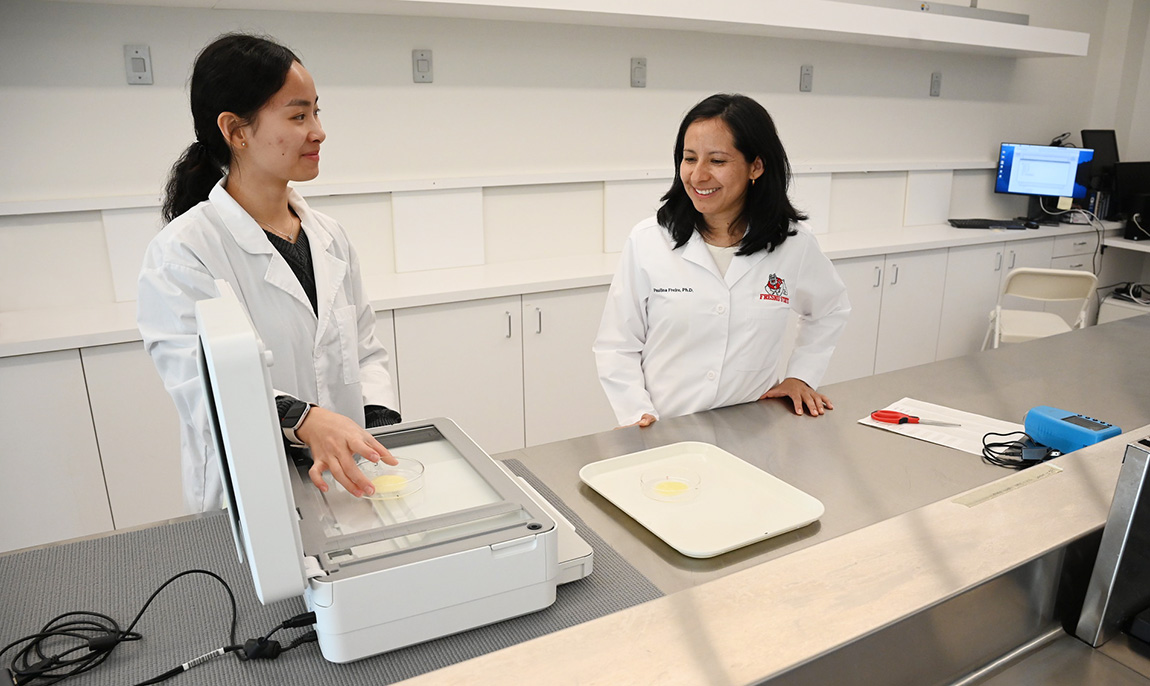
Dr. Paulina Freire Vásconez, a postdoctoral researcher in Fresno State's Department of Food Science and Nutrition and the Institute for Food and Agriculture, has been researching the development of a portable, sensor-based device in cheese processing that is paired with software that uses sensor fusion and machine learning techniques to offer reliable, real-time meltability assessments.
This advancement holds great promise for in-line or at-line processes, ensuring higher quality control in cheese production and enhancing its potential applications in the food industry.
This project received the top award for doctoral thesis research in its field by the Universitat Autònoma de Barcelona (UAB) in Spain in 2025. The project also received "Cum Laude" distinction.
An expert in new dairy processing techniques, her expertise in spectroscopy, sensors, and artificial intelligence to develop sensor-based devices as advanced control technologies aim to improve dairy productivity, quality, and safety. She is particularly focused on process control and the evaluation of functional properties with a one-second single test.
In addition, she has delivered presentations on machine learning and artificial intelligence and established new industry partnerships since joining Fresno State. She has dedicated her time to training students, guiding them through their research projects, and facilitating their publication efforts in scientific journals.
Dr. Freire is also actively engaged in a range of significant projects, including high-pressure processing techniques with milk, sensory studies on cheese, the development of new cheese recipes through ultrafiltration, and the application of high-pressure processing technology for milk.
She has also explored the use of fluorescence spectroscopy to assess the technological functionality of acid whey. Her research involved developing predictive models for the total protein content and undenatured whey protein levels in milk, as well as investigating various functional properties of whey through synchronous fluorescence responses. This innovative work positioned her at the intersection of sensor technology and artificial intelligence.
Dr. Freire also conducts research and works on industry outreach projects with campus staff, faculty, and students through the Pacific Coast Coalition of the USDA Dairy Business Innovation Initiative.
Her contributions have not only strengthened collaborative efforts but have also greatly supported the academic and professional development of Fresno State's students.
Learn more about the Institute for Food and Agriculture's Smart Dairy program.
Dairy Science
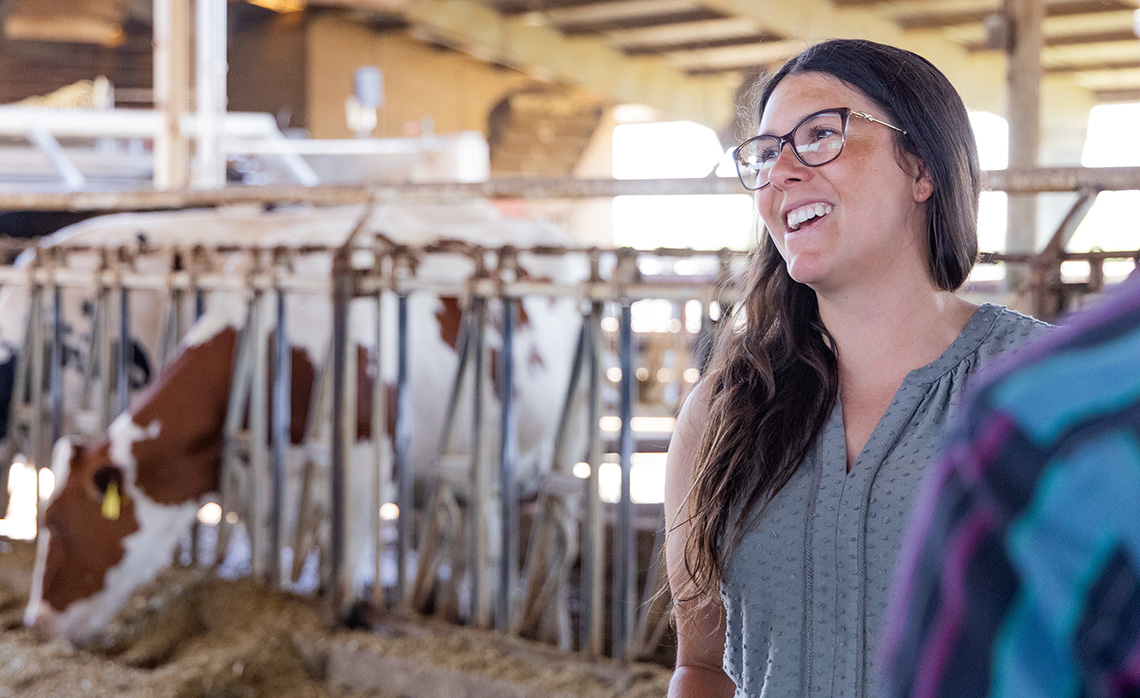
Fresno State animal science assistant professor Dr. Jessica Graybeal and Andrew Ridgway, the manager at the campus Manuel Mancebo Jr. and Katye Mancebo Dairy Production Unit, use smaXtec boluses to monitor cow health and support daily management decisions.
Each bolus sits in the cow’s reticulum and continuously collects and uploads individual-animal data to the cloud, including internal body temperature, rumination, activity, and water intake. Besides showing data on a web platform that computers, tablets, and phones can easily access, the system’s artificial intelligence analyzes these data over time, recognizes changes in each cow’s normal patterns, and alerts staff when an animal may need attention.
One of the technology's primary uses initially has been heat detection. The algorithm can recognize behavioral patterns associated with estrus, such as decreased rumination paired with increased activity, and identify cows that may be ready for breeding. This gives staff another way to monitor reproductive activity beyond relying solely on visual observation.
The boluses have also been especially valuable for monitoring fresh cows during the transition period, when they are at greater risk for metabolic challenges. Changes in temperature, rumination, activity, or water intake may provide an early indication that a cow is developing an issue such as subclinical ketosis or milk fever. These alerts allow staff to evaluate cows sooner and, when necessary, begin treatment before the condition becomes more severe.
What makes this technology exciting is that it does not replace the knowledge and experience of the people caring for the cows—it gives them more information to work with. Instead of relying only on what can be observed during routine checks, employees can use continuous, cow-level data to determine which animals need a closer look. This can support earlier intervention, improve animal well-being, and make herd management more efficient.
In addition to everyday management applications, the staff hopes to incorporate the boluses into future research. Since the bolus continuously monitors internal body temperature and other behavioral and physiological measures, they may be particularly useful for studying heat stress and evaluating how cows respond to changes in their environment or management.
Overall, the technology is a great example of how artificial intelligence can turn large amounts of on-farm data into practical information that supports both animal care and dairy management.
Plant Science
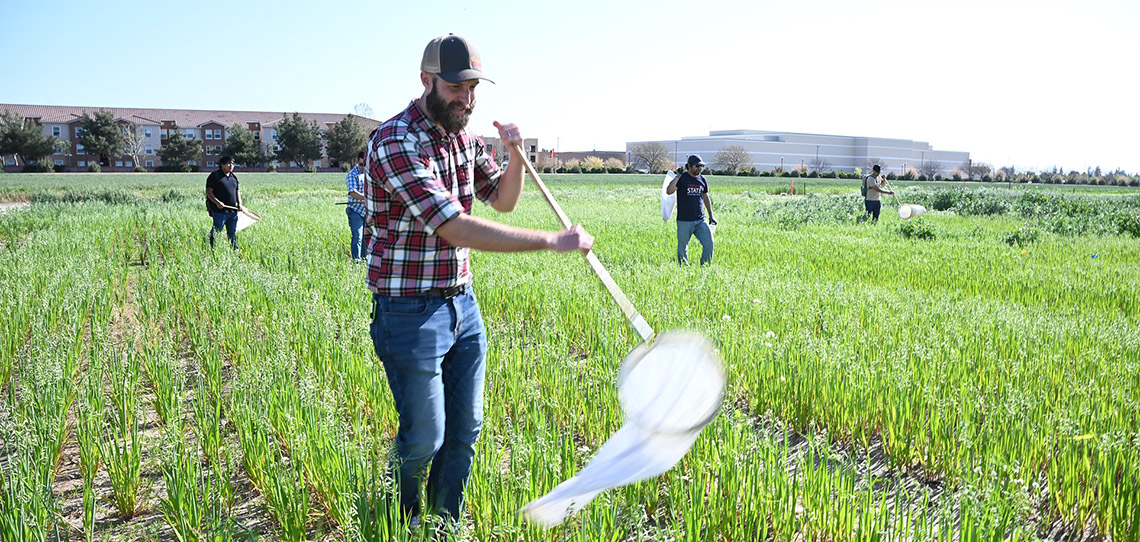
Plant Science Department faculty Dr. Jacob Wenger integrates artificial intelligence with traditional scientific methods in the economic entomology class (PLANT 162), an upper-division core course taken by plant science and viticulture students. Students learn to identify insects by sight using dichotomous keys, field guides, and AI apps. In the insect identification lab, students identify groups of insects using these three tools, and compare the relative accuracy and ease of the approaches. AI might appear to be a quicker and easier way to identify larger and more common insects fairly accurately, but other insects are also include to highlight some of the weaknesses of AI models (such as an inability to identify immature life stages, small, drab, and nocturnal insects because of poor data input). Students are asked to reflect on the relative appropriateness of the various identification tools to specific situations.
In the soil health course (PLANT 177), faculty member Dr. Sangeeta Bansal makes a concerted effort to include AI-based apps, sensors, and prediction models in lab and lecture components that allow students to make informed decisions about soil health management.
The Food Science and The Environment class (PLANT 105) involves projects involving intensive writing and critical review so faculty member Robert Ullo provides an overview of AI writing technologies. His instruction covers the use of AI chatbots (such as ChatGPT, Claude, or Gemini) to create a first draft of a paper. Students then fact check its accuracy and write a critique of the report that identifies strengths, weaknesses, limitations, and areas of growth of the technology.
Viticulture and Enology
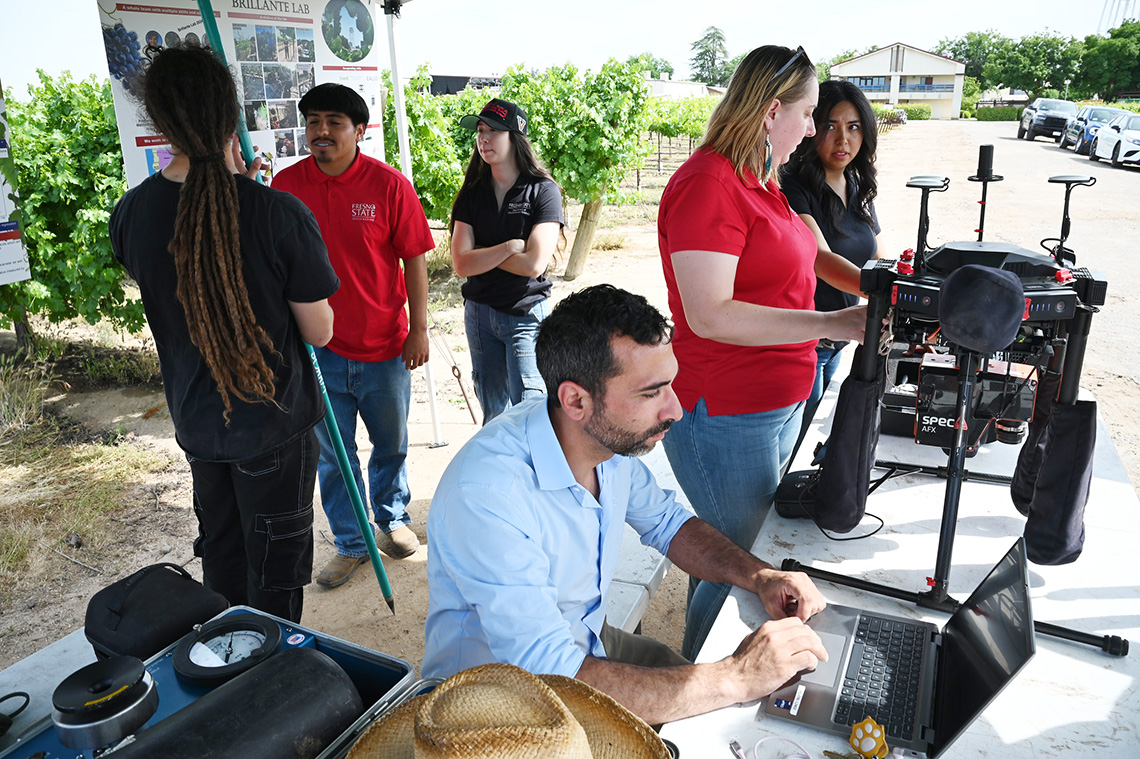
Viticulture and Enology Department faculty Dr. Luca Brillante is working with faculty, students, staff, and industry members to detect virus Infections in vineyards throughout California using advanced technology and software.
Working with Viticulture and Enology Research Center post-doctoral researchers Dr. Eve Laroche-Pinel and Dr. Diego Freire, they are integrating automated technology, hyperspectral imagery from drones, and machine-learning algorithms for analysis.
Due to the incurable nature of viral diseases, early and accurate detection and subsequent removal of infected grapevines are vital to maintaining a healthy vineyard. However, many current methods of virus detection are costly, time-consuming, and unable to scale.
Data from his recent study with the new techniques showed promise, and a research article on the topic was published by the International Society for Horticultural Science. This project explored the detection and classification of two major groups of grapevine viruses, namely grapevine leafroll-associated viruses (GLRaVs) and grapevine red blotch virus (GRBV).
Brillante, who serves as the department's Bronco Wine Company Chair in Viticulture, has also made presentations on this and related topics at national and regional conferences and outreach events for industry members and growers.
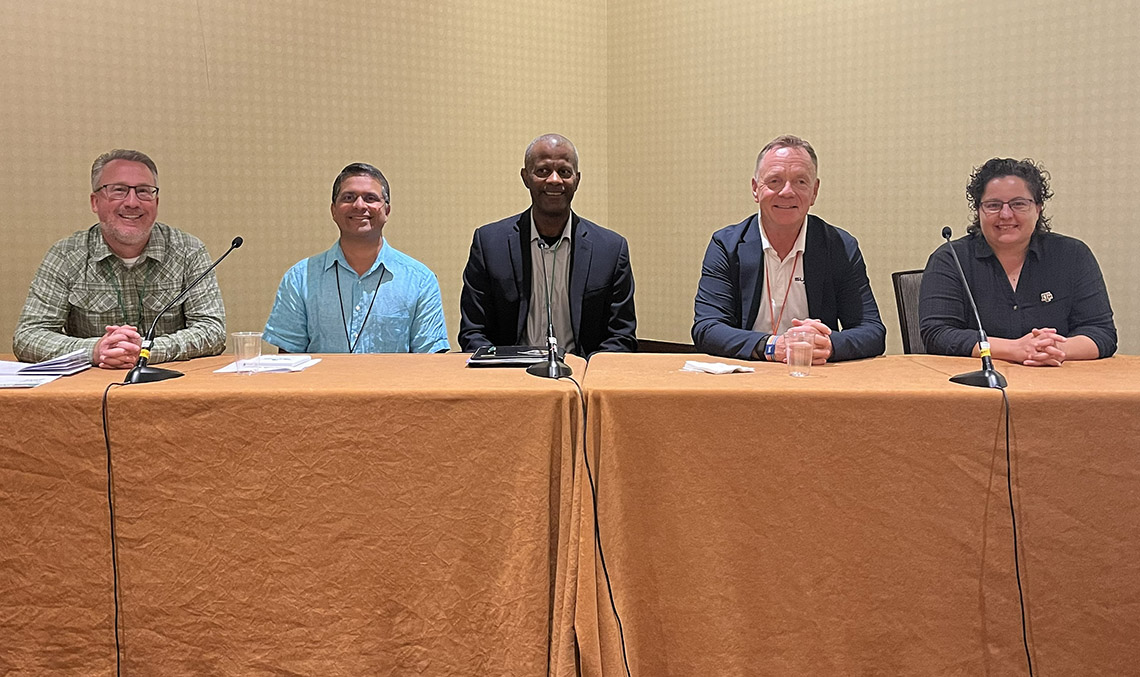
Fresno State Jordan College Dean Rolston St. Hilaire participates in an expert panel discussion about artificial intelligence projects at the American Society for Horticultural Sciences (ASHS) annual conference in Dallas, Texas, August 2026.