The Jordan College of Agricultural Sciences and Technology
Technology team creates new access during pandemic
When the pandemic forced Fresno State classes to quickly transition into virtual mode in March 2020, one of the unforeseen issues was accessing software for classes that was available only in specific computer labs.
Apporto, a virtual cloud service platform, had been tested on campus in months prior, and quickly became an invaluable resource.
Some of the first students to use the remote software portal were in Jordan College robotics and programming classes. Campus technology staff loaded the class software onto the company’s remote server that could be accessed virtually anytime.
Industrial technology students then used a username and passcode on the Apporto website to access a host of design and programming software software such as Atom, ArcGIS, Photoshop, Python, ROS Melodic, SOLIDWORKS 3D CAD and SPSS to complete their class projects.
“We have higher-end computers for a reason in certain IT labs to help run the complicated software,” said Daniel Nguyen, a technology services consultant assigned to the Jordan College of Agricultural Science and Technology, “When campus closed, the Apporto platform made it easy for students to still do their best work. It is also nice because it works across Windows and Apple platforms, and students could write their own code in Linux if necessary.”
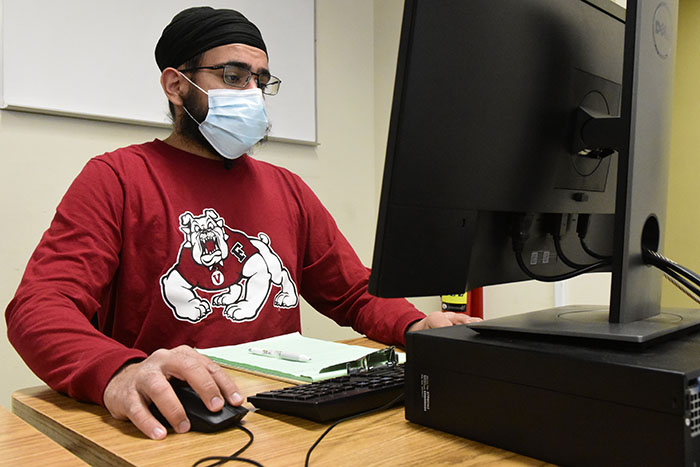
The advantage was immediate for students like master’s student Sukhbir Singh, especially if they were using computers or tablets that did not have the necessary memory, graphics card and processor speed.
“It would have been hard for me to finish the main robotics class projects, which are largely what your grade is dependent on,” said Singh, “but more important, was the actual experience - it allowed us to still replicate basic automated vehicle programming. The software worked fairly quick, even on my older laptop, and that was very convenient. Even when there was an occasional software problem, the campus technology people could reload the software online easily, instead of us having to come into campus to fix it.”
The campus Apporto account currently allows access to 200 students at a time, which also includes many students from the food science and nutrition department who use the Food Processor software.
The application is a key resource for professionals in diet and recipe analysis and menu planning. However, students only had prior access to it for projects and assignments on weekdays in a shared, food science computer lab. The new virtual access has allowed students to work at night or on weekends easily by logging into their internet browser on any computer.
“In the past, the lab and specific computer access would sometimes cause bottlenecks,” said dietetic faculty Erika Ireland, “We still only have 10 licenses that are shared by a larger number of students, but we had no problems with too many people wanting to work at the same time.”
 Student assignments last fall involved entering data and running reports for various
projects ranging from toddler nutrition to state prison inmates. Knowing how well
students utilized the software last semester, she is excited to implement it more
into her course planning this spring.
Student assignments last fall involved entering data and running reports for various
projects ranging from toddler nutrition to state prison inmates. Knowing how well
students utilized the software last semester, she is excited to implement it more
into her course planning this spring.
“This software is the industry standard, so learning it now is a very important step in preparing for their careers,” said Ireland. “However, the software itself and all the updates are expensive, and not something students would ever buy on their own.”
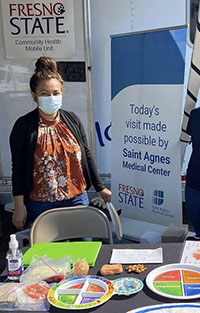
For Mirella Ortigoza, a dietetics program junior, it became a key part of her projects for the nutrition lifecycle class and the ‘Winning With a Healthy Lifestyle’ outreach program. Even though she had never used the software before, she quickly became comfortable and even created videos for classmates on how to use the software and create reports.
“Having the improved accessibility to the software made the projects so much more flexible and valuable,” Ortigoza said. “When you’re planning meals for clients, there are so many options, so having more time to fully analyze all the food and nutrition options is critical, as well as creating easy-to-understand and comprehensive reports.”
While many students still face issues in the virtual learning process, this experience has helped keep the Fresno native’s career path on pace to becoming a clinical registered dietitian nutritionist (RDN).
“Nutrition is so important to preventing disease,” Ortigoza said, “We’re seeing an alarming increase in Type 2 Diabetes Mellitus at younger ages, so we need to use tools like this software to help youth and others around us in the Central Valley lead healthier lives.”