The Jordan College of Agricultural Sciences and Technology
Veterans Day Student Spotlight: Mauricio Soriano
 Happy #VeteransDay to all our military personnel, including graduate student Mauricio Soriano, who have served our country from our Fresno State ag community and supporters.
The Santa Maria native's interest in a plant science degree was rooted in his early agricultural surroundings, and later reignited while serving in the U.S. Army in Afghanistan.
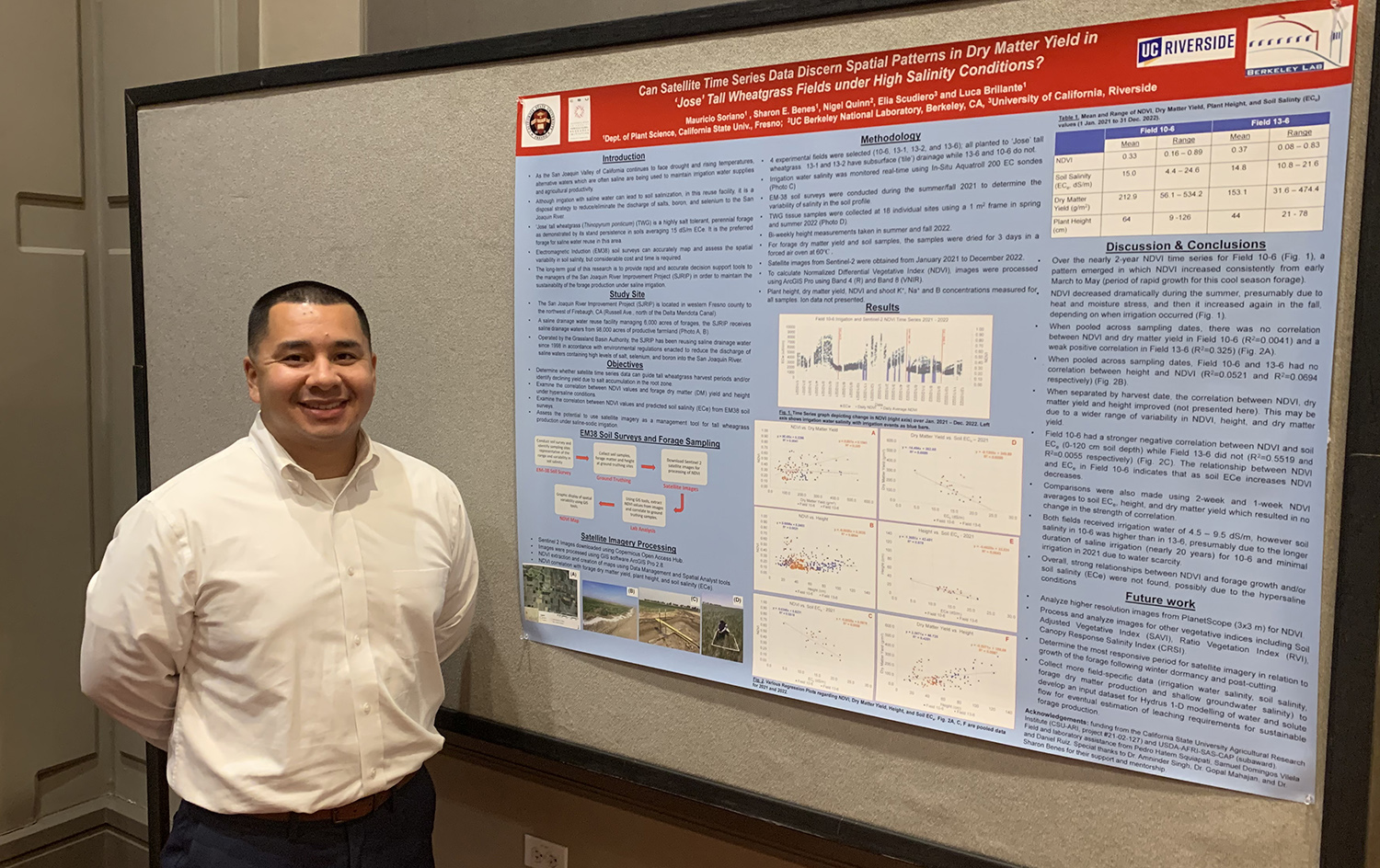
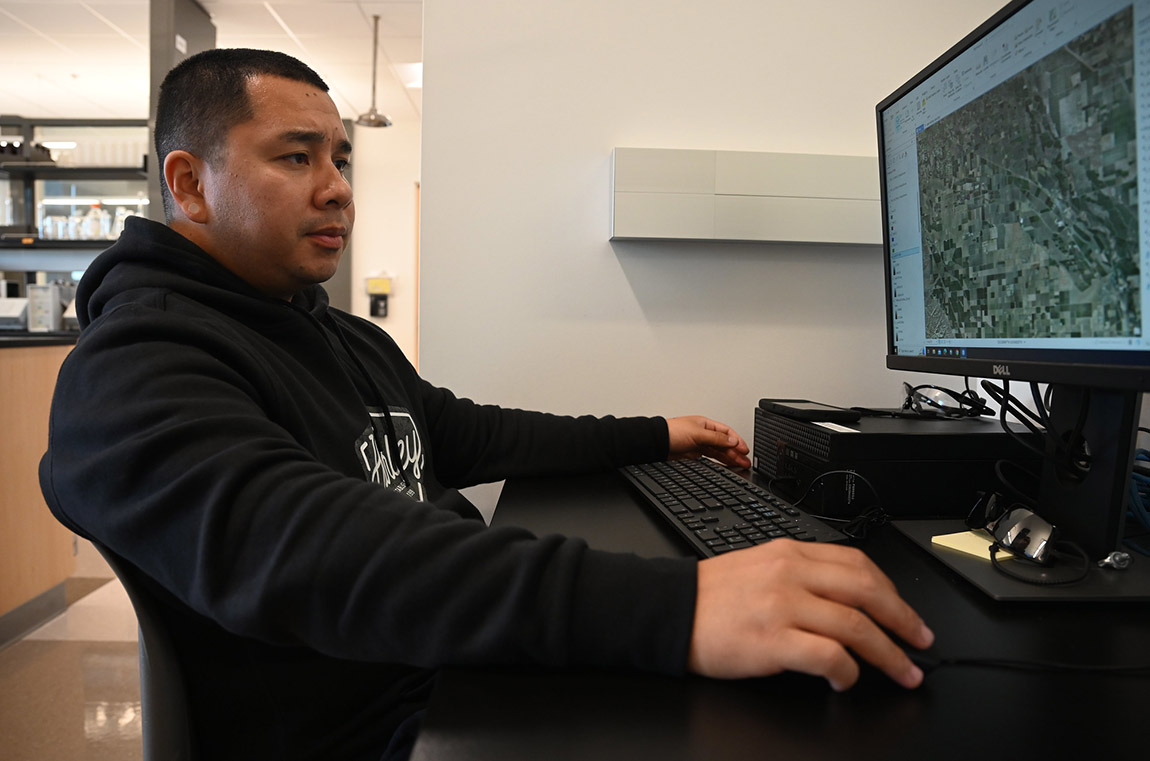
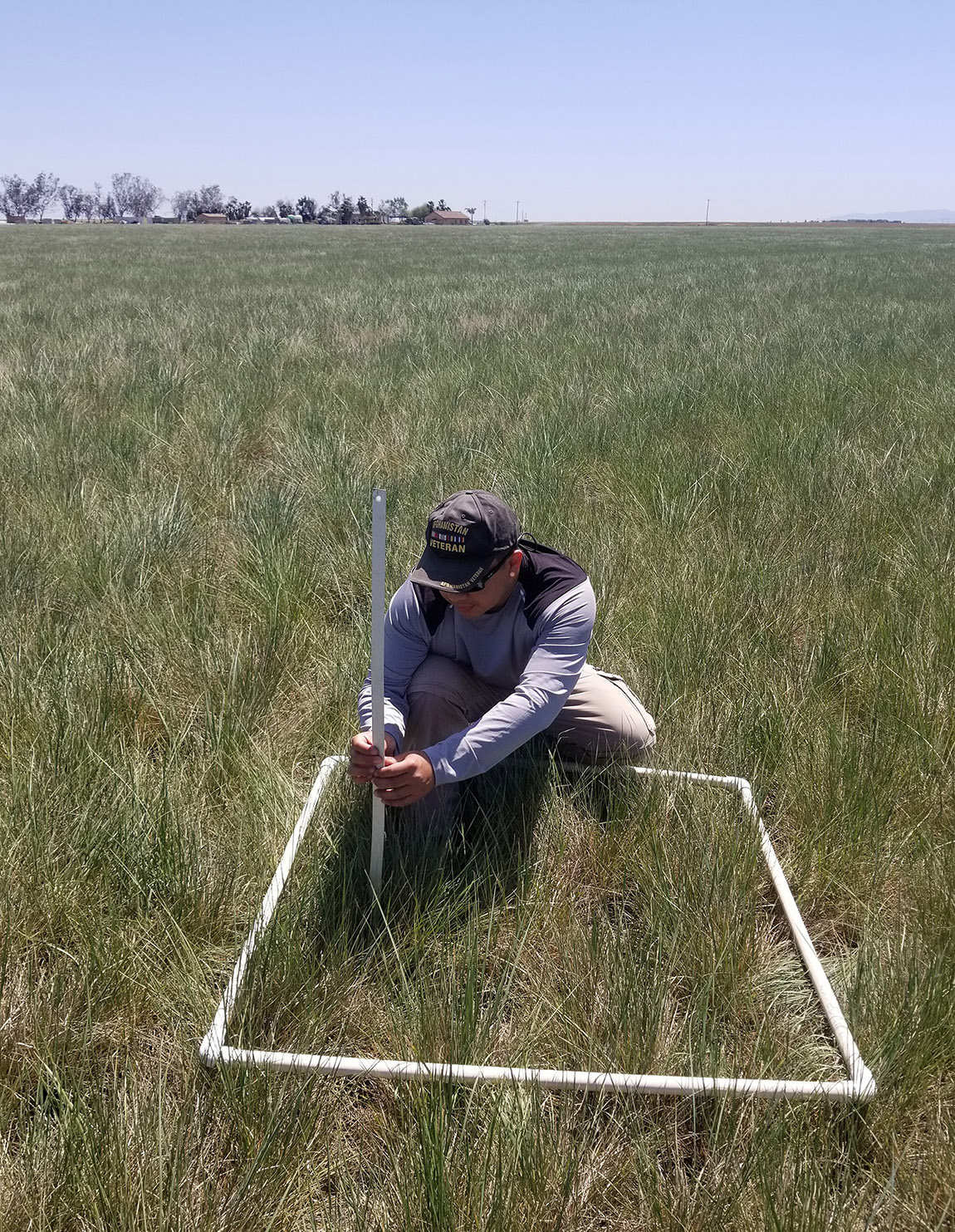
Working with faculty member Dr. Sharon Benes, his research is focusing on using satellite imagery to help determine the effectiveness of using reclaimed high-saline water as an irrigation source for Jose Tall Wheatgrass (a possible feed crop for livestock).
Read more about his journey to Fresno State and its unique opportunities exploring new directions in sustainable agriculture at: https://bit.ly/FS23-mauricio-soriano
Why did you choose to attend Fresno State, and how did you pick the plant science major?
I chose Fresno State because it offered a master’s in plant science, and it was important to me that that would be the title of my degree. Also, after I conducted a campus tour, I learned that Fresno State had the most agricultural land on campus than other California universities so I knew there would be a lot of opportunities for me to learn about agriculture here.
I picked plant science because during my first deployment to Afghanistan I came across a cannabis plant on our base and while everyone stayed away from it. It blew my mind that here in the States at the time cannabis was looked negatively upon, but over there it was a crop grown like anything else. This puzzled me and drove me to learn more about plants. During my time overseas I realized I enjoyed being outdoors in nature, and I want to do what I can to conserve it. These ideas just fell together and led me here.
Which classes and faculty members had the biggest influence on you while at Fresno
State?
Dr. Sharon Benes has had the biggest influence. She has been very supportive and has given me the tools to be successful. I recognize how hard she works for her students and that motivates me to work harder and do more.
Also, Dr. Dave Goorahoo and his course Soil, Plant, and Water Relations (PL251). This class allowed me to be creative and freely ask questions I was hesitant to ask others.
Lastly, Dr. Anil Shrestha and his Agroecology class (PL250). This course helped me put the ideas I’ve learned about sustainability into an agricultural setting. He also allowed me to share ideas that I thought may be too far-fetched while helping me realize that they may not be as crazy as I think.
 Have you been involved with research on campus, and how will it benefit your career
path?
Have you been involved with research on campus, and how will it benefit your career
path?
Yes, I am currently working with Dr. Sharon Benes on the effectiveness of using satellite imagery to predict yield in Jose Tall Wheatgrass grown in high saline soils in the western San Joaquin Valley. Water shortage is a big problem in the Central Valley, which has increased the demand for the use of alternative waters. Alternative waters can be used to irrigate crops but presents its own set of challenges like salt accumulation in the root zone which can lead to stress.
I believe this project will benefit my career path because there are few people that study soil dynamics. Also, I am learning a new set of skills with the use of satellite imagery and GIS. This study allows me to contribute my studies to a real-world problem that doesn’t have a perfect solution, some applied research if you will. Lastly, gaining some research experience and publishing our findings will help me enter a PhD program.
What was your background in agriculture before you started at Fresno State?
I did not have a background in agriculture before Fresno State except for the summer I volunteered at the university farm in Colorado. Prior to that I was surrounded by agriculture in Santa Maria, but I was not hands-on until I moved to Colorado.
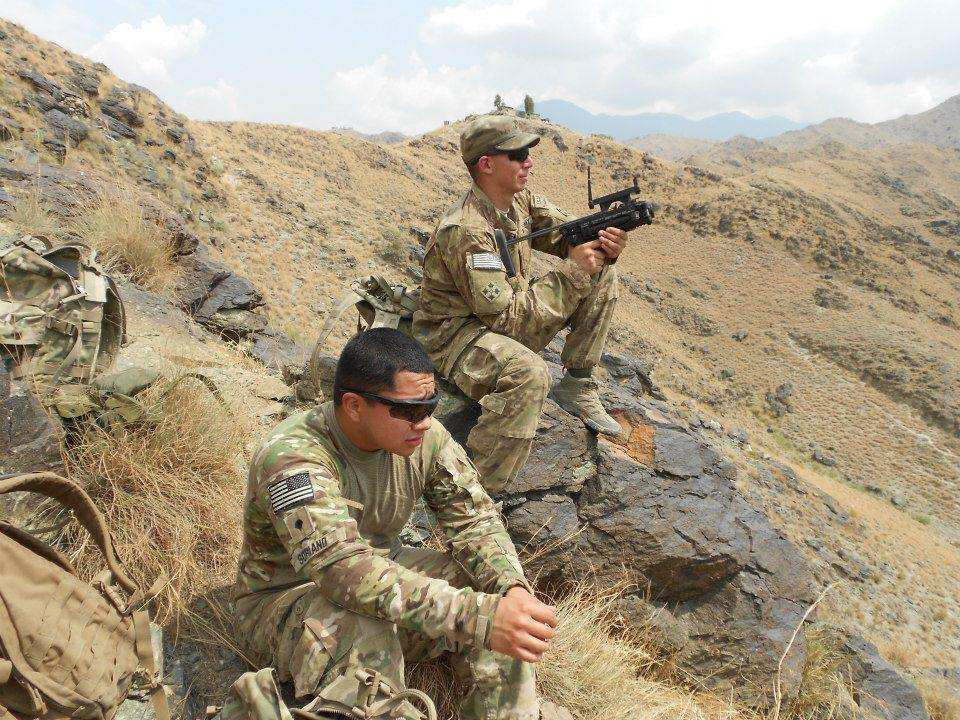 Give us a little more background about your military service.
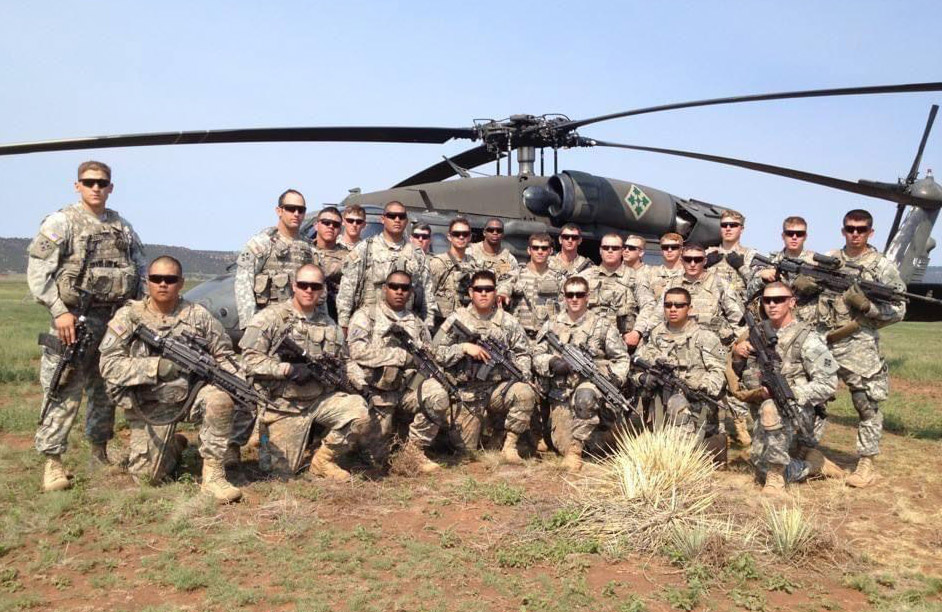
I served in the Army from 2011 to 2015 as an Infantryman. I conducted basic and advanced individual training at Fort Benning, GA before being stationed at Fort Carson, Colorado. Later, we would go on to conducted pre-deployment training at Fort Irwin, CA and Fort Polk, LA. During my deployments we often moved and traveled a lot. During my first deployment we stayed at FOB Joyce and COP Fortress in Kunar Province and FOB Tagab in Kapisa Province. During my second deployment we stayed at FOB Apache in Zabul Province. Eventually, I would be honorably discharged as a Specialist (E-4). In this time, I was awarded an Army Commendation Medal with three oak clusters, Army Good Conduct Medal, and Combat Infantryman Badge as well as various unit medals.
What were some of your normal responsibilities and duties?
As an Infantryman my duties were to stay physically fit, master our warrior tasks and drills (like tactical movements and hand signals), maintain our arms and equipment, which included firearms, trucks, and night-vision goggles. Additionally, we would conduct a lot of tower defense guarding and security, foot and vehicle patrols, clearing routes of explosives, and support the Afghan National Army.
How has your military service prepared you for your ag classes, research and career
path?
My service emphasized the importance of being at the right place, in the right uniform, at the right time. Also, paying attention to detail has been helpful with note taking, maintenance of equipment, or being out in the field and noticing subtle changes can make the difference. I strongly feel that these ideas are helpful in a class setting, and in research and in a career. You have to stay disciplined.
Have you received any scholarships related to campus, the Jordan College or Ag One
Yes, I am grateful to have received the Jordan Graduate Award, Ag One Harry Kubo Award, the Rodger and Margaret Jensen Scholarship, and the CPT. Leland Haun Scholarship. Thank you for your support!
Have you overcome any challenges to get where you are today that have shaped who you
are?
Yes. Everyone deals with challenges, but one that still drives me are the negative comments that I received from teachers and coaches. I have been told that I would not make it far in life or wouldn’t amount to anything. Maybe they really thought that, or they said it to motivate me. I’ve never really cared what people thought of me, even when I heard these words, I remember thinking, “You don’t know me or know what I am capable of.” Since then, I feel that I have proved them wrong. If I could share some words of encouragement, it would be not to let anyone put you down or allow their words to prevent you from reaching your goals.
Are there any other interesting notes about yourself that you would like to include?
I hope to someday become a Pokemon professor, and I enjoy headbanging in my car while listening to heavy metal.
What's your potential next career step, and where do you plan to work upon graduation?
After graduation I hope to work for the USDA and gain more research experience while I continue exploring doctorate programs.
When do you intend to graduate?
Spring 2024