The Jordan College of Agricultural Sciences and Technology
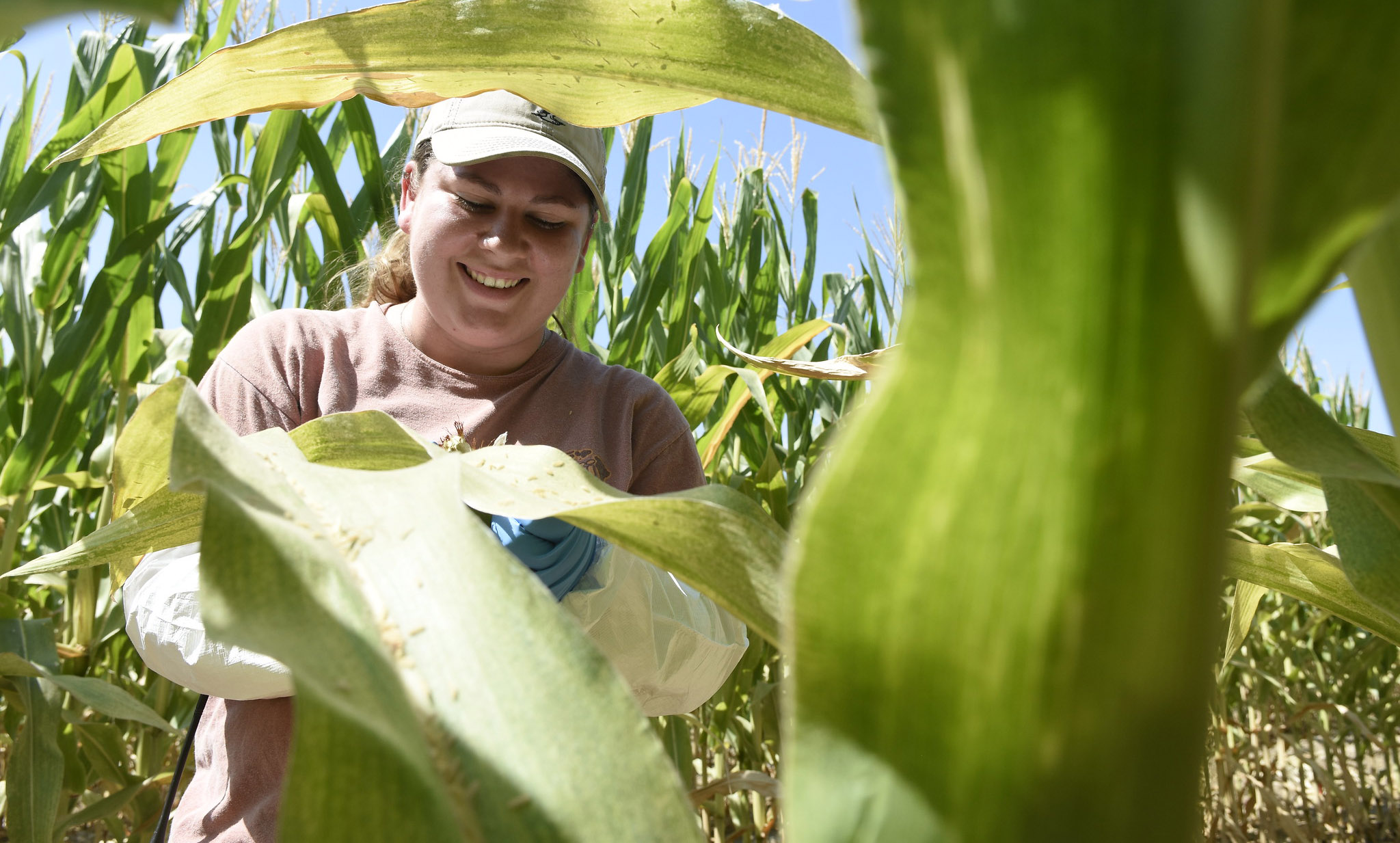
#FresnoStateGrad Kiera Searcy might have completed her plant science undergraduate degree last December, but you might not have guessed it because of how busy she has been on campus since then.
Earlier this semester, the Hanford native won first place in a California Weed Science Society research poster competition for her work comparing chemical and no-chemical weed control methods for lavender plants in a nursery lathe house.
She has assisted faculty Dr. Anil Shrestha in research examining chickweed herbicide resistance in the Central Valley. A former campus horticulture unit assistant, she has also helped propagate 3,000 to 4,000 seedlings for a Sierra Club Merced Chapter milkweed project to increase monarch butterfly forage areas.
Besides a summer internship with Bayer Crop Science, community outreach has been another focus for her, and she has lent her experience to the Insight Garden Program at Avenal State Prison, Amendola Family Student Cupboard, 4-H groups and student tours at the campus nursery.
The national tri-society student recognition recipient has also been a campus irrigation club treasurer, FFA Field Day volunteer, and member of the campus soils club, Plant Science Club and arboretum task force.
Learn more about her background in this recent interview before she heads to the University of Kentucky to start a graduate program in weed science
Q: Why did you choose to attend Fresno State, and how did you pick your major?
“I chose to attend Fresno State because of its solid, agriculture program. Originally, I was a pre-nursing major, but it didn’t feel like it was my true passion. I immediately changed to plant science when I officially became a student. My mentor, Dennis Mann, encouraged me to look into a career in plant science because I loved it. I hadn’t ever considered pursuing a career in agriculture and was set on pre-nursing until he showed me that I could change my mind.”
Q: Did you have any other family members graduate or attend Fresno State?
“I have a younger sister, Jenna Searcy, who attends Fresno State as a pre-nursing major.”
Q: Which classes and faculty members have had the biggest influence on you while at Fresno State?
“The classes that have had the most impact on me while at Fresno State have been Plant 160 - Weeds with Dr. Anil Shrestha, Plant 162 - Entomology with Dr. Jacob Wenger, Plant 172 - Soils with Dr. Sharon Benes, and Plant 107 - Plant Propagation with Mr. Jacob Hurst. The faculty that have had the most impact on me are Dr. Shrestha, Calliope Correia, and Jacob Hurst.”
“Dr. Shrestha is easily one of the best professors at Fresno State and wants his students to do the best they possibly can do and it shows. He encouraged me to apply to graduate school and to get more involved in the research atmosphere. He has gone above and beyond to help me succeed and I genuinely appreciate it.”
“Jacob Hurst is a very supportive and understanding lecturer. He has been very helpful in comprehension in course material and how it relates to the world, not just in a purely academic setting. His broad expertise and knowledge helped me navigate through challenges and do the best I could possibly do. He has been very influential in my decision to pursue a career in research and showed me that I should not undersell myself.”
“Calliope Correia is an excellent mentor. I learned so much working with her at the horticulture unit. There was so much more than just dealing with plants, but also teaching me how to work with people, be flexible, and be a better person overall. I appreciate that she helped me make a ton of connections with people from all different walks of life and broadened my mindset.”
Q: Talk about which campus farm units you have worked at, when you started, types of responsibilities, and skills you have learned that you can apply to your career.
“I worked at the Ornamental Horticulture Unit from February of 2020 to January of 2023. The responsibilities that I had included: daily plant nursery tasks such as weeding, transplanting, propagating, preparing soil medium, irrigation & maintenance work, tractor operation, field maintenance, and the harvesting of cut flowers.”
Q: Have you been involved with research on campus, and how will it benefit your career path?
“I have been involved in undergraduate research with Dr. Anil Shrestha comparing weed control methods in a container nursery lathe house setting. This helped me learn the fundamentals of research, how to set my own experiment, and how to follow through with all of the necessary steps. Research is truly a group effort and it taught me that I have to ask for help and collaborate with people to have the best possible results. Going to graduate school will help me focus more on research, and set up a strong foundation for what I will be doing for my career.”
Q: Describe the research, and issues it’s addressing, variables being compared, how it will benefit industry, growers, community, etc.?
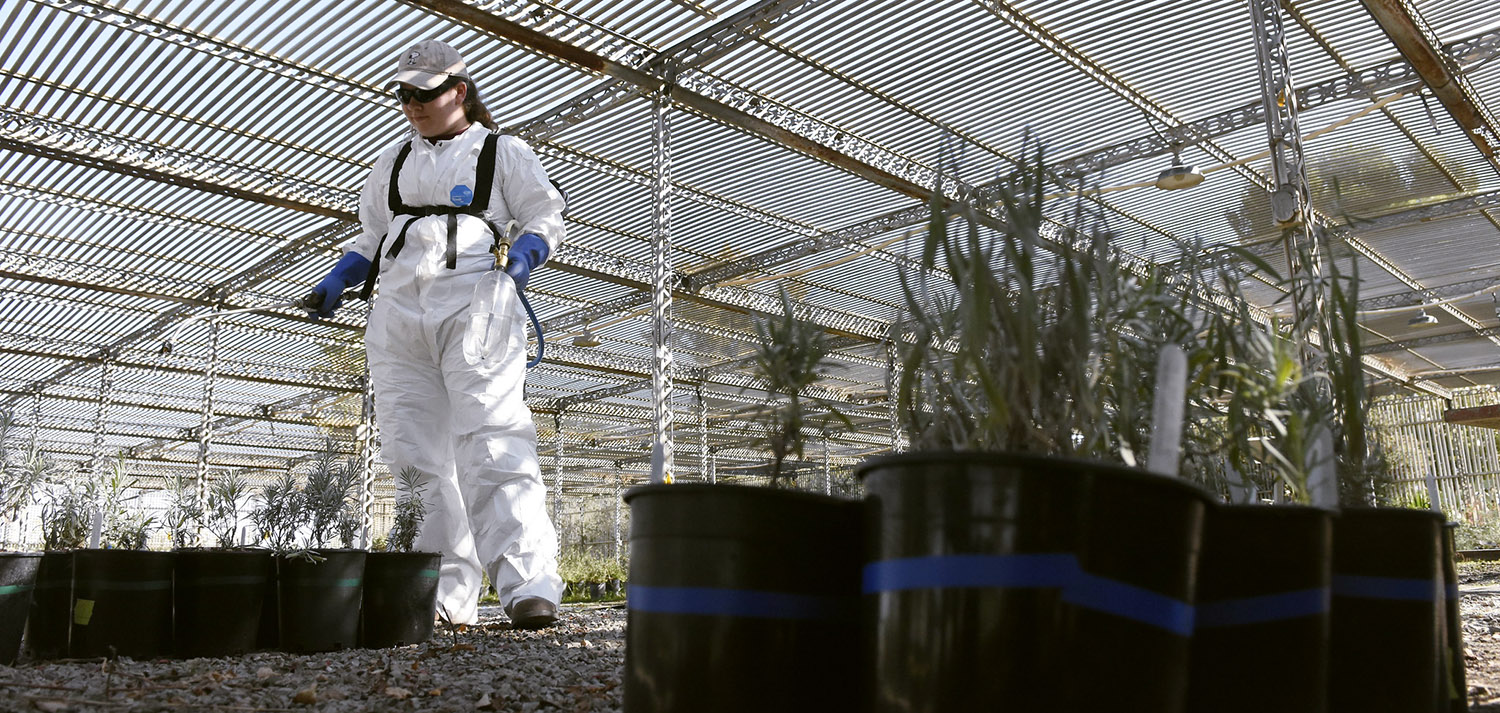
"The research compared weed control methods in a nursery setting, which can be a challenge due to the limited amount of herbicides and alternative management techniques. The herbicides available are not suited for mixed production. While propane flaming is an option on lathe house floors, it can also be expensive as weeds tend to regrow, necessitating flaming to be done every two to three weeks. Furthermore, hand weeding is one of the main methods of weed control, but can be very expensive and cumbersome in potted nursery plants. This oftentimes is not feasible due to how frequent and how much labor would be required to do so. Therefore, alternatives to hand weeding in ornamental nurseries and lathe houses need to be explored.”
“Studies were conducted in a lathe house at the Fresno State Horticulture Unit. Lavender (Lavandula x intermedia ‘Grosso’) plants were grown in pots with nursery soilless media and the pots were treated four days after transplant with six different treatments. There were four pre-emergent herbicide treatments and two plant-based mulch treatments. Weed counts were taken every week to see what weed species emerged, and what treatments were effective in comparison to the others. There were no differences between the pre-emergent herbicides treatments, and they lacked weed control. The two, plant-based paper mulches had complete control with no weeds germinating. However, half of the plants in each treatment died because the roots were too wet. I set up the experiment, collected data, and analyzed the data with Dr. Shrestha.”
“With growing cases of herbicide resistance and calls for a more integrated approach to weed control, this could be useful in the nursery industry combined with other techniques to limit the amount of weed emergence and maximize weed control.”
“Dr. Anil Shrestha, Calliope Correia, and Jacob Hurst were all instrumental in conducting the experiment. Corteva Agriscience donated the herbicides. Kings River Commodities donated the rice hulls. Ryan Cox donated the woven weed barrier. The Fresno State Horticulture Unit provided the space, growing media, and number one nursery containers.”
“There were no differences between the pre-emergent herbicides treatments, and they lacked weed control. The two plant-based paper mulches had complete control with no weeds germinating. The weed woven barrier had complete control of weeds in comparison to the uncovered gravel.”
Q: What was your background in agriculture before you started at Fresno State?
“My family owns an auction business that auctions off and appraises used farm equipment, and I have been involved in the business since I was nine years old. Additionally, I raised dairy heifers in high school and was extremely involved in the FFA organization.”
Q: Describe any internships you've done at Fresno State, your responsibilities, and how it has prepared you for your career path?
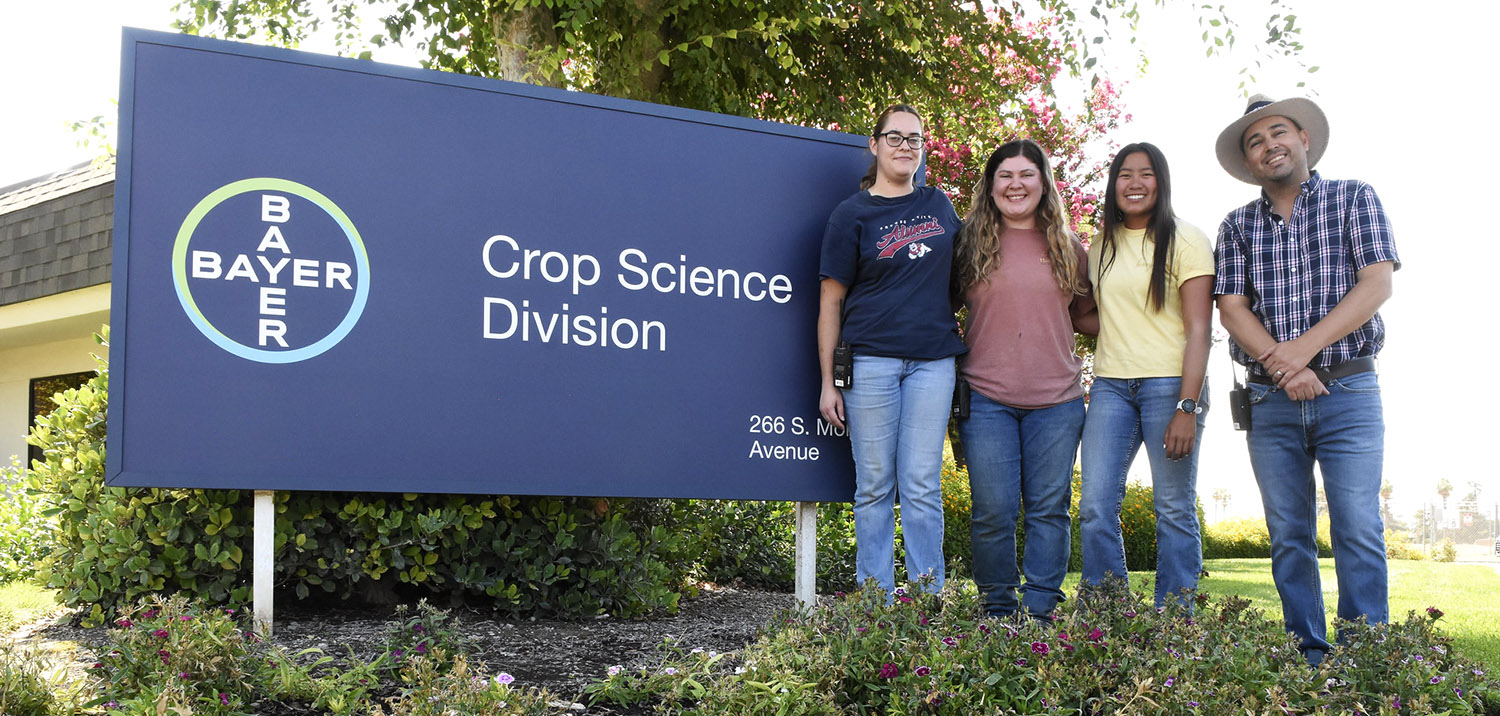
“While at Fresno State, I did an internship at Bayer Crop Science. My internship duties included: assisting in crop and trial establishment (i.e. measuring and labeling plots, planting/transplanting crops, establishing irrigation systems, etc.), assisting research scientists in mixing and application of crop protection products, evaluating plots for efficacy; reporting any unusual observations, trial maintenance and station maintenance, and data entry. This internship was an excellent experience and helped uncover my love for research and helped me decide to pursue a graduate degree after completing my bachelor’s degree.”
Q: Are you a part of any other clubs/organizations at Fresno State and any noteworthy activities or competitions?
“I was involved in the Irrigation Club as the Treasurer, student representative of the Arboretum Committee, and senior chair for the Operations Subcommittee for the FFA Field Day event.”
Q: Have you received any scholarships related to campus, the Jordan College or Ag One?
“I have received several scholarships related to the Jordan College or Ag One including: an Ag Scholar Student Recognition Award from Assemblyman Jim Patterson, California Weed Science Society Scholarship, 1st Place Undergraduate Poster Presentation - CWSS, California Pest Control Advisor Travel Award, Central Valley Women for Agriculture Scholarship, Plant Protection Golf Association Larry Palamore Scholarship, The Flavor Tree Fruit Company Scholarship, Valley Growers of Local Sunsweet Growers Inc. Scholarship, Irrigation Association Scholarship, Richard Peters Scholarship.”
 Q: What's your potential next career step, and what field would you like to work in
after graduation?
Q: What's your potential next career step, and what field would you like to work in
after graduation?
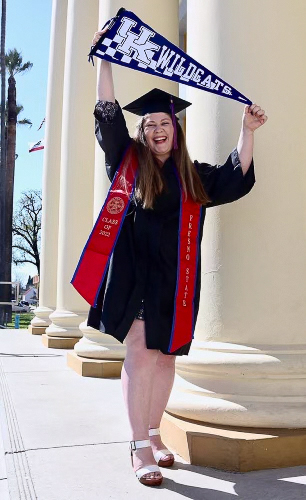
“I am going to graduate school at the University of Kentucky to study weed science. Specifically, my project will be in studying cover crops in cropping systems and encouraging a more integrated, sustainable approach to weed control; furthermore, rather than relying on herbicides to do most of the weed control. Upon completion of my master’s I hope to join a PhD program and further my studies in weed science or agroecology. After getting my PhD, I would like to become a university professor and be able to have the same impact on students as the faculty/staff at Fresno State have had on me. I would like to have the opportunity to conduct research and teach undergraduate/graduate students.”