The Jordan College of Agricultural Sciences and Technology
Plant Science Student Spotlight: Jesus Raymond Mireles
#FresnoStateGrad Jesus Raymond Mireles has greatly benefited from the Jordan College’s unique ties to industry by receiving a fellowship from Bayer Crop Science, an international leader in crop protection products, to attend graduate school while working at its local research station.
Members of the Visalia native’s Mexican-American family had ties to agriculture, but he himself had limited exposure growing up. It was only by chance that he took a high school horticulture landscape class and got a first glimpse of agronomy.
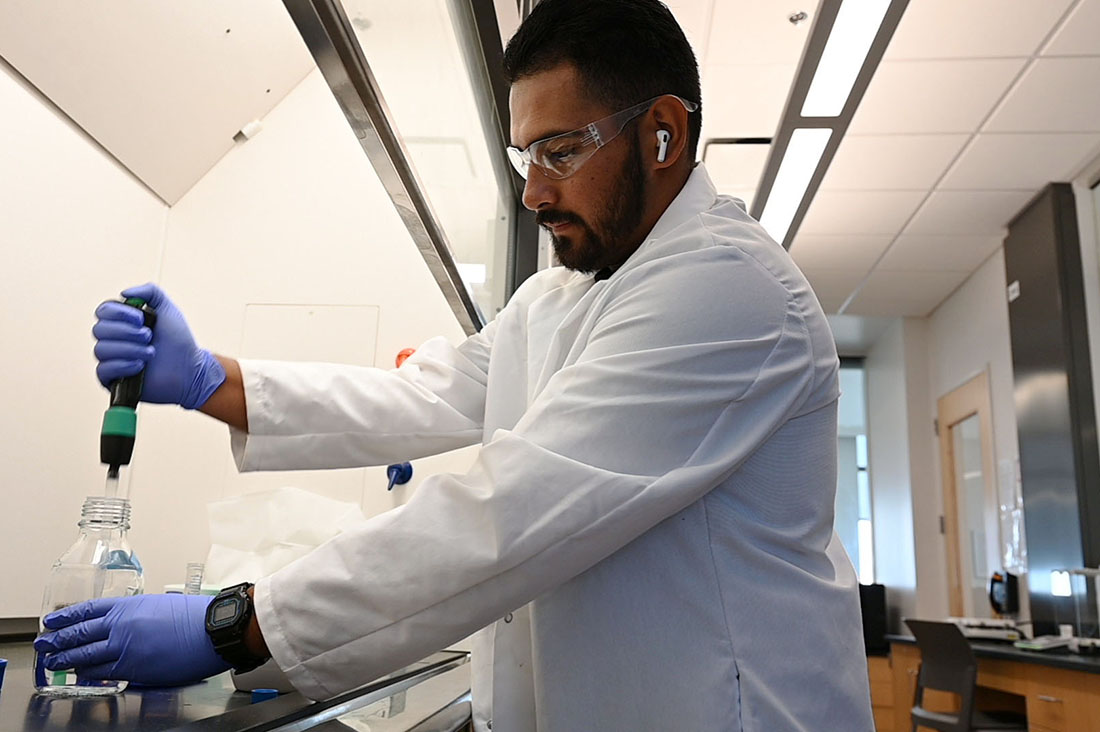
At Fresno State, his academic confidence has soared from his hands-on-experience as an undergraduate and graduate student (and recent research on how drone technology can measure spider mite damage in almond orchards). He presented his findings at the annual Entomological Society of America convention last fall, which also honored him with its Alate Award - a nationwide honor for students at minority-serving institutions who excel in entomological studies, research and service.
Read how his studies, research and mentorship through our Fresno State Plant Science Department and Bayer have confirmed his research scientist career direction, as he hopes to study how crop protection products can improve Central Valley grower practices in this recent interview.
Q: Why did you choose to attend Fresno State, and how did you pick your major?
“Ever since I was little I knew that I was going to college, as it was a requirement by my parents in order to live under their roof. My parents always wanted to attend college, however, it was not financially attainable. Given that Fresno State was only an hour away from my hometown and financially feasible for my family, I decided to pursue a Plant ScienceBachelor's Degree. Not only that, but watching Fresno State football and baseball games as I grew up engrained a sense of belonging. As soon as I stepped on campus I always felt at home.”
“Growing up in the Central Valley, agriculture was always around me. However, I did not think of agriculture as a possible career choice until I was a senior at Golden West High School. I was mistakenly put into an ornamental horticulture class my senior year of high school, and instead of dropping the class I decided to attend. In this class I found interest in landscape architecture, which later evolved into an interest in plant science.”
Q: What do you consider your hometown and /any ties your family had to agriculture?
“I am a native of California's Central Valley, and born and raised in Visalia. Both of my parents (Sally and Jesus Mireles) are from Lindsay, which is approximately 20 minutes from Visalia. Once married they moved to Visalia, where my older sister (Olivia Mireles) and I were born and raised.”
“My grandparents (Benito and Maria Mireles) on my dad’s side were originally from Monterrey, Mexico. They came to the U.S. looking for work picking various crops in Texas and following work, which eventually landed them in Lindsay. “My grandparents (Tony and Lupe Guzman) on my mom’s side were born and raised in California as first generation Mexican-Americans. Similarly they followed farm work, which led them to Lindsay.“
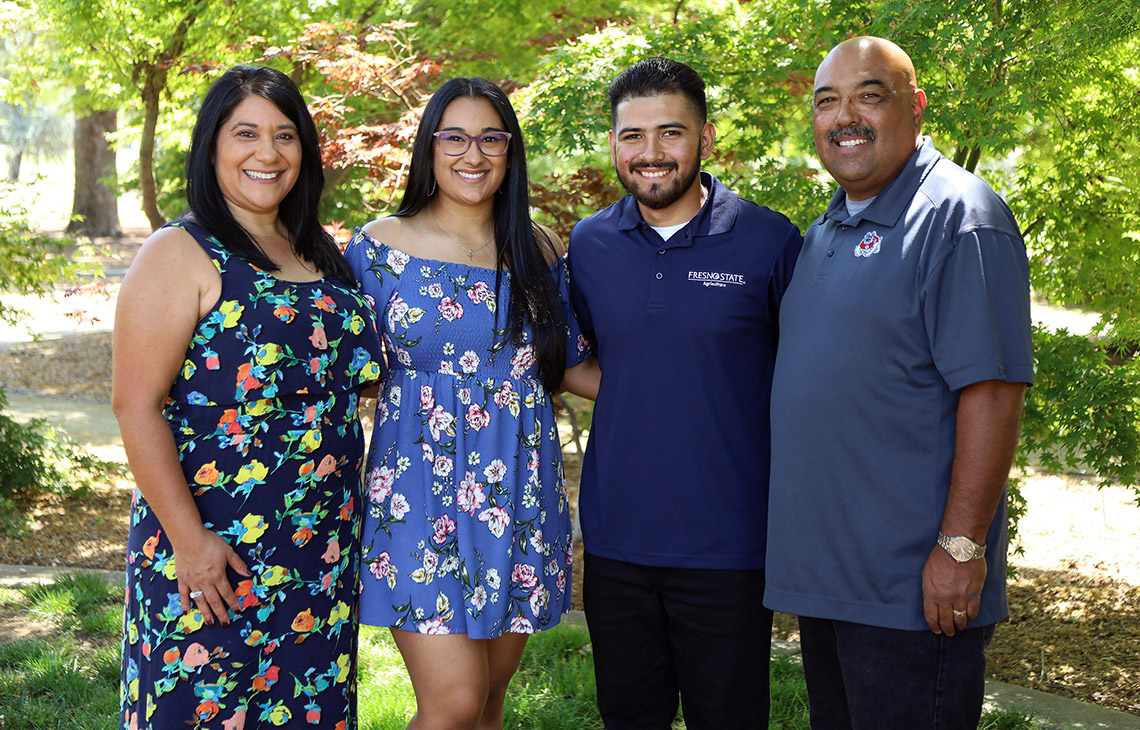
Fresno State graduates Jesus Raymond Mireles and Olivia Mireles with parents Sally and Jessie Mireles.
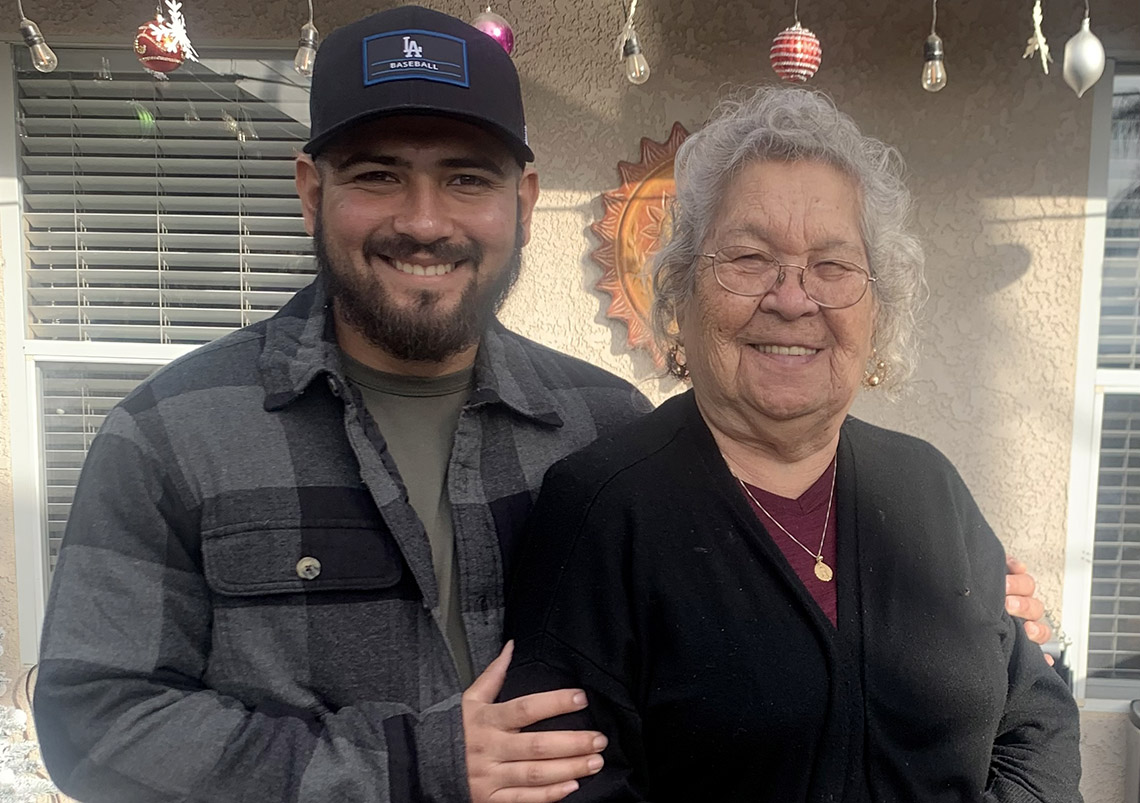
Fresno State graduates Jesus Raymond Mireles with grandmother.
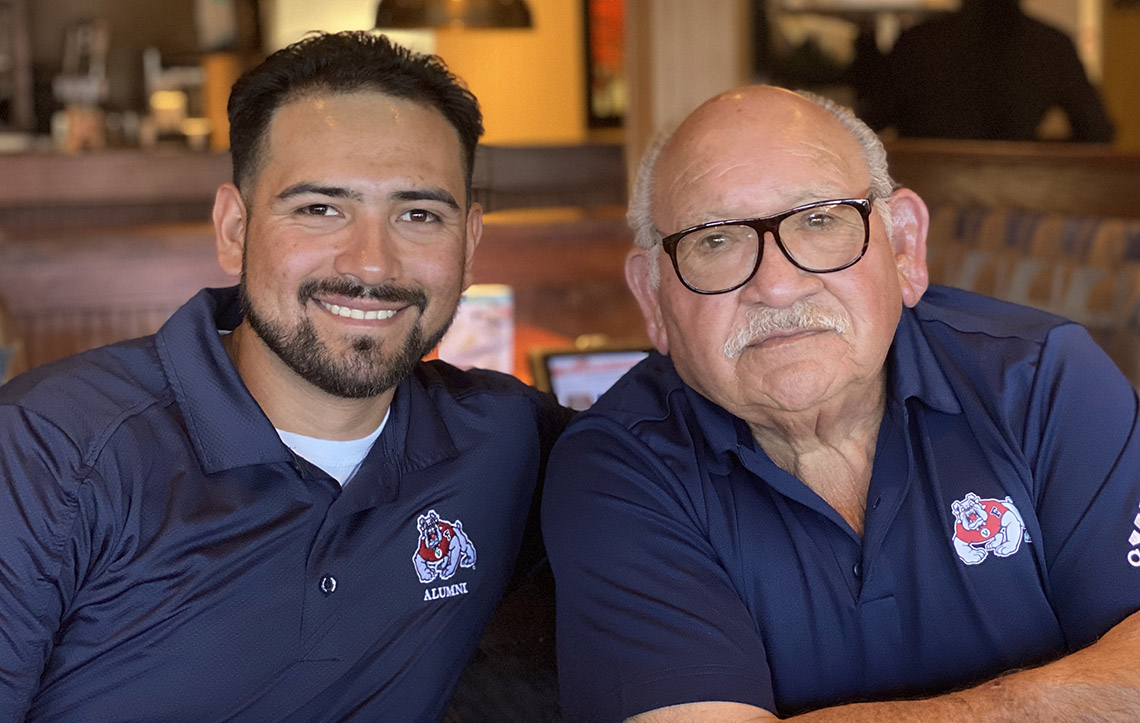
Fresno State graduates Jesus Raymond Mireles with grandfather.
Q: Did you have any other family members graduate or attend Fresno State (and include their names, relationship to you, and degree areas)?
“The first person to attend a university in my family was my older sister, Olivia Mireles. She graduated from Golden West High School in 2013 and attended Fresno State immediately after graduating. She graduated from Fresno State with her Bachelor's Degree in Kinesiology in 2018. She is currently pursuing her Doctorate in Physical Therapy at Fresno State and is projected to graduate in 2025. She always encouraged me to never settle in my academic journey and was never hesitant to help me along the way. She is one of the strongest and smartest people I know, and it is great to see Fresno State provide her an opportunity to pursue her dreams as a physical therapist.”
Q: Which classes & faculty members had the biggest influence on you while at Fresno
State and why?
“I had a lot of great professors throughout my six years attending Fresno State. I always felt like they were looking out for my best interest and wanted me to succeed. I can remember the small conversations I would have with some of my professors about my future, and I feel like those short conversations really helped with my development as a student and as a professional in my field.”
“I cannot thank my graduate school advisor (Dr. Jacob Wenger) enough for all of the help he has given me. Ever since I started the master’s program he has always guided me in the right direction. He has been instrumental in my development as a scholar and a scientist. One of the best moments with Dr. Wenger was when we attended the Entomological Society of America conference in Vancouver, British Columbia. It was good to get to know Dr. Wenger outside of the classroom. He truly is a selfless person who is always willing to help you succeed.”
“I remember having a conversation with Dr. (Sharon) Benes in my last semester of my undergraduate year (Spring 2020). I decided that I wanted to continue my academic career and pursue a Master's Degree in Plant Science. Being a first generation college student, I had no idea of the necessary steps in order to apply for a graduate program. I scheduled a meeting with Dr. Benes, and she was kind enough to break down the requirements for the master’s program, while also giving me a realistic idea of what to expect as a grad student.”
Q: Have you been involved with research on campus, and how has it benefitted your career path?
“In 2019 I briefly assisted Dr. (Anil) Shrestha and student Gabrielle Celaya-Finke in a project that was investigating the use of lasers to control weeds. My assistance was sadly cut short due to the pandemic. Nevertheless, this was the first research project I was a part of and where I was able to refine my skills as a researcher. I was introduced to methods of data collection and analysis, which would be beneficial in my master's thesis project.”
“My master’s thesis was titled ‘Utilizing Remote Sensing Technologies to Monitor and Quantify Spider Mite (Tetranychus spp.) Damage in California Almonds (Prunus dulcis).’ Since there was no research exploring this topic, we thought it would be beneficial to explore using cameras on drones since it has the potential to save researchers and growers time and money.”
“The experiment entailed drone flights over almond orchards located at the Bayer Crop Science Western Field Technology Station near Fresno. Along with the drone flights, spider mite counts, visual damage assessments and chlorophyll measurements were taken (that were analyzed in Dr. Brar’s lab in the Jordan Agricultural Research Center) to determine if drones could replace or supplement time consuming human-based assessments of spider mite damage.”
“I was subject to a strong learning curve with the drone technology and post-processing of drone images, yet, I was able to overcome this challenge by taking Dr. Seth’s course IT 286 Applied Spatial Technology, where I was able to learn and gain experience in Geographical Information Systems software. This was instrumental in my research as it gave me the appropriate knowledge to acquire relevant plant health metrics using drones.”
“Throughout the research there were many challenges from the data collection to the data analysis. It definitely challenged my critical thinking skills. I was glad to have the support of my thesis committee (Dr. Wenger, Dr. Brar, Dr. Michael Schlemmer (Bayer Crop Science) and Dr. Raksha Kuenen (Bayer Crop Science)) as they were able to assist me in every step of the research process.”
Q: What was your background in agriculture before you started at Fresno State?
“I do not come from an agricultural background. My grandfather on my mother’s side was a spray manager for Sun Pacific, however, by the time I knew that I wanted to seek an education in plant science he had already retired. Growing up in the Central Valley with agriculture being all around, I knew that a career in agriculture was always an option. I intend to stay in the Central Valley so I wanted to pick a profession that would keep me here.”
Q: Describe any internships you've done at Fresno State, and how they ahve prepared
you for your career path?
“In October 2018, I attended a career and internship fair at Fresno State. I handed out my resume to various ag-related companies, and one of them was Bayer Crop Science. Additionally, Bayer Crop Science hosted a meet and greet event in the JARC the same night I attended the career fair where we got to meet some of the research scientists and sales representatives. It was a great experience since it gave me a good idea of what type of careers Bayer had to offer. I ended up applying for a field operations intern position that assisted the research scientist in establishing and carrying out experiments involving plant protection research.”
“In March 2019, I was offered the position, to which I accepted. I am currently still an intern at the Bayer Crop Science Western Field Technology Station in Fresno. My first year as an intern I worked under Dr. Raksha (Rocky) Kuenen, who is the station's entomologist. I was able to gain experience in identifying common insect pests and their methods of control in California cropping systems. This was beneficial as I was able to carry this knowledge into Dr. Wenger's Economic Entomology and Integrated Pest Management courses.”
“In 2020, I worked under Dr. Drew Palrang who was the station's weed scientist at Bayer. I assisted Drew in everything involving herbicide screening. Additionally, I was able to assist Drew in operation of newly acquired drone systems. Here I was able to gain experience in the flying and testing of plant health detecting drones and was able to assist Drew and Dr. Michael Schlemmer (drone technology expert) in the development of a protocol for all new drone pilots within Bayer.”
“I owe all that I know about research to the Bayer Crop Science Western Field Technology Station. They exposed me to a different side of agriculture, as the main career path promoted for a plant scientist was a pest control advisor (PCA). Over the four years working there, I found a passion for research. Rocky and Drew are a big reason why I am interested in research now, and they are great models. They also encouraged me to attend graduate school and gave me tons of useful guidance and advice.”
“I have to thank Fresno State for building relationships with companies such as Bayer Crop Science. It provides students with opportunities to reach their goals both academically and professionally. Without the career fair, the experience I gained with Bayer would have never happened.”
“I also think my story and experience is a lesson for other students attending Fresno State who are hesitant to put themselves out there. I don't come from an agricultural background, and at one point I thought I was not capable of getting an internship because of this. I remember enrolling in a career readiness program that was put on by the Career Development Center. This resource helped me get my resume and cover letter ready for the career fair, and I believe that was a defining factor in being a strong candidate. Fresno State has the necessary tools to get students ready and start on their career paths, yet, it is up to the student to utilize these tools.”
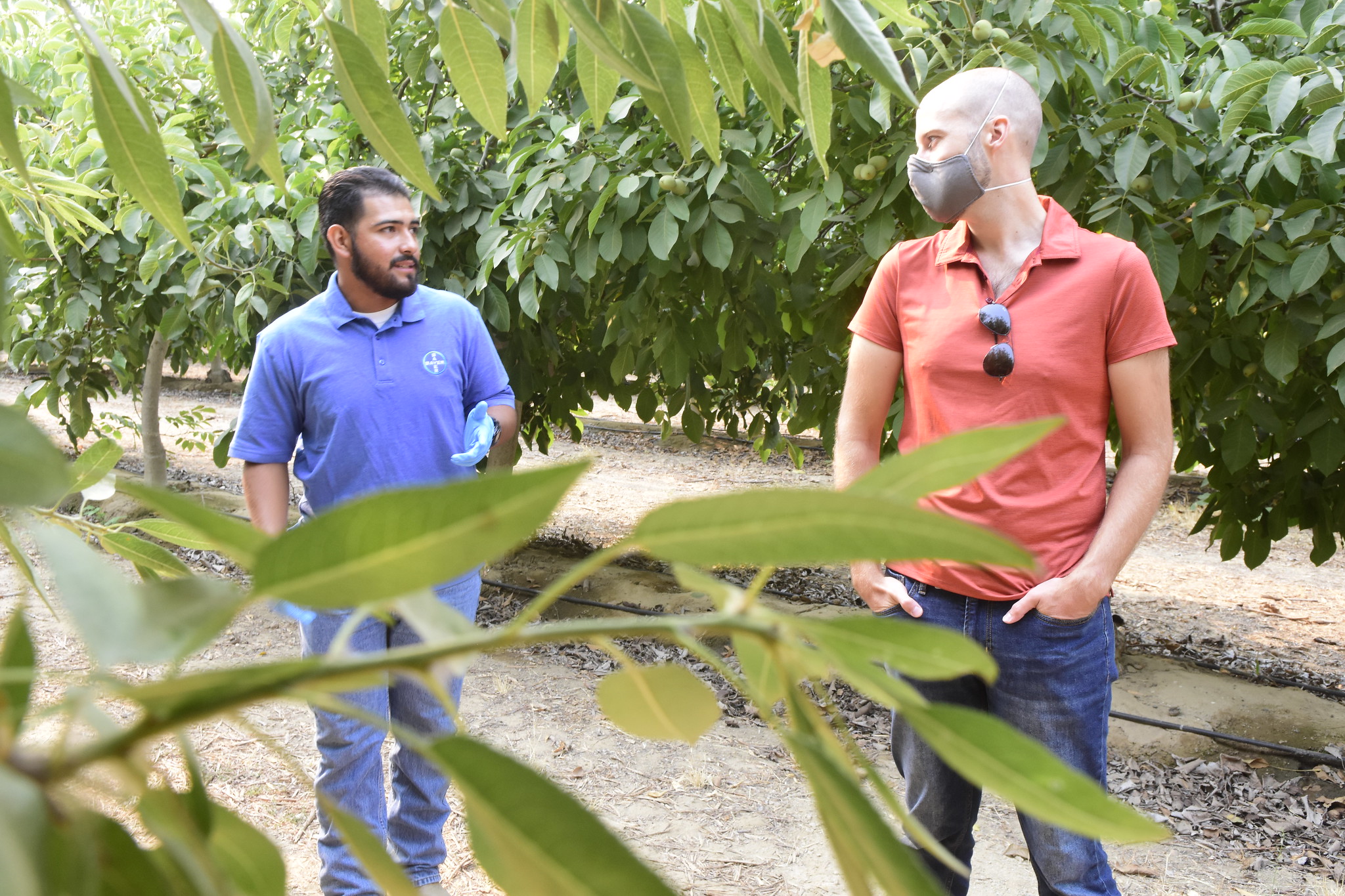
Fresno State plant science students and Bayer interns Jesus Mireles and Arik Bains with research station manager Alfonso Cabrera at Fresno Bayer Crop Science Research Station.
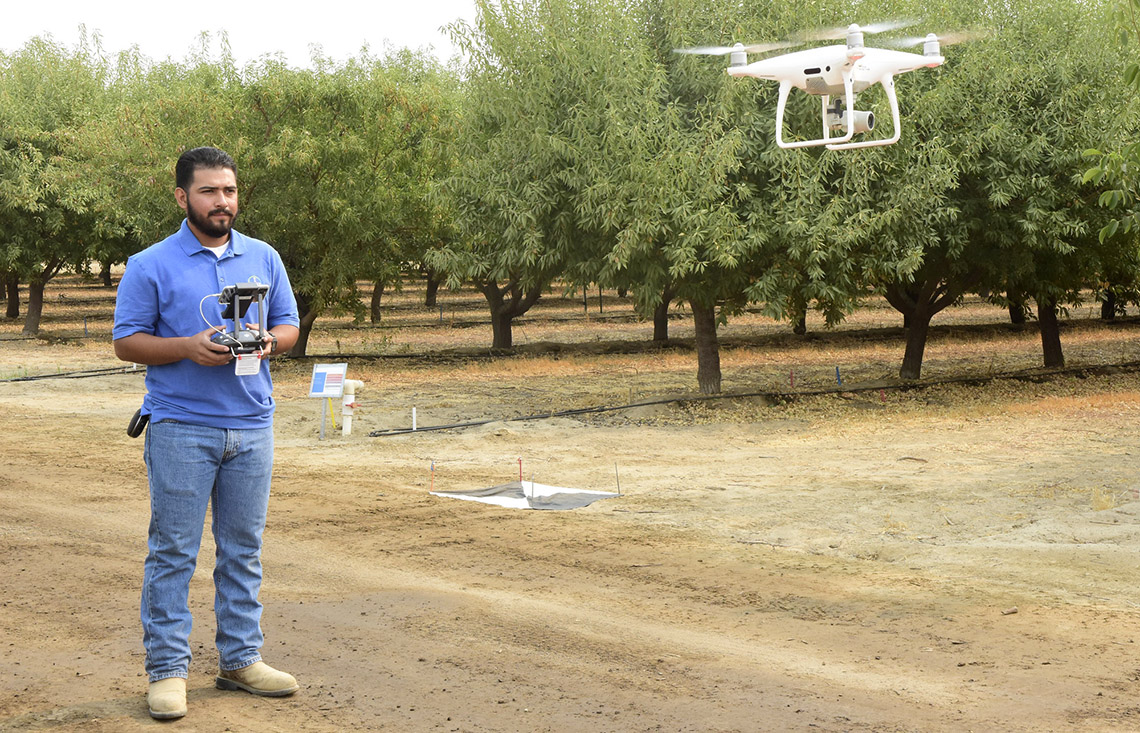
Fresno State plant science students Jesus Mireles, Arik Bains, & Bayer employee Drew Palrang at Bayer Crop Science Research Station.
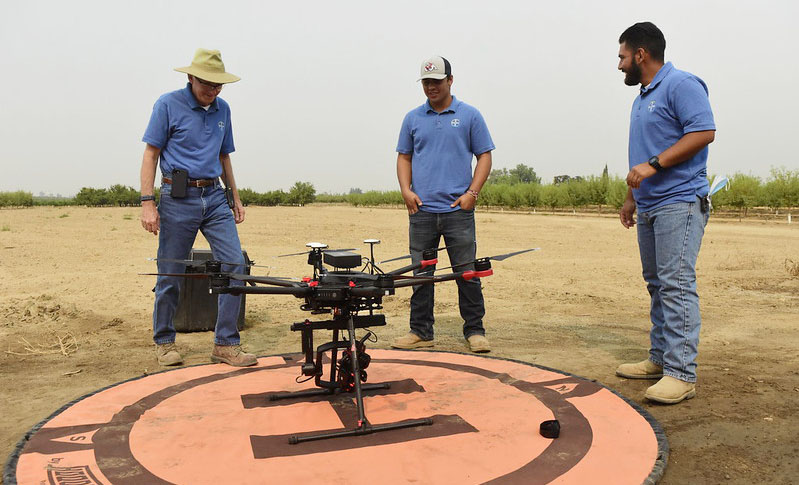
Fresno State plant science students Jesus Mireles, Arik Bains, & Bayer employee Drew Palrang at Bayer Crop Science Research Station.
Q: Are you a part of any other clubs/organizations or outreach efforts at Fresno State?
“Besides being a part of the Plant Science Club (and its community food bank vegetable plots), I also served as an expert judge for a FFA Field Day competition where I evaluated students' pest knowledge and presentation skills for an oral presentation section. I also presented my graduate research (alongside grad school classmates: Kelsey Galvan and Gabrielle Celaya-Finke) to an eighth grade ag class at Fairmont Elementary School in Sanger as a way for them to be introduced to research ideas for their science fair projects.”
Q: Have you received any scholarships related to campus, the Jordan College or Ag
One?
“I received a fellowship from Bayer Crop Science, where all financial responsibilities were covered (Bayer Crop Science Masters Fellow). I attained the fellowship in my final undergraduate semester in the fall of 2020 and started my Fresno State's Plant Science Master’s Program in spring 2021. I am also a recipient of the Alate Award (2022) given by the Entomological Society of America, and I was given the opportunity to present a research poster at the ESA Joint Annual Meeting in Vancouver, BC.”
Q: Have you overcome any challenges to get where you are today that have shaped who you are?
“There were many challenges I had to overcome socially, academically and mentally throughout my college career. I had to sacrifice a large portion of my social life to study and complete my research, yet, I was fortunate enough to have a good group of people around me that understood the task at hand.”
“I was never a strong academic student. As a kid in elementary, middle and even high school I struggled to comprehend key concepts. Yet, I feel like once I reached the college level it all changed. I started to gain confidence in myself and learned my own strengths and weaknesses. I learned my own studying style and refined it with each semester.”
“There were multiple points throughout my journey where I wanted to give up due to the stress of it all (part time jobs, midterms/exams, research papers, master’s thesis). I would get to the point where I would ask myself, “Why am I doing this”, but luckily I had my family here to remind me why. I remember having long conversations with my mom, dad and sister where we would discuss all of the sacrifices made before us. My dad would bring up stories of his mom and dad working long, hot days in the fields harvesting various crops, asserting that they also asked the question, “Why am I doing this?” My dad would go on to say they worked long days just so we did not have to. They would put their bodies and minds under immense strain just so their family could survive. Stories like this one remind me why I get up every morning, so my family could have a better life. Stories like this motivate me to never give up and always have faith, because the day that I give up, is the day that my grandparents' hard work and sacrifices go in vain.”
Q: Are there any other interesting notes about yourself that you would like to include?
“I am proud of my academic standing in my undergraduate degree as I was able to achieve a 3.5 GPA, and I was able to achieve my master’s degree with a 4.0 GPA.”
“The paragraphs below are from the acknowledgements page in my master’s thesis, and I think it is worth bringing attention to because they are the reason why I am in the position I am in. If it was not for my professors, family and friends I don’t know where I would be.”
‘Foremost, I would like to give all thanks to God for blessing me with this opportunity. You have allowed me to enjoy the brightest times and persevere through the hardest times in my academia and research.’
‘I would like to acknowledge and give thanks to my thesis advisor, Dr. Jacob Wenger, for showing an immense amount of support, patience and understanding through all stages of my master’s thesis.” Additionally, I give the warmest thanks to my thesis committee Dr. Raksha Kuenen, Dr. Michael Schlemmer, Dr. Gurreet Brar, and others such as Dr. Drew Palrang and Rick Lambeth. Your guidance and advice were instrumental in my development and success as a student and as a professional.’
‘This accomplishment would not have been possible without the financial support from Bayer Crop Science, for that I am extremely thankful. Additionally, thank you to the employees of Bayer Crop Science Western Field Technology Station for providing the space and equipment necessary to carry out my thesis work.’
‘Many thanks to the Fresno State faculty and cohort members of the Department of Plant Science. Thanks also to the Agerpoint team in assisting and contributing to the successful accomplishments within my thesis work.’
‘I must also give special thanks for the help of the undergraduates and members from the Bayer Crop Science internship program. I would like to specifically recognize and thank fellow interns Arik Bains, Anabel Padilla, Evelyn Andrade, Jillian Gipson, Kiera Searcy and Satpal Sidhu.’
‘Lastly, thank you to my mom and dad, Sally and Jesus Mireles, and my sister, Olivia Mireles, for being my sources of inspiration and motivation. Your constant display of support and endless love and guidance is what has led me to the person I am today and to this momentous achievement.’