The Jordan College of Agricultural Sciences and Technology
| Picture |
|---|
 |
 |
 |
 |
 |
 |
 |
 |
 |
Agricultural Education Alumna Spotlight: Ronda Hamm
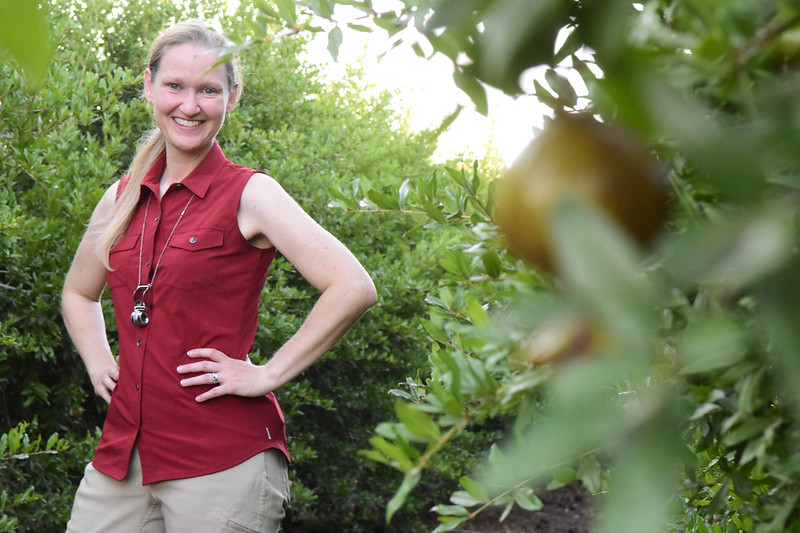
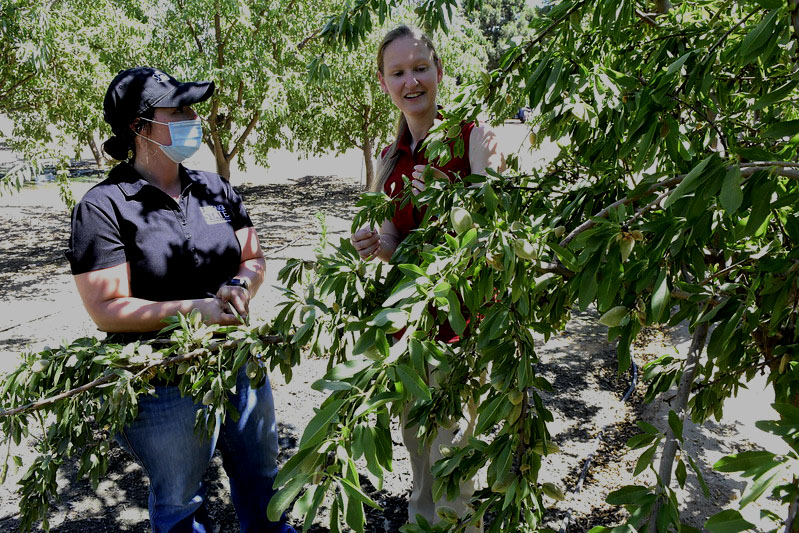
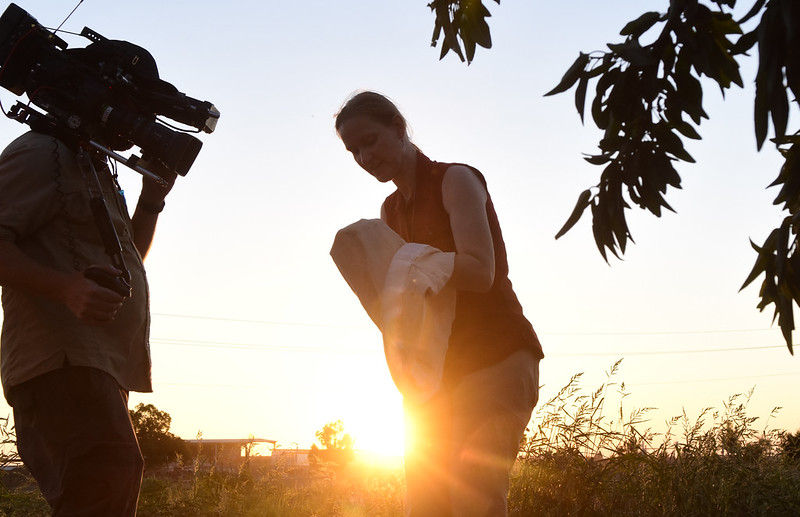
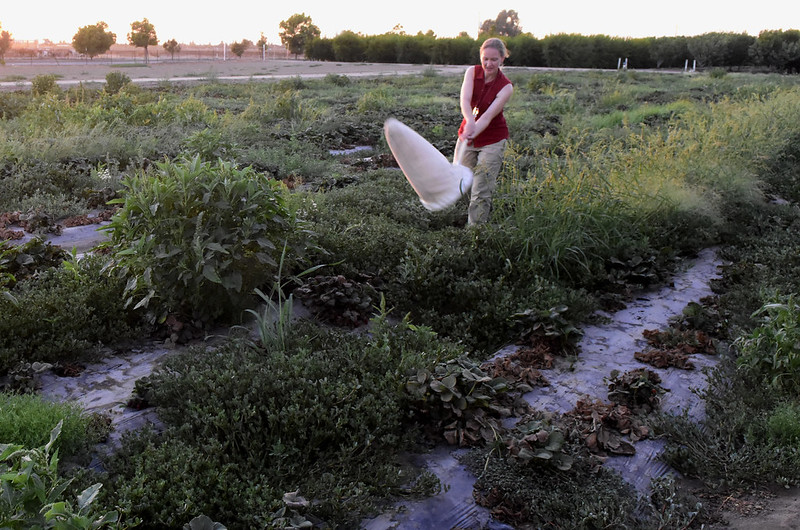
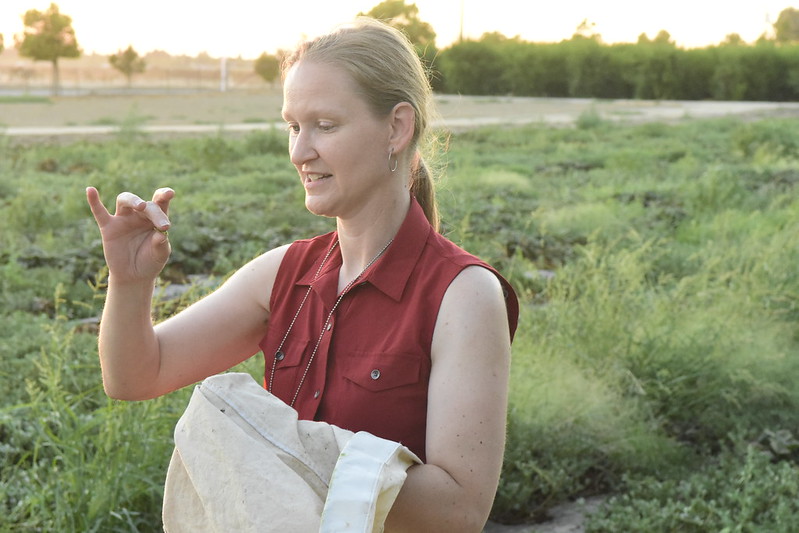
(Oct. 11, 2021) -- Our Fresno State University Agricultural Laboratory was the perfect site for alumna, Dr. Ronda Hamm, to talk about the key role that insects play in the food chain on the season three premier episode of Mission Unstoppable, a CBS weekly kids show (watch here) featuring female professionals in the STEM areas (science, technology, engineering & manufacturing).
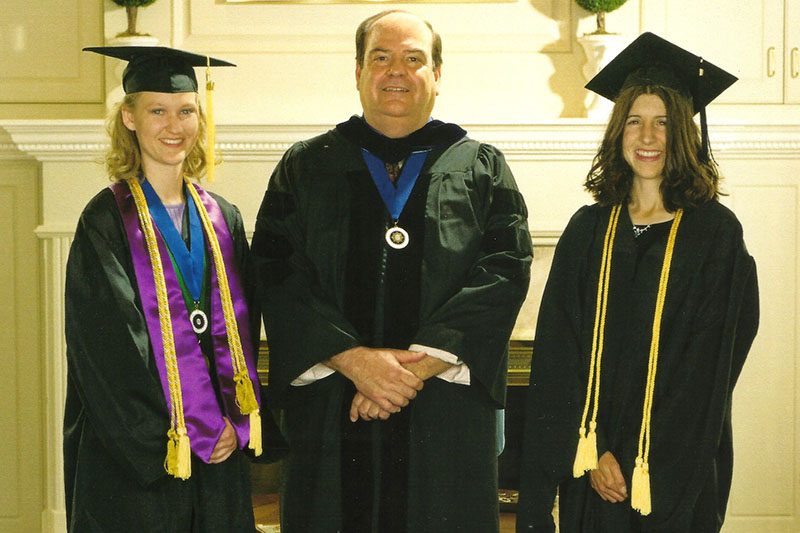
Her career path since receiving our Dean's Medalist undergraduate honor at commencement in 2001 has been impressive as she applied her agricultural education degree & entomology research in a host of industry positions & outreach efforts across the nation.
After graduating from Fresno State, she conducted insect research for her master's & doctoral degrees at Cornell; worked as a post-graduate lab technician & assistant for UC Riverside & UC Berkeley; & served as a patent liaison at Dow AgroSciences (after previous positions as a urban pest management biologist, & seed / traits / oils operations project leader).
Now she serves as a global academic relations leader for Corteva Agriscience, which has agricultural education programs that connect with audiences of all ages around the world.
Read more about her fascinating work & career path in this recent interview.
Q: Why were you drawn to your education-related position at Corteva and the agriculture industry?
Hamm: “I’ve always had a passion for education and outreach. It’s why I majored in agricultural education and have developed multiple STEM outreach programs. I describe my current role as my dream job that I didn’t know existed when I started in my career. I always thought I would be doing outreach as an “extracurricular” activity, and never as my full-time job. Agriculture is one of the few industries that touches every life, every day. If you want to work in an industry that has a global impact, helps people, and helps the planet, then agriculture is the place for you.”
Q: How did the CBS Mission Unstoppable kids show utilize your background with agriculture and insects on our campus farm for a recent episode?
Hamm: “Mission Unstoppable is focused on showcasing women in STEM to inspire the next generation. In the episode I focused on the tools that entomologists (someone that studies insects) use. As an agricultural entomologist we use these tools to determine the insect species present and the population density in the field. It’s important to understand the species to determine if they are pests or beneficial insects. The population size is important so we can determine if anything needs to be done to help the crop.”
Q: Since you now live in Indiana, how did Fresno State become the site for this video shoot?
Hamm: “The crew and producer were already based out of California. I already happened to be home visiting my family for two to three weeks over the summer, partly since the pandemic created a little freedom to work out of other locations virtually, so the timing worked out well. Based on my experience in college, I knew it was a great location to shoot because of the wide diversity of crops on the farm that were close together. This is where my career in ag started so it was a full circle moment. I could bring my roots back home in a place that helped position me for graduate school and my current profession. ”
Q: How did this TV segment relate to your job at Corteva?
Hamm: “This was my first appearance on the show, and was related to my current position that is focused on inspiring the next generation of STEM professionals, from elementary students through university students and even adults. Or as I like to say working with 'K through Grey.' I’m passionate about providing enriching science and agriculture experiences for everyone. I enjoy working with students to empower them to apply their skills to help solve global challenges, including how we can improve food production in a sustainable way.”
Q: How does this position work with educators, students and other audiences?
Hamm: “Pre-pandemic, I would travel a lot to do presentations with non-profit organizations, universities, school groups and national conferences. I would often use my agricultural education degree more than my entomology background. Topics were often presented on a variety of sciences and tailored to meet the needs of those participating. Experiences tend to hold more resonance with an audience than a lecture, so we would discuss with some groups how to implement them and train educators to create engaging experiences and activities for students. I would use some of these ideas myself for sessions at the National FFA Convention since it is in Indianapolis where I live. Essential to all of it is for others to hopefully have fun and have a memorable experience. Since the pandemic started, I’m traveling a lot less but I can still engage with many of the same groups via Zoom. The silver lining is that sometimes I can reach a lot more people virtually. At some conferences I might get 30 to 40 teachers in a room, which is fantastic. This year at one conference, I had 800 educators together at one time. It wasn’t quite the same from a hands-on standpoint and personal connection, but from an accessibility standpoint, we could all be together from our own homes, which made it better from a scheduling and inclusion standpoint.”
Q: How do these programs fit into the vision of Corteva as a company?
Hamm: “When I started here, I was part of Dow AgroSciences, and they were part of a merger with DuPont and Pioneer to form Corteva Agriscience, which has an emphasis on ensuring progress for generations to come in its mission statement. It’s turned into a dream job that I didn’t know even existed. When I started at Dow, we didn’t have this program yet, so I was doing these types of presentations as an extracurricular activity. Luckily, I had supportive supervisors who allowed me to participate as long as I was getting my day job done."
Hamm: "After I had been with the company for a few years, we created a more formalized program to engage other employees. After the merger, I was asked to present how our program worked and its organization to our leadership. I told them that after five years our Dow program had reached half a million people, so that was a pretty good success story. They agreed, and wanted us to expand it. Part of this initial presentation was doing an actual demonstration for the leaders of the company like we would for kids or other groups. I described that we try to give people experiences versus just lecturing or talking at them. I showed them a Vinegaroon (whip scorpion) in the presentation, and I asked who would like to hold it. They had the same reaction as kids do - one stepped forward, and three stepped backwards. Some presentations are focused on breaking down barriers and getting all ages more interested. Hopefully by the end of the session, they will get closer to the scorpion or insect, and maybe even hold it. My eventual boss told me after that if I got her to hold this creature that I needed to be working in this space. It was a game-changing experience, and I never thought it would be available as a full-time job.”
Q: How did this program begin and then grow into its international scope today?
Hamm: “We started the program informally as a support group for each other. We all had full-time jobs, and we also loved outreach and engaging with communities. None of us thought it would grow into a national and international program. For me that’s a true testament of the passion of our employees to give back to the community. We had about 10 or 15 people when we first started getting together well over 10 years ago.”
Hamm: “Today, when we travel to other countries, we try to partner with and empower the local communities. I haven’t traveled that much myself internationally, but we have programs on every continent except Antarctica and over 40 locations around the world. My Brazil trip was amazing because I saw how we take a lot of things for granted in the U.S. education system, which is often based on the number of students per classroom, resources, and facilities. Then you get to some other places, and you realize it’s all a luxury. We may have a general global strategy but the execution is local and based on whatever is needed there to empower youth, whether it’s in Illinois or Taiwan. It’s different in every place, and we don’t want to think that we know what every school needs around the world. We rely on local employees who know how to engage their audience. We might be involved in a science activity, or sourcing books for their libraries, or even painting the building. In Brazil we can make connections to students through soccer balls, which is the national sport. Knowing what works locally is important for helping them expand their horizons.”
Q: Since entomology is a key part of your background, describe how you were drawn to that field?
Hamm: “I actually went from a fear of insects growing up to having a fascination with them. It wasn’t until I received an offer to be an intern and was assigned to an entomology lab that I became aware that there were scientists that actually studied these creatures. I was not looking forward to the internship, but I tried to keep an open mind, and it was a paid position, which helped motivate me. After I was there and started working on the project I realized I was enjoying the challenge of asking questions and coming up with ways to design experiments to answer those questions. It also helped that I had two amazing mentors that treated me like a colleague and gave me ownership of the project even though I was just a high school kid.”
Q: Since you’re often working with young people with a fresh perspective, does that keep it fresh for you?
Hamm: “Certainly. Students are full of amazing ideas and solutions if you take the time to listen to them and try to help them implement those ideas. For example, there’s a group of students in Ohio that realized they could help with food security efforts and decrease food waste by working with local restaurants to get soon to be expired items, dehydrating them, and the repacking them for food pantries. They created their own non-profit doing great work for their community solving two issues they identified.”
Q: When you’re creating these new ideas, do you use anybody in your family as a guinea pig?
Hamm: “My husband is a chemist, so I may have him review things at home, especially if I don’t know if everyone will grasp this concept, and sometimes he will ask me to review materials for him. I also have colleagues that are my ‘go to’ people to find out if an activity will work with a specific group of people or if they have ideas to improve it. It’s not easy to predict how things will work. Sometimes you feel like you knocked a presentation out of the park and the audience was super-engaged and motivated. Then there are times it flops, so I ask why it didn’t work and what can we do to adjust it for next time. Over time, I have learned how to read the audience during a talk and adjust on the fly. I’m also able to use tricks and tools that go back to my minor at Fresno State in communications to help keep others engaged.”
Q: Why did you choose to attend Fresno State, and why did you pick your degree areas?
Hamm: “I was lucky enough to be selected as a Rodman Scholar (now the President’s Scholarship). The financial support I received allowed me to change my entire university experience and focus on my education without the added worry about how I would pay for it. In addition, I was able to meet faculty that were invested in me and wanted to help me grow and succeed.”
Hamm: “I had a passion for animals so I was drawn to study in the College of Agriculture. As I learned more about the diversity of agriculture I became more interested in plant science so I ended up majoring in agricultural education where I could take a combination of classes in a variety of important agriculture topics. That background and degree has served me very well.”
Q: Which faculty members and classes had the biggest influence on you while at Fresno State and why?
Hamm: “Dr. Art Parham served as my advisor and mentor. He encouraged me to get involved and believed in me at times when I didn’t believe in myself. Dean Bartell and I had an entomology connection that he supported and encouraged.”
Q: Dr. Parham has been a key leader for our ag education program for decades - talk about how he influenced you while you were a student?
Hamm: “Dr. (Art) Parham spent a good share of time getting to know me. He was always ready to present students with opportunities that would strengthen their skills. At that point in your life and education, it’s important to find someone you’re comfortable with so you can share yourself and where you want to go. A mentor might also know where your blind spots are and the things you don’t work on enough. College is a good time to build on those areas since the stakes are lower-risk since you’re not in a job yet, while you can also strengthen the areas you’re already good in. He would also suggest leadership positions to further develop skills, and also ways I could be aligned with agriculture’s needs and become more visible and build relationships with farmers and agricultural organizations.”
Q: What types of research were you involved with as a Fresno State student, and how did it benefit your career path?
Hamm: “Surprisingly I completed a research project looking at the differences in communication styles between men and women. I worked with Dr. Melanie Bloom in the Communications Department as my advisor for that project. I also worked with Dr. Mayes, the entomologist at the time, and Dr. Kent Daane (an entomologist from UC Berkeley) to try and design a method to rear a wasp for biological control of navel orangeworm pests that could be done on the farm. Most of my research experience was through my work at the UC Kearney Ag Center in Parlier. I started as an intern there while I was in high school and continued to work there while I was a student at Fresno State.”
Q: What was your background in agriculture before you started at Fresno State?
Hamm: “I did not grow up on a farm, and my agriculture background before Fresno State was through my involvement with FFA. I served as the FFA San Joaquin Regional Vice President and participated in a wide variety of leadership and judging contests.”
Q: Did you work at any units on the campus farm or other campus organizations?
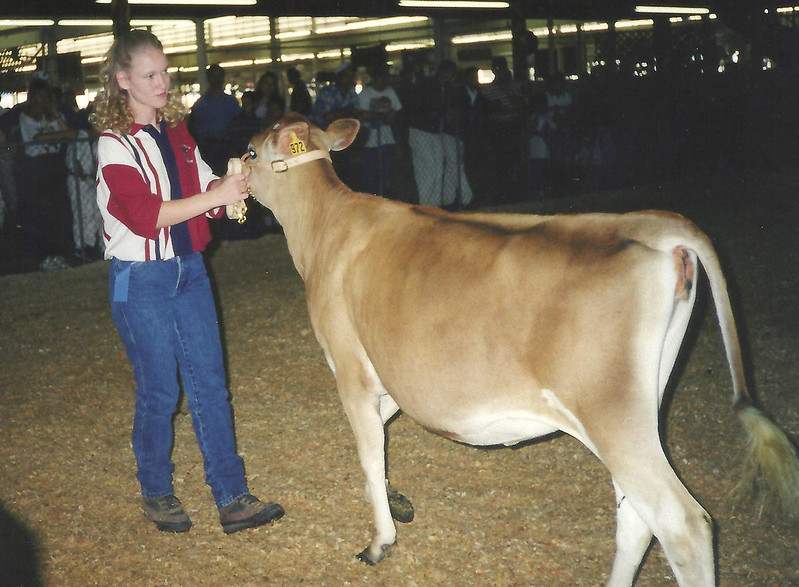
Hamm: “The breadth of agriculture I was able to experience has been critical in my career, as well as the opportunities that I had outside the classroom. I was engaged as a Fresno State Ag Ambassador, President and Secretary of the CAST Student Executive Council, Chancellor of Alpha Zeta, and on the FFA Field Day Committee. I worked part time with the San Joaquin Regional FFA Advisor when he was located on campus. I also worked a little at the campus floral shop creating arrangements that were sold in the farm market, and I was part of the dairy club.”
Q: I know you have some connections with other university programs currently, too. Talk about those roles.
Hamm: “I’m an industry mentor and guest lecturer for universities where I’m invited to participate, and I’m currently mentoring students from Purdue University, the University of Dayton, and Washington State University. Each university is different, so it depends on what they need and what Corteva Agriscience has to contribute. I often serve as a guest speaker and talk about plant sciences or career planning. I have also been invited to talk about cover letters, public speaking, or other areas related to their careers. At Corteva Agriscience I have colleagues that are interested in engaging with universities so it’s my job to match the needs of the university and students to the experience and expertise of our employees.”
Q: What areas of research have you specialized or been most interested in during your career?
Hamm: “My research areas have always centered around entomology, but have been quite varied within the field. I started as a high school intern in an entomology lab where my research was focused on insect behavior. Specifically, I was extracting volatiles from plants and testing them for repellent effects on ants. After that I started working on pheromone mating disruption, then biological control. My PhD work focused on sex determining genes and insecticide resistance in house flies. After my graduate work I took a job in industry where I was working on urban pests including termites. I’ve also worked on projects looking at the impacts of plant traits to control insect pests.”
Q: Why were you drawn toward entomology?
Hamm: “As a kid I was terrified of insects, but I was able to get a paid internship through the UC Extension. I was not looking forward to working with them and thought it would be the longest summer of my life. I also knew that past students had used their projects in science fairs, so for me it was a chance to also possibly win some money toward scholarships for college. Once I started that internship, the more I learned about them and how they interact with plants, the more I got excited about them. The aspecting of learning and growing to appreciate is the same method I use today for students, parents and adults. There’s often an automatic fascination with insects, but people are also unsure about insects and initially don’t think they want to touch or get near them. Once they understand that it won’t harm you, and many are beneficial as well, that fear starts to lessen and the fascination overcomes the fear.”
Q: What's the most rewarding part of your job?
Hamm: “The people, programs, and organizations that I get to work with. I have the honor and privilege to work with schools, non-profit organizations, and universities around the globe to ensure the future generation is ready to take on the STEM jobs of the future.”
Q: What are some of the most memorable moments of your career?
Hamm: “Being on a national TV show highlighting women in STEM is pretty high on the list. This is a great chance to encourage young kids - boys and girls - towards new opportunities, like being a scientist. And being selected as a AAAS IF/THEN Ambassador has been an amazing honor. You never know when and where you will make an impact on an individual. I’ve been to lots of STEM days with various arthropods, and it’s always rewarding to see someone come up fearful of the creature, and after we talk about it, that fear lessens, and becomes a bit of the fascination that I experienced in my own journey with insects.”
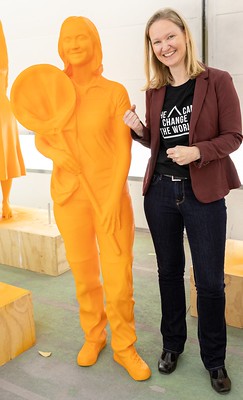 Q: You were honored with a statue that’s part of the If/Then exhibit that features
female professionals who successfully share STEM principles with future generations.
Talk about that experience.
Q: You were honored with a statue that’s part of the If/Then exhibit that features
female professionals who successfully share STEM principles with future generations.
Talk about that experience.
Hamm: “It was really fun. They actually built my statue by doing a 3D scan of my body and using a 3D printer in Fort Wayne, Indiana, so I could see them actually make it. I was really honored to be among their 125 honorees. The project started because there are so few statues across the nation recognizing women’s accomplishments, so this organization wanted to crush that old figure. The main idea is to show other generations of females the opportunities available in STEM, and right now the exhibit is in Dallas through this month.”
Q: You have had so many interesting roles, how do you see your role or career expanding or changing in the future?
Hamm: “There’s always a next level to take any program, and I don’t see myself doing anything else for the time being. In the past, things have always kind of happened, and opportunities come up, so you keep an open mind, and adjust your direction when it makes sense professionally for you and your family. At Corteva, there’s no lack of organizations or groups that are interested in education and STEM principles, and everything we do is important for sparking new ideas and inspiring new generations.”