The Jordan College of Agricultural Sciences and Technology
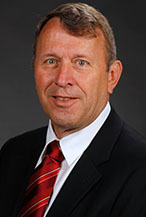 Dean's Office Update (June 15) - Dean Dennis Nef
Jordan College Faculty and Staff,
I hope you are enjoying the summer. As I write this, we are coming out of a relatively
cool June week and heading into what is forecast to be a few days of record breaking
heat. Summer in Fresno!
Commencement on May 15th proved to be a memorable experience for our graduating students
and their families and I appreciate all in the college who made it possible. While
the stadium was an interesting venue and the weather cooperated, I think I prefer
the Save Mart Center and look forward to returning there next year.
We are gearing up for a mostly in person fall semester without physical distancing. The dean’s office is staffed daily but the doors remain locked and we are not always there so please call before visiting. We have started scheduling some in person meetings. As you know Mary Olivas retired last year and Marian Bankston took a position elsewhere on campus. We have reassigned Allyson Baldus from IFA to the Dean’s office to help us fill those holes. A search for Allyson’s replacement at IFA is being launched. Incidentally, the search for a new viticulturist has successfully concluded and you will meet our new assistant professor this coming fall when Dr. Runze (Cliff) Yu arrives in August. Thanks to Luca Brillante for chairing the committee and to Sharon Benes and Annette Levi for their service.
Department chairs and center directors along with their support staff are busy preparing annual reports from the last year and putting things in place for 2021-2022. A number of faculty are participating in summer training including the following workshops:
- Transforming your Teaching with Resilient Course Design
- Introduction to Teaching Online Using QLT
- Advanced QLT Course in Teaching Online
- STEAM workshop
The ACDC advisors and a number of faculty have spent time developing Guided Pathways
advising sheets for our majors with support from the STEAM grant that Steve Rocca
is helping manage. Additionally, with funding from a joint grant with the College
of Sciences and Mathematics, there are opportunities for faculty to teach an AG BOND
course. If you are interested, please reach out to Annette Levi.
With Nate Gapasin’s leadership, the Phase 1 budget process has been completed. This
part of the budget process provides all levels with an understanding of the budgetary
implications of personnel. We don’t yet know the level of funding that will be available.
The legislature has passed a “budget blueprint” allowing them to get paid without
doing the heavy lifting needed to complete the job. Nevertheless, the governor’s proposal
in May provided increased support to the CSU including some one time dollars. We
will “wait and see” what the final impact on our campus will be-we might know by the
time school starts.
A number of you are involved in other activities. Avery Culbertson and a number of faculty helping her are running the Ag Discovery program for potential students. Susan Pheasant and a number of students are running the Ag in a Bag and the Kid’s Camp program for local youth. Faculty are actively involved in research. Those of you working on the farm are well aware of the problems associated with procurement. The pandemic has made it very difficult to get all kinds of required inputs and that is slowing everything from equipment repairs to applications of materials to crops. Support staff have become experts in Docusign and are keeping the departments, centers, college, and university functioning. Thank you all.
Over the past year, I have been actively involved as the Chair of the Dean’s Council of the Agricultural Leadership Program (CALP) and a member of the Board of the California Agricultural Leadership Foundation. The board has been engaged in a strategic planning process which wraps up this week with board approval of the process. The CALP involves faculty from the two Cal Polys, UC Davis, and Fresno State and Foundation staff to provide leadership training to 24 agricultural professionals through a two year program. Michael Thomas was the education coordinator for the program for a number of years before serving as our associate dean. Alex Alexandrou now manages Fresno State’s involvement. He recently wrote a piece describing the leadership model behind the program. It is included as an attachment to this newsletter.
I wish you the best in the coming month.!
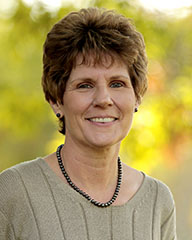 Dean's Office Update (May 3) - Dr. Annette Levi
Agretti or Monk’s Beard
Agretti or Monk’s Beard will be available for the early part of May at the Gibson Market. It is a halophyte plant tolerant of saline conditions and is native to the Mediterranean. Agretti is very popular in Italy and has become the latest trend in high-end Italian restaurants in the United States. It has a mild salty taste, perfect for fresh salads, pasta, or sautéed with some garlic and olive oil. It is being tested by USDA Parlier and Fresno State as an alternative crop for our west side growers, and is funded by the CSU Agricultural Research Institute.
Returning safely to campus
The CSU and UC will now require all students and employees to have proof of COVID-19 vaccination, with medical or religious exemptions. At this writing 181 campuses around the United States are requiring students to be vaccinated for fall 2021. Most of these universities have the stipulation that once the vaccines have formal approval (currently, they are approved for emergency-use only), the requirement of the vaccine will be implemented.
An ABC News/Washington Post poll out on April 26th found Americans are sharply divided on the issue. Fifty percent of respondents support colleges and universities requiring that students get vaccinated before being allowed on campus (1). Some states are banning the COVID vaccine requirement (e.g., Texas and Florida) if the school receives state funding. Currently, 85% of 4-year institutions mandate vaccines for measles, mumps and rubella. (Source: https://abcnews.go.com/US/debate-swirls-colleges-weigh-mandate-covid-19-vaccines/story?id=77326765)
Changes in the Dean’s office
It saddens us to announce our very own Linda Atkins-Lopez, the assistant to the Dean, is retiring this fall 2021. Linda has been an integral part of the Jordan College for all of her 36 years with Fresno State. Her commitment to excellence and dedication to our college will have a lasting impact. Filling her shoes will be a difficult task. Linda will be sorely missed by all.
Other notable changes are the retirement in October 2020 of Mary Olivas, the Jordan College receptionist. In addition, Marion Bankston, the assistant to the associate dean, transferred back to her previous position with the Department of Communications in summer 2020. We wish both of them well.
The replacements for these three staff are unknown at this time. The Associate Dean position will continue to be split among three faculty – Dr. Alex Alexandrou, Dr. Annette Levi, and Dr. Randy Perry.
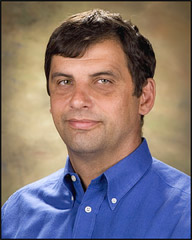 Dean's Office Update (April 5) - Dr. Athanasios Alexandrou
Integrating Advanced Manufacturing in Ag Processing
The Ag Mechanics/Adv Manufacturing working group organized a virtual tour of the department of Industrial Technology (IT) on March 25. The working group, a collaboration between community colleges and 4-year programs, resulted from the Building Pathways for Student Success initiative that JCAST instigated 3 years ago. About 38 community college instructors and high school teachers registered for the event which included a virtual tour of the Department of Industrial Technology. Dan Pronsolino, Board member of the Western Agricultural Processors Association (WAPA), was the guest speaker. He presented the needs and challenges that his industry confronts to find qualified personnel. The discussion between instructors at all levels was vivid and resulted in a better understanding of the needs of the processing industry of the San Joaquin Valley.
California phases out agricultural burning in San Joaquin Valley by 2025. Farmers need fresh ideas.
The California Air Resources Board (CARB) voted unanimously to phase out agricultural burning in San Joaquin Valley by January 1st, 2025. The decision was taken at its February 25th meeting and directed the CARB to work with San Joaquin Valley Air Pollution Control District (SJVAPCD) to achieve this target. This means that San Joaquin Valley farmers and ranchers could not burn their trees when they remove them, and it is expected that the disposal of vineyards and orchard trees will be greatly affected. According to the San Joaquin Valley Air Pollution Control District, vineyard removals and orchard removals, account for approximately 90 percent of total tons burned in 2020. Farmers and ranchers will have to use alternative methods that, according to Ryan Jacobsen, CEO of the Fresno County Farm Bureau, can cost the vineyard farmers between $1,500 to $2,000 an acre.
Part of the state’s plan is to allocate $15-$30 million to help farmers transition to alternative methods. Alternative methods may include:
- Chip up the wood and reintegrate it into the soil. It requires special equipment.
- Transport the wood to biomass plants. Unfortunately, they are only five biomass plants in the area down from twenty only a few years ago (SJVAPCD), and they cannot absorb the expected wood quantities available for disposal.
- Use of Air Curtain Burners, a pollution control device.
It is certain that farmers will need help in developing environmentally friendly alternatives for wood disposal. This may be an opportunity.
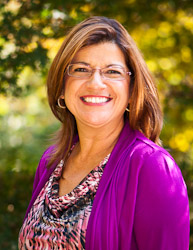 Dean's Office Update (March 29) - Linda Lopez-Atkins
Jordan College Faculty and Staff,
It’s hard to believe that this semester is just about over and commencement is upon us. We have been very busy putting together our Commencement ceremony under the lead of the University Student Involvement office - the details as they stand now are below:
- Our college commencement is combined with the College of Arts and Humanities and is scheduled for Saturday, May 15th, 7:00 p.m. at Bulldog Stadium. Details are still being worked out as to what time faculty, staff volunteers, and graduates need to be there & more information is available at the University event webpage ( https://commencement.fresnostate.edu/faq.html ).
- Staff can still volunteer to assist at the event and faculty are encouraged to participate in the processional. At this time, it is expected that faculty will sit in the first two rows with graduates sitting in the rows behind them. Seats will be socially distanced on the field. If you haven't already done so, please email Nate Gapasin (ngapasin@csufresno.edu) if you are interested in being part of the faculty processional or volunteering to assist at the event.
- The Jordan College has 424 students registered to participate of which 124 are 2020 graduates, and the remainder are 2021 grads. Each graduate will receive 4 guest tickets with assigned seating in the stadium.
- Graduates names are being pre-recorded by an outside vendor the University has contracted with. Late last week, the University began sending emails to our 424 registered participants requesting information for their slides which will be shown as their name is announced at commencement. Graduates will also be able to submit a photo that will be shown when their name is read. Students have until May 5th to submit photos. All photos will be reviewed by our office for appropriateness.
- The ticket distribution to students has been scheduled for the week of May 3rd on the lawn between the Satellite Student Union and our Ag Sciences building with colleges and affinity groups scheduled for specific days that week. The Jordan College date is scheduled for Thursday, May 6th from 10:00 a.m. - 4:00 p.m. We will reach out to department administrative staff to see if they would like to help out on that day. The University will be sending our participating graduates an email and we will follow up with a college email as well.
- At the ticket distribution, our College will provide honor cords to students that earned them, departments can distribute stoles to those students who are receiving them, and students participating will also receive a graduation gift from the College and a gift from Ag One.
- There are other details that will be sent out in the next couple of weeks to our graduates, faculty and staff but please know that the University is emphasizing social distancing and that there be no congregating after commencement. Stay tuned for additional information as it is provide to us.
In addition to commencement, please be reminded of these upcoming events:
- Honors Program Cohort 6 Virtual Reception, May 3, 2021, 5:00 p.m. via ZOOM
- Jordan College Faculty/Staff Appreciation & Recognition Virtual Reception - Friday, May 7, 2021, 2:00 p.m. via ZOOM.
If you have any questions on commencement or any other end of the year activities, please let us know. Have a great week!
Dean's Office Update (March 29) - Dr. Annette Levi
“Students don’t care how much you know until they know how much you care.” — John C. Maxwell, American author and leadership expert
Freshman Update
The 2020-21 academic year has had its challenges for all of us and current research shows this was particularly hard on our freshmen. Freshmen year is pivotal because it is when the highest dropout rates occur (1). During a typical year about 15% of CSU freshmen don’t return for their sophomore year. For Fresno State, our freshmen retention rate has recently improved; our freshmen drop-out rate in 2018 and 2019 were 17.4% and 13.2%, respectively.
Freshmen are a vulnerable group that face particular challenges, especially this year’s cohort. Please reach out to these students when they contact you in classes, at the office or at virtual events. Special attention and care may go a long way to increase the likelihood that these students get integrated in our college and return for their sophomore year this fall.
Transfers
The number of transfer students is directly related to community college enrollment, and over the last year, community colleges had an average 9.4% decline in enrollment (2). It is important to keep in mind that all of our students have missed out on part of the college experience that includes seeing friends, attending extracurricular events, etc. and transfers have less time for such activities than our freshman. I had one transfer student speak to me during office hours last week. She indicated that she will graduate this spring from Fresno State and she has only been on campus for part of the spring 2020 semester. Connecting with these students is a critical part of what we do for outreach. These students are an essential communication tool for us to keep the pipeline open to our feeder schools. Ensuring these current transfer students are happy graduates, despite spending minimal time on campus, is important for our ongoing recruitment efforts.
STEAM Enriched Pathways Grant
The Jordan College, along with the Lyles College of Engineering and the College of Science and Math, is part of a five-year $3 million STEAM Enriched Pathways grant from the U.S. Department of Education. STEAM is Science, Technology, Engineering, Agriculture and Math.
Eleven majors and the Advising Center of the Jordan College will be part of the Pathways grant. The grant includes a faculty-training program for those who will work with these Pathway majors. Workshop training will be offered on May 26th to May 28th , financial incentives will be included for attending,. Please see Dr. Rocca’s USDE STEAM Grant Update email sent on March 29th for more information.
1) Freshman year can be tricky; the pandemic makes it worse
https://edsource.org/2020/freshman-year-can-be-tricky-the-pandemic-makes-it-worse/644364
2) The Impact of COVID-19 on Transfers
https://www.newamerica.org/education-policy/edcentral/the-impact-of-covid-19-on-transfer/
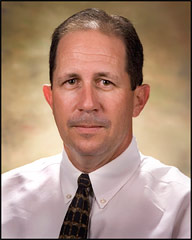 Dean's Office Update (March 25) - Dr. Randy Perry
Interesting Quote – “People don’t care how much you know until they know how much you care”
Preview Day
Kudos to Ms. Michelle Perez, the Recruitment Counselor/Outreach Coordinator for the
Jordan College for doing an excellent job in organizing the Jordan College activities
for Preview Day on Saturday, March 20th. It was a virtual event. It was well attended
and the people involved indicated that the students were very engaged and asked many
questions regarding the departments and programs in the Jordan College.
Plans for Fall 2021 Semester
The University has increased its target from 70% to 85% of the course offerings this
fall being taught in a normal “face to face” format. These would be potentially both
lectures and laboratories. All of this planning has to be done in accordance with
what the Chancellor’s Office is recommending and also in accordance with the requirements
of our local health department officials. As we have discussed before, the social
distancing requirements is the key factor. The difference between 6 feet versus 3
feet versus no social distancing requirement is “huge” in terms of its impact on how
many students can be enrolled in our courses.
Admission Numbers for Fall 2021
The admission numbers for our college look good and now we are just starting to receive
the numbers as students accept their admission and sign up for Dog Days advising sessions.
Those numbers are just starting to come in so it will still be awhile before we know
if our yield (enrollees versus admissions) ends up to be fairly close to what it has
been in the past.
Commencement Plans
There is a university committee that is putting a lot of effort into planning what
the University Commencement will look like this year. It is a very fluid situation
and hopefully by the end of spring break we will have a better idea of what commencement
will “look like” this year. Enjoy your spring break!!!!
Dean's Office Update (March 15) - Dean Dennis Nef
It has now been one year since we changed the mode of work at the university.
The fact that there are vaccines that have proven effective and that supplies of those are becoming readily available holds promise for moving beyond our sheltered existence. Please take advantage of the opportunity to get vaccinated. With wide acceptance of vaccines, we can plan for a majority of our classes to be offered in person in fall (albeit many will be in hybrid mode). We will be hearing more about ‘repopulation’ soon.
In the meantime, plans for commencement are underway and are subject to the same adjective we were using last year at this time ‘fluid’. The university announced that all colleges/schools would hold virtual commencements and even provided a list of events that would need to be common across the ceremonies.
Late last week, that changed with the announcement of an in-person commencement in the Stadium. There will likely be multiple ceremonies over more than one day but how those are divided up is anyone’s guess. Whether guests will be allowed and if so, how many is also unknown.
The class of 2020 will be included and the event(s) will be live streamed and recorded for those unable to attend. It is anticipated that an outside firm will be hired to facilitate the reading of names. Students will not walk across the stage, but will stand from where they are seated in the stadium. This does not preclude the Jordan College from having a celebration. Remember though that this is fluid and our commencement planning team which has already met under the leadership of Randy Perry is awaiting further information before moving forward.
As we look beyond Covid, we have talked about imagining an alternative future and re-imagining what we do. Some of our colleagues are heavily involved in doing just that.
Annette Levi is leading a team focusing on how we can better incorporate the concept of sustainability into all of our work. Some may see this as being radical for the Jordan College but in reality, we have long been involved in this effort. Indeed, agricultural development has always been about making the production of food and fiber more sustainable.
I recently discovered that the root of ‘radical’ is in fact about roots.
At Merriam Webster online I found this: “The meaning of radical for many centuries was related to its origins radicalis meaning "root." Thus, until recently, radical referred to the roots of words, the roots of illness, or even square roots. Later, radical was used more figuratively to mean "fundamental" and examples like "radical reform" referred to changing the very root of the system.” Taking this as our starting point, perhaps we can add additional descriptors of the change we should think about. Radical change would restore, refresh, renew, rebuild, and re-invigorate. Rather than re-open and return to normal, let's plan to be radical with a radical outcome as defined by the more recent slang use radical: that of being excellent and/or cool!
Best wishes for the rest of the semester and hold on!
Dean's Office Update (March 8) - Dr. Athanasios Alexandrou
Nut Processing Line Progress
The nut processing line is currently being installed in the Grosse Industrial Technology Building, room 124. The state-of-the-art equipment can inspect, clean, and sort a variety of nuts.
The equipment will provide industrial technology, food science, plant science, and students from other majors with hands-on instruction of the equipment used in this very important sector of California’s agriculture. The value of nut production in California for the 2019 crop year is very significant with total value of almonds standing at $6.1 billion, pistachios at almost $2 billion and walnuts at $1.3 billion. It is a growing and dynamic industry.
The equipment will be used to offer a course with lab & lecture sessions. The course will provide students with an in-depth look at various equipment, technologies and programs that assist tree nut hulling, shelling and processing operations throughout the season. Mirroring a similar class offered at Fresno State focusing on citrus packing, the tree nut processing course provides students with hands-on experience with industry equipment operation and maintenance. The course is offered as an Independent Study this semester.
It is worth noting that Industry stepped up and two professionals volunteered to assist with the teaching of the lecture and lab, Emmanuel Ramos (Touchstone Pistachios Co) and Adam Salwasser (Minturn Nut Co), both very experienced members of the Nut Processing Industry.
WAPA (Western Agricultural Processors Association) Board Member Dan Pronsolino (Dunnigan Hills Hulling & Shelling) was instrumental in developing the overall scope of the course, while also contacting manufacturers on potential equipment donations for the lab. WAPA would also like to recognize Gary Dunn with Wonderful Pistachios for his tireless work on developing the layout of the lab space, and for assisting in the installation of equipment. The line will be operational before the end of the current semester
Agriculture Pathway Working Groups
Three years ago, JCAST introduced a forum (Building Pathways for Student Success) where faculty and administrators from Community Colleges within our service area, could exchange ideas with faculty and administrators from Fresno State. The effort is considered successful and it has evolved into a state effort. As a spinoff of the forum, Agriculture Pathway Working Groups were established with the main objective of creating synergies and reinforcing the cooperation between 4-year institutions and their Community College partners in specific sectors. The following links allow you to view the groups and register to participate.
LINK TO VIEW PATHWAY GROUPS LIST
LINK TO ADD FACULTY TO PATHWAY WORKING GROUP
FORESTRY/NATURAL RESOURCES: Facilitator Nancy Gutierrez
FOOD SAFETY/FOOD SCIENCE: Facilitator Nancy Gutierrez
AG MECHANICS/ADV MANUFACTURING: Facilitators Krista Vannest & Gary Potter
AG BUSINESS: Facilitator Holly Nolan Chavez
ANIMAL SCIENCE: Facilitator Carrie Peterson
HORTICULTURE/PLANT SCIENCE: Facilitator Fred Sconberg
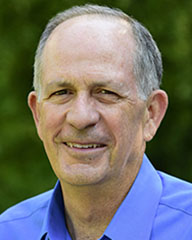 Dean's Office Update (March 2) - Dr. Michael Thomas
Courage to Move Forward: Almost overnight we leapt into a new era of teaching. Methods changed. Direct contact with students diminished. Our hands-on activities could no longer be delivered in our traditional way. Higher education has changed – and very quickly. So much for the myth or the previous stereotype that universities are slow to respond to change.
During all this change, the key concept has been and continues to be related to the word pivot. How quickly can we pivot to online teaching? What does it look like when we return to more students on campus? How do we pivot to the demographic changes that are now intensified with the new demands of students? How will we pivot to admission challenges followed by teaching and adjustment-to-college struggles for students who may have completed high school without grades? How well can we get these students up to the standards that we previously championed?
We have changed. Can we continue to change? It appears that we must do so, because many things in our future is still uncertain. It takes courage to face an uncertain future.
I often think about the challenges our students are facing. I wonder if they realized they had the courage to see their way through the past 12 months. But that’s the curious thing about courage – we never really know how much we have until we need it. Our current situation continues to call for abundant courage. A deadly pandemic has swept across the globe. Wildfires have destroyed forests and neighborhoods. Many people have lost loved ones, jobs, or struggled with loneliness. It seems however, most have found the courage to continue on with their studies and their lives. During this time, it seems, that one of our main responsibilities is to demonstrate bravery to our students and colleagues by keeping our heads up and increasing the morale of those around us.
I recently heard a broadcast that included the following story[1]:
“On September 7, 1940, German bombers attacked London, England. They attacked again the next day. And the next. Over the following eight months, Londoners did their best to carry on normal lives, knowing that each day, “the odds that someone, somewhere in London would die were 100 percent.[2]” Many of the air raids took place under the cover of darkness, making nightfall especially dreadful. In all, 2 million homes were destroyed, and more than 40,000 civilians were killed.
Despite the damage the bombers caused, however, they failed in at least one of their missions: to demoralize the people. In fact, morale seemed to increase after each attack—people seemed more confident, more determined, and more willing to volunteer. When someone suggested to British prime minister Winston Churchill that he had given the people the courage to carry on, Churchill responded: “I never gave them courage. I was able to focus theirs.”
Deep within us, we have the courage to face the upcoming challenges. The signs are found all around us. We see it in students helping each other. We see it in a faculty member or an advisor encouraging a student. We see it in an established faculty member learning new pedagogical techniques. We see it in staff members working independently to keep their unit going. We see it in innovation to establish new grants or programs. We see it when strangers put their differences aside and serve someone in need.
Morale is not spent during difficult times – that is when it flourishes. Courage cannot be given or taken away. Courage comes from within each of us and when it is focused, we can find the strength to move forward.
Dean's Office Update (February 8, 2021) - Dr. Annette Levi
“Opportunities are usually disguised as hard work, so most people don’t recognize them.” - Ann Landers
This March 2021 will mark a year since we have taken to shelter in place. Our lives have been flipped on edge and made more challenging, to say the least. We have resolutely overcome these challenges. And we have been blessed to see and experience some aspects of our lives that have eluded us pre-pandemic – family, homemade food, learning new things (technology) and such.
The obstacle in our path*
In ancient times, a King had a boulder placed on a roadway. Then he hid himself and watched to see if anyone would remove the huge rock. Some of the king's wealthiest merchants and courtiers came by and simply walked around it. Many loudly blamed the King for not keeping the roads clear, but none did anything about getting the stone out of the way.
Then a peasant came along carrying a load of vegetables. Upon approaching the boulder, the peasant laid down his burden and tried to move the stone to the side of the road. After much pushing and straining, he finally succeeded. After the peasant picked up his load of vegetables, he noticed a purse lying in the road where the boulder had been. The purse contained many gold coins and a note from the King indicating that the gold was for the person who removed the boulder from the roadway.
The peasant learned what many of us never understand! Every obstacle presents an opportunity to improve our condition.
 In summary, if being successful were easy, everyone would be successful. Success does
not just arrive at your doorstep. There are more than 1,700 companies on the New York
Stock Exchange and every one of them started in someone’s garage. They saw a problem
and said, “I can fix that.” And they did. Today they are called successful businesses.
When they started, they had to overcome many obstacles. Opportunities came disguised
as problems. Our task is to see more than an obstacle, but to seize the possibilities.
In summary, if being successful were easy, everyone would be successful. Success does
not just arrive at your doorstep. There are more than 1,700 companies on the New York
Stock Exchange and every one of them started in someone’s garage. They saw a problem
and said, “I can fix that.” And they did. Today they are called successful businesses.
When they started, they had to overcome many obstacles. Opportunities came disguised
as problems. Our task is to see more than an obstacle, but to seize the possibilities.
Dr. Annette Levi
Agricultural Business Faculty
Dean's Office Update (February 8, 2021) - Dean Dennis Nef
Face to Face instruction. Today, several of our colleagues will begin teaching face to face labs. Please exercise caution and observe the social distancing, sanitizing, and masking requirements. Several members of our Jordan family have received positive COVID diagnoses this past week and we want everyone else to stay healthy. Additionally, we launched a college conversation at our opening assembly imagining what the future would look like and how we might design it. The administrative council reviewed the outcomes of our conversation and will be taking it up with you in the next few weeks. Also, the campus conversation about Fall 2021 began Friday with some 225 faculty considering ideas. I encourage you to take an active part in the conversations in your department/unit.
Web Redesign: The University is embarking on a campus web redesign. Geoff Thurner is our college representative. You will be hearing more about this.
Sustainability. At the Spring Assembly, we were introduced to the U.N. Global Compact which has 10 principles of sustainability and 17 sustainable development goals. You can read about each of the goals below.
- Goal 1: No Poverty
- Goal 2: Zero Hunger
- Goal 3: Good Health and Well-being
- Goal 4: Quality Education
- Goal 5: Gender Equality
- Goal 6: Clean Water and Sanitation
- Goal 7: Affordable and Clean Energy
- Goal 8: Decent Work and Economic Growth
- Goal 9: Industry, Innovation and Infrastructure
- Goal 10: Reduced Inequality
- Goal 11: Sustainable Cities and Communities
- Goal 12: Responsible Consumption and Production
- Goal 13: Climate Action
- Goal 14: Life Below Water
- Goal 15: Life on Land
- Goal 16: Peace and Justice Strong Institutions
- Goal 17: Partnerships to achieve the Goal
The CSU Board of Trustees passed a Sustainability Policy in 2014 which committed the CSU to “seek to further integrate sustainability into the academic curriculum working within the normal campus consultative process”. We are being asked to explore incorporation of sustainability into student learning outcomes and how those will be addressed in the curriculum. The 17 goals above can be used as a guide as you consider what your students should know and how they can learn it.
Student/Faculty workloads: While the university has encouraged faculty to be flexible in accommodating students, it is important that we maintain a focus on student learning outcomes and helping our students achieve those. In an article from the Wake Forest Center for Advancement of Teaching, Betsy Barre addresses “The Workload Dilemma” in which faculty indicate they have become more accommodating while students claim their workloads have increased. The author posits 6 hypotheses:
1. Whether we intend to or not, we might actually be assigning more work than we have in the past.
2. We aren’t assigning more work, but we haven’t made our expectations clear.
3. Some students are overestimating their work because they are unhappy to be learning online.
4. Many students could do well with less effort in the past.
5. The shift to online coursework has increased students’ cognitive load.
6. A global pandemic has decreased student capacity to work
The entire article can be found here if you would like to explore it in depth. She has also worked with others on a workload estimator you might find useful in evaluating student workload in your course.
I hope you have a great week!.
Dr. Dennis Nef
Dean