The Jordan College of Agricultural Sciences and Technology
University Agricultural Laboratory Modernization
Fresno State's 1,000-acre University Agricultural Laboratory and its 18 units provide a one-of-a-kind experience that gives hands-on training to student assistants and class labs.
Many of its most recent updates in 2024-25 were thanks to a one-time, $18.75 million allocation from the state assembly to each of the four California State University agricultural colleges. The funding was earmarked for each of their campus farms to make important updates and renovations, integrate new technology and encourage more sustainable practices that are beneficial for student learning.
Since then, the Jordan College has continued to partner with agricultural companies to add new equipment and technology to keep the farm updated with the latest technology.
Row Crops, Orchards and Vineyards
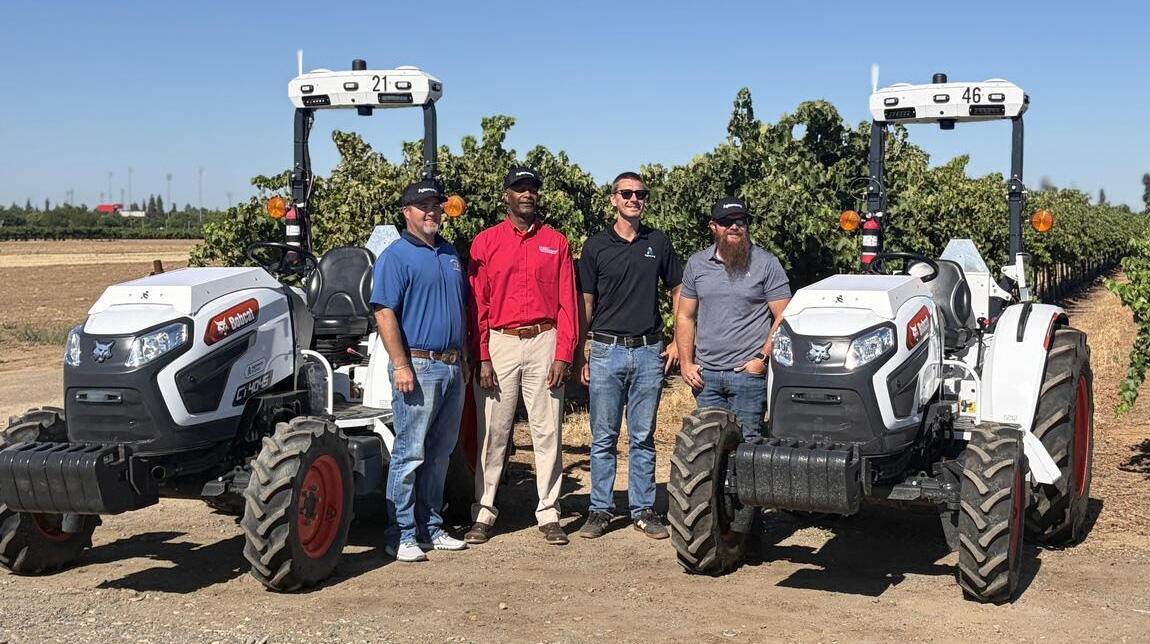
Starting in 2026, the University is proud to partner with Agtonomy, which makes it possible for students to learn hands-on from two Agtonomy-enabled Bobcat CT4045 units, provided through Agtonomy’s partnership with Bobcat Company. As a result of this partnership, students will have the opportunity to learn hands-on and via coursework about the cutting-edge technology that the Agtonomy-enabled Bobcat CT4045 units have to offer, while they also provide real support to vineyard and orchard operations on the University’s 1,000-acre farm.
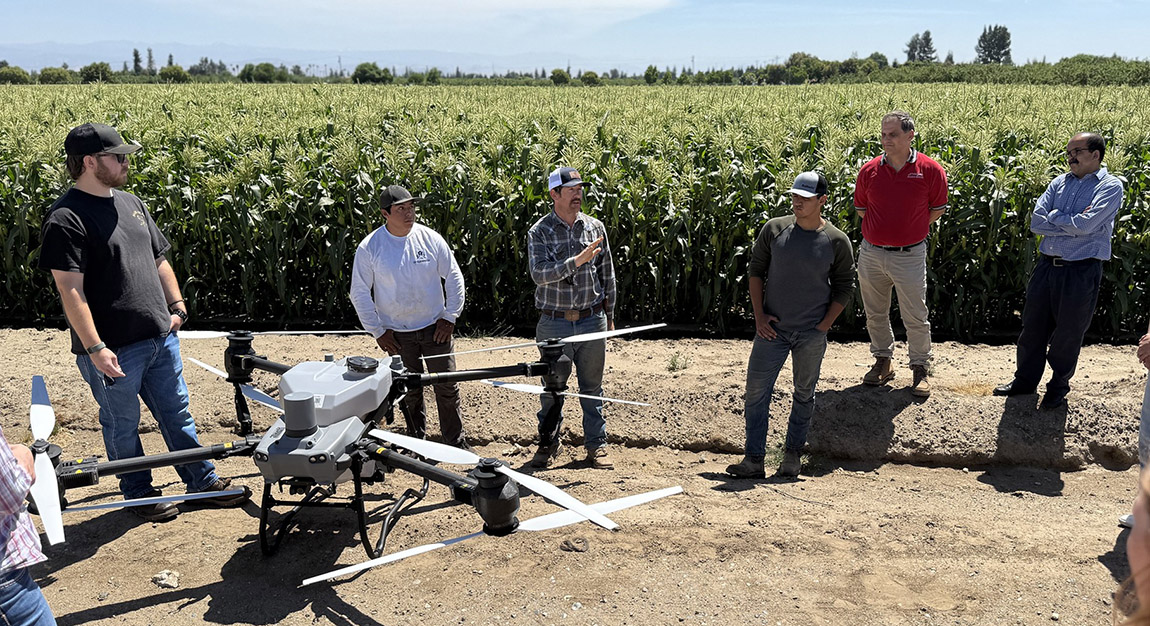
A new drone has been purchased to help modernize crop management methods. Farm staff are being trained on its use, and the new equipment can be used on a majority of the 1,000-acre campus farm to better manage pest and crop health needs.
In the winter and spring of 2025, a new 24-foot tall, irrigation pivot system gave farm staff extra control of its operation through automated technology from their phones that can be tied to meteorlogical data.
As each unit rotates in a circle around an 18-acre area, it has an additional arm that extends outward to reach each corner and maximize coverage. The equipment can be synced to run at night or early in the morning when energy costs are cheaper at non-peak usage times, and can apply fertilizers and pest control products through the same lines, which can reduce labor costs.
The new unit irrigation also allows the farm to double its amount of alfalfa fields from 18 to 36 acres and raise more of its livestock feed on campus for cost savings.
Ag Operations
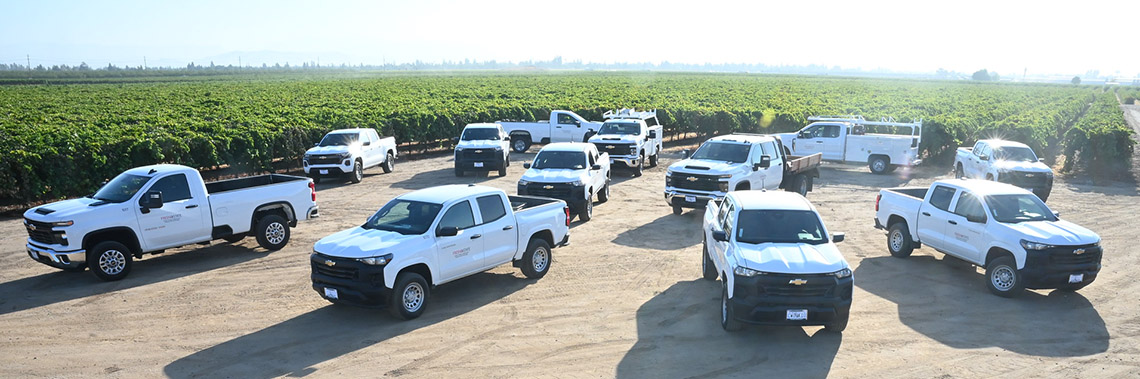
The state assembly’s additional funding has also helped the campus farm’s 18 units upgrade their entire fleet of farm and service trucks and purchase an electric-powered tractor, forklifts, utility vehicles and carts – many of which have autonomous potential.
Many of these vehicle expenditures were leveraged through additional funds and incentives from rebates tied to the state’s Clean Off-Road Equipment and San Joaquin District Air Resources Board programs.
Food Processing Facilities
The campus creamery has added a host of new equipment in recent years through its industry partnerships and funding provided through the Pacific Coast Coalition of the Dairy Business Innovation Initiative. New cheese processing equipment provided by Leprino gives student assistants and staff the ability to make premium cheeses like mozzarella.
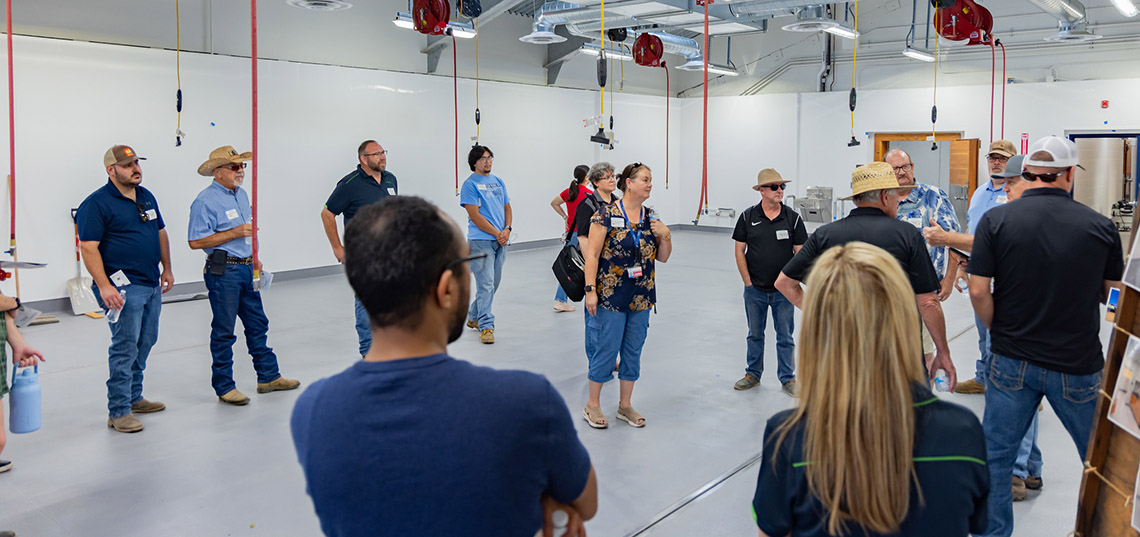
The campus meat science lab will reopen in the fall of 2026 and will showcase a new refrigeration unit and renovated flooring. The space is also utilized for classes for the meat science program, which is regarded as one of the nation’s finest. Students produce a wide range of dried and cured products and popular sausage products, many of which feature student-designed recipes and other beef, chicken, lamb and pork products for the Gibson Farm Market The campus is coordinating the planning for a new meat processing facility that will feature modern processing, cooking, storage and training facilities.
Livestock Facilities
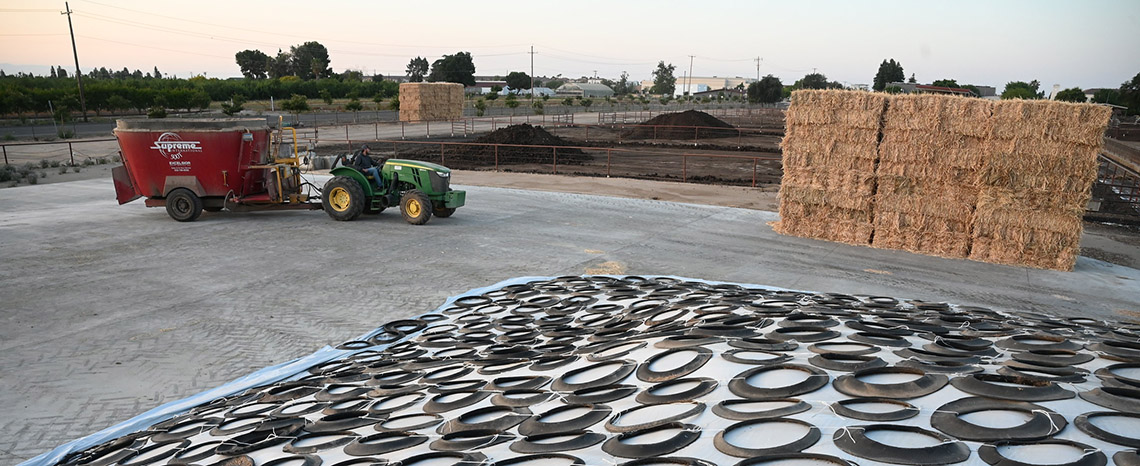
Feed management operations at the campus dairy are benefiting from a new silage pad that was completed in the spring. The concrete subsurface will cut down on corn silage waste from the former dirt footprint, provide better drainage, and make it easier for students to move feed with large equipment. The campus silage area can also better integrate crops from the nearby fields that can be stored longer and offer higher quality of the nutritious ration.
New flooring and drainage has been installed inside the Macebo Dairy Unit, a new feed wagon was purchased and repairs were made to a wind-damaged commodity barn. Other future projects are planned to improve the dairy facility’s grading, drainage and shading.
The campus beef unit is in the process of replanting its fields and installing more efficient irrigation systems, and a sheep pasture renovation project is planned for spring 2026.
Horticulture Nursery
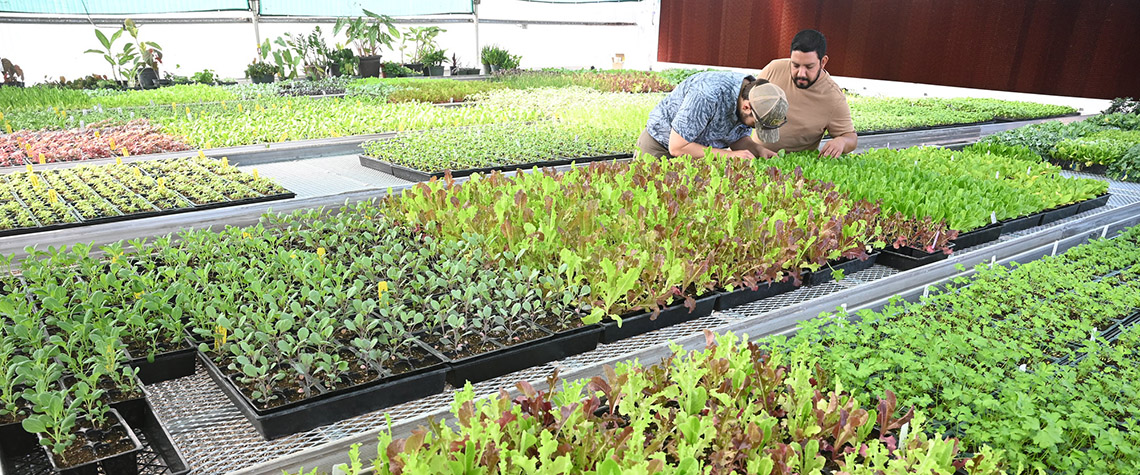
The campus nursery's seven greenhouses have received notable irrigation, ventilation, heating and cooling equipment updates that were completed in spring 2025.
The new equipment’s automated software will help to lower energy costs, improve plant health and extend growing seasons. New rolling benches have also increased the nursery’s capacity, which includes a propagation lab, lath house, demonstration gardens and a new vertical farm. The state funds were supplemented by irrigation equipment from Netafim, and some of the updates were installed by students with staff guidance to enhance their learning experience.
Vineyard and Winery
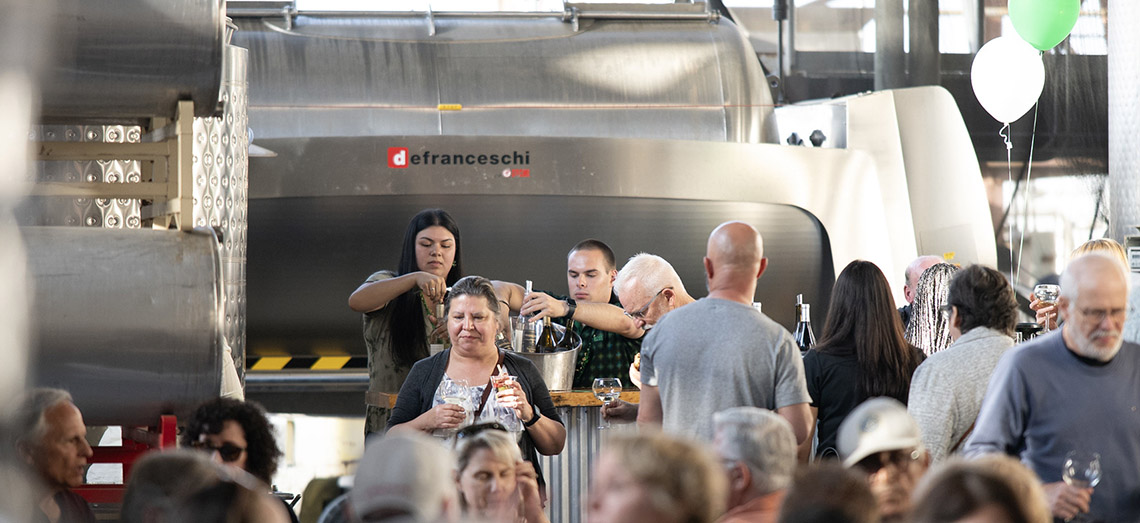
Fresno State's national reputation as a leader in grape and wine science will be enhanced through a series of renovations at the Donald E. Gumz Enology Building. Its teaching and research areas are under construction this fall and will unveil space to make beer and spirits when it reopens in the spring. Fundraising efforts are underway to purchase and install a brewhouse and pot still.
An adjacent refrigeration area will be updated and will feature a new wine library to store donated wines, special collection wines and Fresno State Winery vintages. When it opened in 1997, the winery was the nation’s first bonded winery on a college campus. Today it is still the largest, and students, faculty, staff and supporters will be able to see wines that date back to its first editions nearly 30 years ago.
The winery has also purchased new concrete storage tanks that offer white wines the best features of wood barrels and stainless steel tanks, thanks to its porous composition and uniform temperature attributes. It also received a discount on the purchase of a new Müller pot still, which will allow the winery to create a wide variety of spirits for special edition products.
The winery is also using a new Defranceschi-SACMI wine press this fall that was donated by the company. Students are enjoying the chance to run the easy-to-operate equipment that also has better, larger and faster extraction features and is more gentle on the grapes in the production process.
The vineyard is also looking to update its irrigation equipment with an automated system funded by a grant managed by Momentum from the California Energy Commission. The four-year project, which aims to be in place by 2026, will demonstrate methods to lower energy costs through an hourly flex pricing program, while maintaining high agricultural production efficiency. This grant will fund students to build management software that integrates with irrigation equipment and software by Wiseconn, a campus agricultural supporter.