The Jordan College of Agricultural Sciences and Technology
Agrivoltaic Research
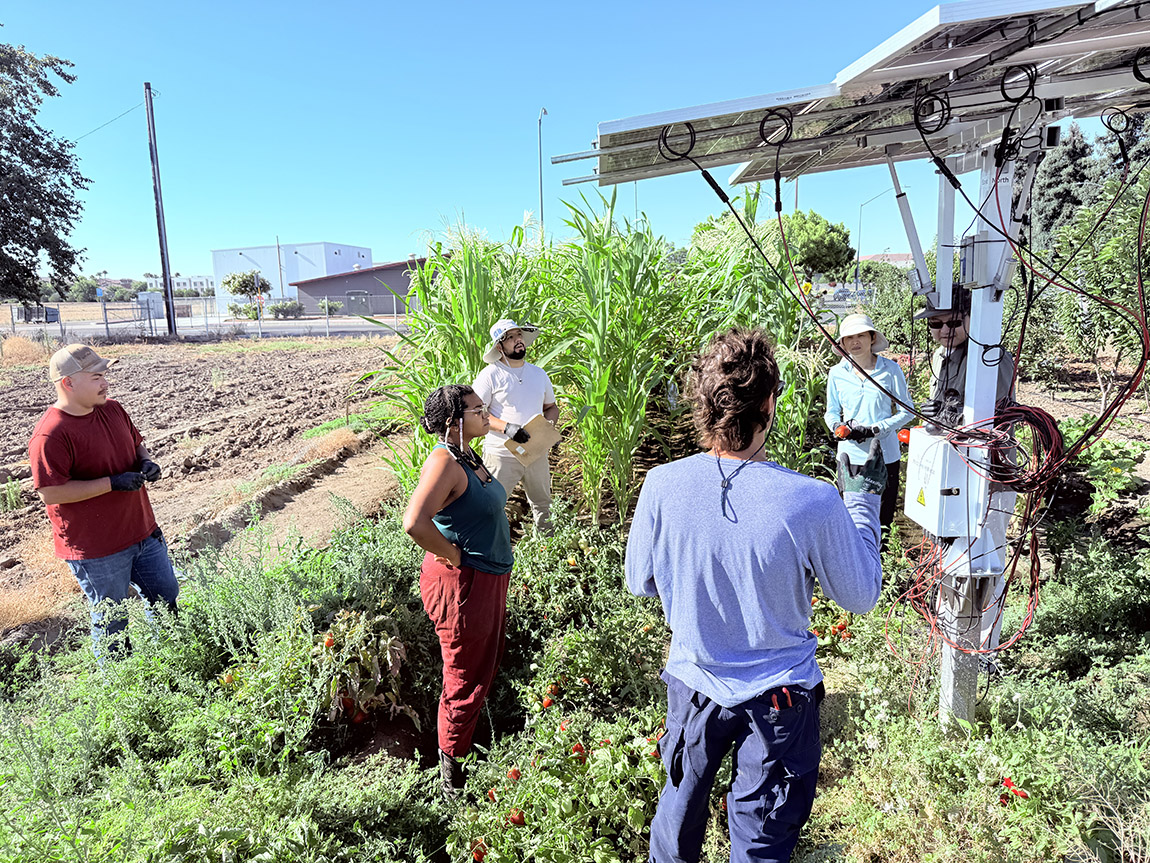
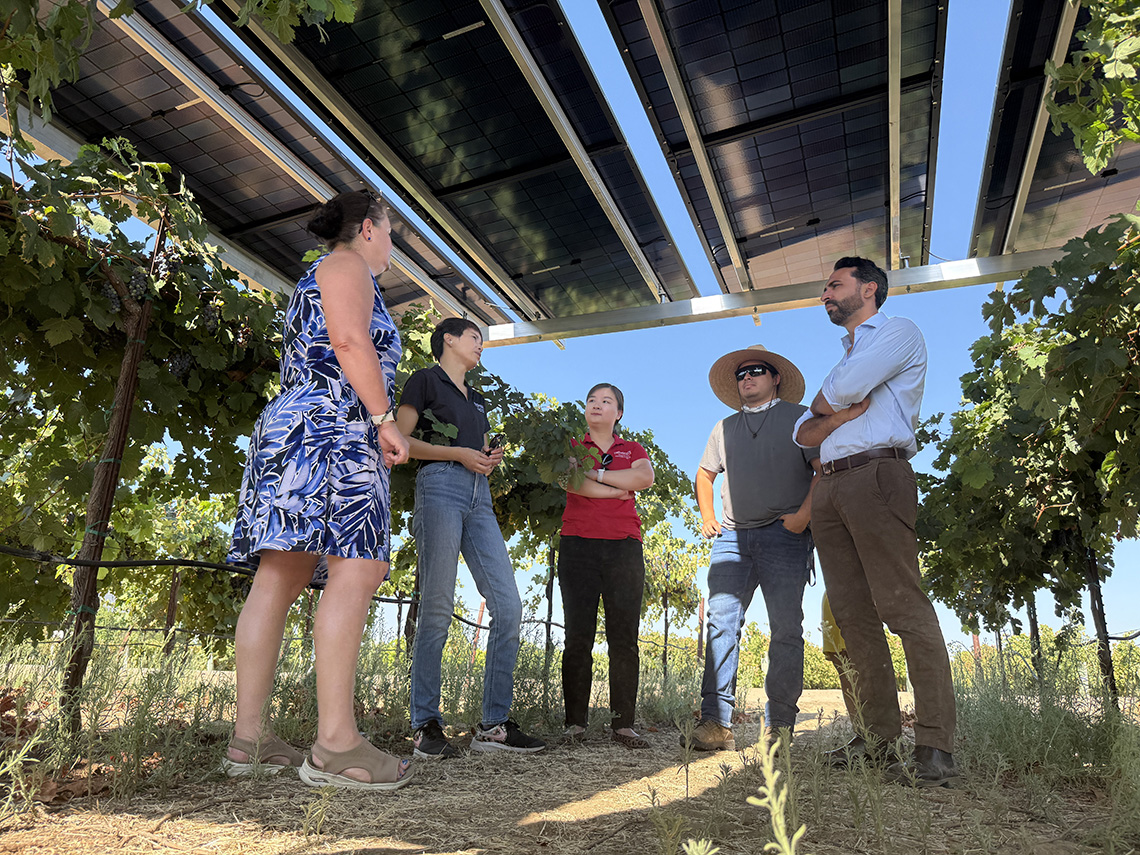
Fresno State and its Jordan College of Agricultural Sciences and Technology are committed to advancing new agrivoltaic research and clean, renewable energy solutions at its University Agricultural Laboratory, the University's 1,000-acre campus farm.
As part of the nation's most productive agricultural region, more and more Central Valley growers are becoming interested in new farming practices that can raise crops and livestock while generating solar energy on the same land.
Shade from the panels can help reduce water loss from crops, improve soil quality, and protect against extreme weather conditions, such as hail or frost. Additionally, the panels can help regulate temperature and humidity levels, creating a microclimate that can lead to improved crop yields and quality.
Since Fresno receives approximately 300 days of sun each year, systems also provide farmers with a reliable renewable energy source, reducing their dependence on traditional energy sources and lowering their energy costs as budgets get tighter, and they seek new ways to increase revenue.
Jordan College faculty are studying more effective crop management practices to balance the shade provided to crops with the sunlight required for photosynthesis. Certain crops that are currently unsuitable for growth in the Central Valley due to excessive heat and sun radiation may also benefit from the shade and could be planted and monitored.
Large-scale solar energy development can have adverse impacts on arable and animal food production, and these projects can also help to carefully study related areas, such as soil and water conservation, ecosystem function, biodiversity, and carbon sequestration. These goals help to safeguard food production, environmental sustainability, and rural and urban livelihoods in California.
Agrivoltaic solutions that combine energy and crop production could increase land productivity by as much as 70%, and more comprehensive research is needed to better understand their impact on food, energy, and water systems. This multidisciplinary effort at Fresno State hopes to integrate a broad range of research disciplines, including plant science, viticulture and enology, mechanical engineering, and economics faculty and students.
These projects present a unique opportunity for recruitment and to showcase Fresno State to alumni, community, and industry partners as a leading education and research hub for sustainability, climate change adaptation, and agricultural technology.