the Almond Life Cycle
VOCABULARY
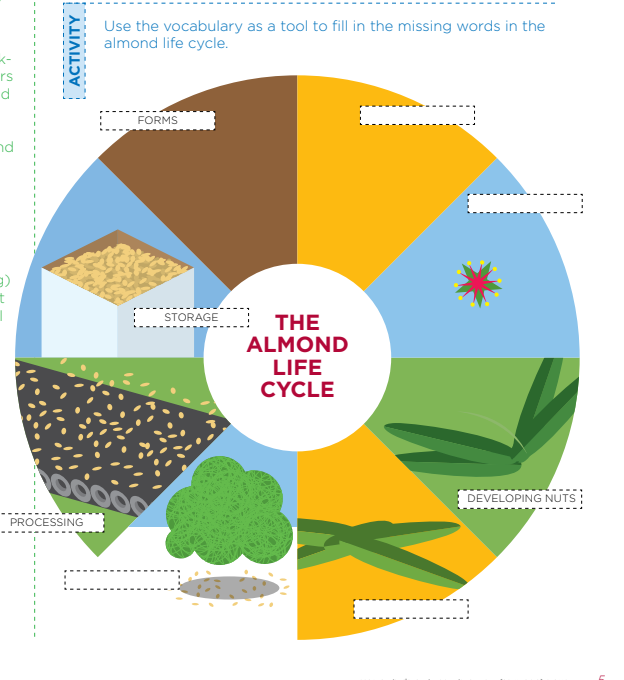
dormant: Once the almonds are harvested and the cold weather sets in, the trees go to sleep for the winter. During that time, the trees are storing up their energy for the spring.
bloom: Soft pink-and-white flowers cover the almond trees during spring for the bees to come and pollinate.
hullsplit: Once the trees have been pollinated, the almond hull (soft green outside covering) splits open to let the almond shell naturally dry.
harvest: During late summer and early fall, the almonds are removed from the trees by mechanical shakers.
Producing almonds is a year-long process. Almond growers pay special attention to the almond trees to make sure they are thriving all year long. Almond trees begin their cycle in a dormant state, which usually lasts from November to February. Once spring arrives, the almond trees burst into bloom and the bees come to pollinate. From March to June, the almond kernel is developing and hardening. In July, once the kernel has grown to its full potential, it goes into the hullsplit phase. In late summer, the almond trees are harvested and transported to the processing plant to be shipped around the world.
ACTIVITY
Use the vocabulary as a tool to fill in the missing words in the almond life cycle.
FORMS
STORAGE
THE ALMOND LIFE CYCLE
DEVELOPING NUTS
PROCESSING
Answers (clockwise): Dormant, Bloom, Hullsplit, Harvest
This HTML version was generated with AI assistance and may contain errors or omissions. The original approved PDF remains the official document of record. An alternative accessible format is available upon request from the document creator in accordance with Title II of the ADA.