Update: Winter 2001-02
Archived newsletter. Events, programs, and contact information reflect the Winter 2001–02 issue.
California Agricultural Technology Institute
California State University, Fresno
In This Issue
- New water center?
- CAB director on board
- CALIFT provides boost
- Overhead imaging tested
Taking ACTION against ag crime
CATI will apply Internet, database expertise in collaborative effort to track, reduce farm thefts
The California Agricultural Technology Institute (CATI) has offered its expertise in Internet services to a broad-based county law-enforcement coalition in an effort to reduce agricultural crime in California.
CATI will support the growing ACTION project by hosting a World Wide Web site that will serve as a central resource and database for information sharing and interaction among eight law enforcement agencies in the San Joaquin Valley.
The ACTION Project is short for Agricultural Crime Technology Information and Operations Network. It was launched two years ago through the efforts of Tulare County District Attorney Phillip Cline, who along with other South Valley sheriffs, district attorneys and agricultural commissioners, was tired of seeing farmers and ranchers victimized by criminals.
In an earlier crime prevention project operated through Cline’s office, investigators found that many criminals who work agricultural areas are not just one- or two-person steal-and-deal operations; many gangs have developed sophisticated networks. Current ACTION Project administrator William Yoshimoto, an attorney with the Tulare County District Attorney’s Office, outlines the reasons so many county agencies have agreed to collaborate.
“Agricultural crime is not just a local occurrence but a regional operation extending nationally and internationally,” Yoshimoto said. “A tractor stolen in one county can appear the next morning 100 miles away, and eventually may be recovered in a state thousands of miles from its point of origin.”
It’s 10 o’clock... Do you know where your tractor is?

Linking sheriffs’ departments, district attorneys’ offices and courts across jurisdictional lines has become essential for successfully investigating and prosecuting these types of crimes.
The federal Department of Justice acknowledged that fact in 1999, when the department’s Bureau of Justice Assistance released a $1 million grant to develop the ACTION Project.
Work began with the collaboration of sheriffs, district attorneys and ag commissioners of four “partner” counties: Tulare, Kern, Kings and Fresno. It has now expanded to eight, with the addition of Madera County as a full partner, and Merced, Stanislaus and San Joaquin counties as networking partners.
The project pioneers the deployment of sheriff’s detectives, ag inspectors, DA investigators and district attorneys to vertically integrate and prosecute cases.
“Vertical investigation and prosecution means the same individuals handle the case from the beginning to the end, thus bringing cohesion, expertise, experience and commitment to each case,” Yoshimoto said.
At the core of the ACTION Project is a computerized information sharing system that will serve as a central resource and intelligence network for data entry and retrieval. A custom database to house case information is being developed by specialists from CATI’s Agricultural Technology Information Network (ATI-Net), reported General Manager Mike Spiess.
Using laptop computers and digital cellular communications systems, investigators and attorneys will be able to access the database from anywhere in the ACTION region.
Another key component of the program is the “OAN,” or owner-applied number, which farmers and ranchers are encouraged to place on all equipment of value, Spiess said. The OAN is a nationally recognized system with a database at the National Crime Information Center. With an OAN, a piece of equipment from a San Joaquin Valley farm can be identified and recovered from anywhere in the United States.
OAN’s can be issued from the ACTION web site, Spiess said.

The ACTION grant also allowed for the purchase of specialized surveillance equipment. Available for use by county detectives will be small wireless video cameras, motion detectors, and “trip” devices that can be linked to a laptop computer. Various arrangements of the equipment will allow for remote surveillance of multiple rural sites.
“Such technology not only increases detection and apprehension, but also provides important evidence in a criminal prosecution,” Yoshimoto said.
Central offices for the ACTION project are located in Tulare, California. For more information, call 559-685-4850 or visit the website at www.agcrime.net.
Coastal vistas to enhance ag safety conference
The seascapes of Monterey Bay will provide the backdrop for one of California’s largest agricultural safety events, the annual AgSafe Conference, to be held Feb. 6 and 7 at the Embassy Suites Hotel and Conference Center in Seaside, California.
The event runs two days and will feature more than 30 workshops on safety issues ranging from hazard recognition to dealing with medical providers. More than a dozen specialists in various aspects of agricultural safety will provide information and training.
The conference typically draws more than 200 participants from throughout California, noted Kimberly Naffziger, director of AgSafe and coordinator of the event.
“It provides an excellent opportunity to gain information and training in so many areas,” Naffziger said. “In addition, we are excited to offer many of the classes in Spanish.”
Classes at this year’s conference will cover safety laws and regulations, emergency response, incident investigation, strategies to promote safe workplace behavior, workers’ compensation, ammonia safety, use of the Internet, how to be an effective leader, and other topics. New to the event will be several classes in dairy safety.
Education and training will be available to participants representing all areas of agriculture and agribusiness, including safety professionals, production managers and supervisors. In addition to the workshops, there will be networking opportunities, as well as vendor displays of safety equipment, services and supplies.
Several keynote presenters will address timely topics in agricultural safety. Michael C. Saqui, partner with the employers’ law firm of Barsamian, Saqui and Moody, will present “A Manager’s Guide to Workplace Motivation” during the first general session on Wednesday, Feb. 6. On Thursday, Feb. 7, Trula la Calle, an organizational development consultant with LPS Inc., will address cultural diversity in the workplace.
The AgSafe conference is sponsored by AgSafe; the Center for Agricultural Business (CAB) and California Agricultural Technology Institute at California State University, Fresno; Environmental Safety and Health at the University of California, Davis; and the National Institute of Occupational Safety and Health.
Cost to attend the event is $190 for AgSafe members and $250 for nonmembers, for registrations postmarked by Jan. 25, 2002. For single-day rates and other details, call 559-278-4404.
Registration information, including detailed descriptions of the workshops, is available on the AgSafe website at agsafe.org and through the CAB website at cati.csufresno.edu/cab.
Leaders cast vision for new water center
San Joaquin Valley seen as location for developing industry, policy standards to meet future needs
A consortium of university and industry leaders representing water and flow technology are promoting a plan that will increase water use efficiency worldwide and enhance economic growth in the San Joaquin Valley.
The consortium includes several representatives from California State University, Fresno and the Center for Irrigation Technology (CIT), as well as leaders of area businesses specializing in the manufacture of irrigation and other equipment related to the flow of water and other materials.
The plan calls for establishment of the International Center for Water Technology, or ICWT, on the Fresno State campus. The vision is for a facility that will be recognized by industry and academia as the world’s leading center for state-of-the-art water and flow technology and related applied sciences.
One of the authors of the plan is CIT Director David Zoldoske, who along with his colleagues, is convinced that a center such as the ICWT is essential to the advancement of agriculture and water-related industries in the San Joaquin Valley.
“Access to usable water is developing into the greatest challenge of this century,” states Zoldoske and the group, in outlining the need for the ICWT.
The world’s ability to find, use, clean, recycle, distribute, sell, and manage water will determine in large measure whether the world will progress or regress in the next 100 years, they assert. A center such as the ICWT would foster the research and technology advances needed to provide water supplies for the world’s major uses, such as agriculture, municipalities and industry.
In a formal business plan recently completed by the consortium, industry leaders confirm that the San Joaquin Valley is already one of the leading regions in the world for water technology manufacturing. But the valley also faces significant economic problems, such as chronically high unemployment, and water shortages.
With the formation of the ICWT, the valley “has the opportunity to become the undisputed, global leader in water and flow technology, and in the process, expand an industry with valuable, high-paying jobs, attract and retain intellectual capital through research and development activities, [and] inform the public and influence public policy in an area central to the success of our state and nation.”
Key functions of the ICWT would be to provide testing and certification services, community education, cooperative marketing services, technology demonstration, and other programs that would benefit the general public, industry and the university.
The ICWT physical plant would consist of a building complex with an exposition center, conference rooms, testing and training facilities, and offices. The Fresno State campus is being considered as a general site, though a specific location has not been determined.
Financial support for the ICWT calls for up to 80 percent of capital costs to be obtained through public sources, including state and federal allocations. The remaining 20 percent would come from private industry. Fresno State President John Welty has tentatively approved the business plan, Zoldoske said.
Operating costs once the facility is built would come through industry support, grants for various projects, and from fee-based services such as research, testing, conferences and trade shows, and memberships.
Zoldoske acknowledged the work of members of the San Joaquin Valley Water Technology Cluster in helping to develop the concept of the ICWT. The water technology cluster was founded last year by university and industry leaders with special funding from California State University’s Agricultural Research Initiative (ARI), the Fresno Area Workforce Investment Council, and the California Water Institute.
Identifying the work of the ICWT was the first major step in formulating the vision, Zoldoske noted; but the far greater challenge is implementation. That first will require creation of an interim board of directors and appointment of an interim director.
Industry representatives have requested Zoldoske serve as interim director. The interim board is anticipated to consist of both university and industry representatives.
Persons interested in learning more about the project are encouraged to call the ICWT phone line at 559-278-2691.
University, industry leaders support plan
California State University, Fresno authors of the business plan proposing formation of the International Center for Water Technology (ICWT) include the following individuals:
- Dr. Karl Longley, Dean, College of Engineering and Computer Sciences
- Dr. David Zoldoske, Director, Center for Irrigation Technology
- Ashley Swearengin, Executive Director, Central California Futures Institute
- Amy Chubb, Director, University Business Center
- Dan Clawson, Project Director, California Irrigation and Flow Technology Program, Center for Irrigation Technology
Industry leaders supporting the plan include the following:
- Claude C. Laval, President, Claude Laval Corporation, Fresno. Co-chair, San Joaquin Valley Water Technology Cluster
- Ray Dunn, President, Floway Pumps, Fresno. Co-chair, San Joaquin Valley Water Technology Cluster
- Angelo Mazzei, President, Mazzei Injector Corp., Bakersfield
New CAB director assumes post
Center for Agricultural Business
Mechel Paggi gained skills in international trade arena

New CAB Director Mechel Paggi (right) meets with Joe Bezerra, CATI director of operations (center), and John Shields, chair of Fresno State’s Department of Agricultural Economics.
He spent several years in congressional committee rooms, at diplomat dinners, and at the highest levels of international policy development for U.S. agricultural trade.
Now Mechel S. Paggi wants to talk to growers, to food processors, and to product brokers; he wants to spend time discussing production, marketing and water issues with those close to their crops and businesses.
Paggi, the new director of the Center for Agricultural Business (CAB), has come full circle, he says, in a career that began with regular interaction with farm producers, reached high into the global policy-making arena, and now has brought him back in touch with the folks who do the hands-on work.
“What I really wanted to do was get back into a position where I could work with producers and industry, to where I could put to work those things I learned at the policy level,” Paggi said last month from his office at CAB.
Paggi fills the opening left after former Director Bert Mason resigned in 1999 to take a position with the California Agricultural Labor Relations Board.
In 1999 Paggi was serving as executive director of the Commission on 21st Century Production Agriculture, a task force of economists and analysts charged with developing recommendations for the U.S. president and Congress on agricultural trade matters. Paggi had gained the requisite stature for that appointment through his previous service as a national program leader in natural resource economics for the U.S. Department of Agriculture, and prior to that as a senior economist for the Food and Agricultural Organization of the United Nations.
When the commission’s work concluded, Paggi learned of the CAB director opening and sought out the position.
“California is a most exciting area to be in,” he said. “What attracted me is the diversity of this area. The most innovative and productive farmers in the world are right here. And with that comes every challenge.”
The new CAB director said he would work to expand the partnership between the university and industry, with a view toward increased support for research and student activities across a wide range of disciplines.
One of the great challenges for agriculture these days is complying with increasing state and federal government regulations, he noted. Paggi said he would emphasize production research that will enable farm producers to succeed under the pressures.
Paggi also will emphasize research and education that will enable producers and brokers to “seize export opportunities” for California farm products.
“I want to enhance CAB’s role as a center for excellence and as a resource that industry calls on first for help in problem solving,” he said.
Paggi’s career in agricultural economics began with graduate teaching and research at Texas A&M University. After earning his doctorate in 1981, he worked as an economics consultant for a private firm for two years, then for the Texas Agricultural Extension Service for three years. From 1985-88 he served as an assistant professor of economics at Texas A&M.
From 1988-94 he worked as a senior economist in the research division of the American Farm Bureau Federation, and in 1995 he took his position with the United Nations.
Upcoming events
- January 16 – Ag Safety Breakfast Meeting, Salinas, California. For more information, call 559-278-4405.
- February 13 – AgSafety Breakfast Meeting, Fresno, California. For more information, call 559-278-4405.
- March 13 – AgSafety Breakfast, Fresno.
- April 10 – AgSafety Breakfast, Fresno.
CALIFT program to boost valley exports
Center for Irrigation Technology
Marketing specialist travels to Latin America to promote SJV products
San Joaquin Valley makers of precision irrigation equipment have a new advocate traveling the Latin hemisphere and promoting sales of their products.
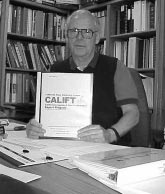
Dan Clawson is leading the CALIFT program.
Dan Clawson is the project manager of the new CALIFT program sponsored by the Center for Irrigation Technology (CIT), with additional support from the Fresno Area Workforce Investment Corporation and California State University’s Agricultural Research Initiative (ARI). The ARI supports collaborative research and educational activities that benefit California agriculture and the environment.
CALIFT stands for the California Irrigation and Flow Technologies Export Program. A key objective of the program is to keep San Joaquin Valley manufacturers of irrigation equipment on the leading edge of global marketing and sales, and thus to help boost employment capabilities of these companies for the area’s workforce, Clawson explained.
Tapping into the global market for water flow equipment involves the use of “smart” technology, which the irrigation industry calls precision flow technology. It includes everything from subsurface drip line to specialty filters to high-efficiency pumps. The equipment is not targeted just to the agricultural community; much of the same technology is applied to municipal and industrial water-flow equipment.
Clawson’s job is to market precision flow equipment in three targeted countries: Mexico, Argentina and Chile. In September he spent two weeks in Argentina and Chile meeting with representatives of government agencies, the mining industry, agriculture, and distribution chains. In addition to his own travel, he is arranging trade missions of buyers and sellers to travel between California and the other countries.
Plans include a trip to Sinaloa, Mexico in January, and a World Ag Expo reverse trade mission in February.
Fresno State’s University Business Center is providing seminars, workshops and an e-commerce website that will aid local companies in enhancing their export marketing strategies.
Clawson’s personal business experience includes more than 20 years in high-level management/marketing positions with Toro Irrigation, Johnston Pump Co., and Johns-Manville Co. For the past 14 years he has operated his own consulting firm in San Diego.
For details on the CALIFT program, contact Clawson at 559-278-2066 or by email at dan_clawson@csufresno.edu, or go to www.calift.org.
Zoldoske to lead Irrigation Association
CIT Director David Zoldoske has been elected treasurer of the Irrigation Association (IA). Based in Falls Church, Virginia, the IA has a paid staff of 10 and an annual budget of more than $2 million.
As a member of the board of directors, Zoldoske will automatically advance over the next three years to the successive positions of vice president, president elect, and then president. Terms are for one year each.
Zoldoske also was recently elected first vice president of the California Chapter of the American Society of Agronomy. After one year he will advance to serve as president.
Spring workshops to address irrigation
Two spring workshops addressing irrigation issues will be held at the Southern California Edison AgTAC in Tulare, California. The seminars are hosted by CIT and are free of charge. For more information call Tim Jacobsen at (559) 278-5752.
February 12 – “How to Buy an Irrigation System” seminar to be held twice, from 8:30 to 11 a.m. and from 1:30 to 4 p.m. Questions to be addressed include the following: “What type of system is best for me?” “How do I evaluate the equipment on the market?” “How much automation is necessary?” “Should I install my own system or hire a contractor?” “How do I contract with my irrigation supplier to avoid disappointments?”
March 11 – “Preseason Irrigation System Tune-up” from 8 a.m. to noon. The meeting will address the tasks necessary to prepare a micro-irrigation system for the irrigation season. Topics include filter station maintenance, field electrical troubleshooting, and field evaluation. Most of the session will be presented outdoors. Workshop includes a complimentary continental breakfast and lunch.
Overhead imaging explored for vineyard management
Viticulture and Enology Research Center
Multispectral imaging of vineyards and other farmlands by satellites and fixed-wing aircraft continues to show promise for detecting crop stress and other problems.
To obtain multispectral images, special cameras, usually from overhead, measure the light and heat reflected from a field or vineyard. Graphic images produced by high-powered software programs can reveal crop stress due to water shortage, disease, pest infestation or other causes.

Thermal image above outlines a grape vineyard on the Fresno State University Farm. In original color version, darkest raised areas near the right edge of the vineyard showed in blue, indicating cool areas. Lighter areas were white, while other areas were red, indicating warmest areas.
While remote sensing is a powerful tool in farm management, one problem still prevents widespread application of the technology in the commercial industry, a problem that California State University, Fresno research scientist Matthew Yen is trying to solve.
“We have learned that remote sensing technology may serve as a viable decision support tool for vineyard managers,” Yen said in outlining his project, funded by California State University’s Agricultural Research Initiative (ARI). But concerns still exist with the delivery of data. It can take days, even weeks to process and deliver information to the field manager.
In a typical California growing season, a period of weeks is far too long for a grower to wait to respond to a problem situation.
The key, Yen states, is in developing processes and software programs that can work together quickly, efficiently and reliably, without requiring oversight by a computer expert.
The first phase of Yen’s project work involved recording image data of a vineyard using three types of cameras, uploading the data from the camera to a processing center, and processing the data into graphic or other types of images useful to the vineyard manager.
The second phase of the project is “ground-truthing” the data. That involves taking field measurements with instruments at ground level to verify measurements recorded from the air.
The goal of the research, Yen said, is to develop a protocol that could consistently record, process and deliver image data to the vineyard manager within 48 hours. Another goal is to assess the economic value of such information to the farm producer.
“There is a need to identify its value so that growers and managers would commit resources to make it successful,” he said.
Results of the imaging project will be disseminated upon conclusion of the work later this year. For more information, Yen may be contacted through Fresno State’s Department of Industrial Technology at 559-278-4201.
Issues conference set for March 14, 15
The 5th Annual Central Coast Viticulture and Enology Issues Conference has been set for March 14 and 15 at the Rancho Santa Barbara Marriott in Buellton, near Santa Maria, California.
The two-day event is geared for the grape and wine industry and will focus on managing grapevine nutrition. Topics to be addressed include cover crops and soils, how they affect vine nutrition, and how they ultimately affect wine quality.
Conference sponsors include Fresno State’s Viticulture and Enology Research Center (VERC) and Department of Viticulture and Enology, Allan Hancock College of Santa Maria, and members of the grape and wine industry.
For registration or other conference information, call VERC at 559-278-2089 or visit the VERC website at cati.csufresno.edu/verc. For sponsorship opportunities, contact Cynthia Wood via email at cynthiaw@csufresno.edu.
Upcoming events
- January 29-31 – Unified Wine and Grape Symposium and Trade Show at the Sacramento Convention Center, Sacramento, California. For more info, go to http://www.unifiedsymposium.org.
- May 6-8 – Barrel and Barrel Alternatives Symposium at California State University, Fresno. For more info: 559-278-2089
- June 26-28 – American Society for Enology and Viticulture Annual Meeting, and Fresno State Viticulture and Enology Alumni and Friends Reunion at the Oregon Convention Center, Portland, Oregon. For reunion details, call 559-278-2089.
- August 6 – Grape Day 2002 at California State University, Fresno. For more info: 559-278-2089.
New CIMIS web site offers improved features
JANUARY 2002
California Irrigation Management Information System
CIMIS was created in 1982 with the main objective of providing high quality reference evapotranspiration (ETo) and weather data to California’s agricultural growers and landscape managers.
Over the years, CIMIS has established itself as one of the world’s largest automated networks of weather stations, with the highest standard of data quality and station integrity. As a result, the number of registered CIMIS users has been growing steadily. To cope with the increased demand and make accessibility and acquisition of data easier, CIMIS launched a new web site on October 1, 2001. The address for the new web site is http://www.cimis.water.ca.gov. Some of the most important features of the new web site include the following:
- Users can now easily register and create their own user id and password online. To create a new user id and password, simply go to the new web site and click on REGISTER. After providing the required information, you can automatically get unlimited access to the archived CIMIS data.
- The CIMIS data can now be extracted in four different formats. These are; a web report format that prints the report in your browser; a PDF report format that provides better quality printing; a CSV report format that automatically downloads data into a spreadsheet; and a XML report format that provides flexible post download processing, including incorporating data into your databases.
- A user can download hourly, daily, and monthly data from active and /or historical stations over an extended period of time.
- CIMIS has been reporting ETo calculated using the Penman combination equation modified for climatic conditions of California. Although preliminary tests have shown that differences between the CIMIS ETo and the standardized Penman-Monteith equation are statistically insignificant, we have decided to report both values for the benefit of interested users.
- Currently, the web site has limited graphics display capability for users to view the data plotted on a chart while browsing their web. We are working on further developing this option.
The new CIMIS web site provides downloading options for important technical references and links to web sites that are helpful for irrigation scheduling. Users can obtain information listing consultants within the state and various software packages. Quality control flags, crop coefficients, station siting, and sensors are also explained.
For more CIMIS information...
CIMIS information is published quarterly in the CATI Update newsletter. Articles are provided by the California Department of Water Resources, CIMIS program staff.
For more information about CIMIS or its programs, contact any of the following representatives at these offices:
| District | Representative | Phone | |
|---|---|---|---|
| Northern District | Jamie Dubay | (530) 529-7367 | pixley@water.ca.gov |
| San Joaquin District | Steve Ewert | (559) 230-3334 | sewert@water.ca.gov |
| Central District | Mark Rivera | (916) 651-7029 | mrivera@water.ca.gov |
| Southern District | Sergio Fierro | (818) 543-4652 | sergiof@water.ca.gov |
If you are unable to reach a CIMIS representative near you, call the CIMIS Helpline at 1-800-922-4647.
Weekly ETo Comparisons for Fresno
Fresno: September–November 2001. CIMIS Station #80, Fresno State.
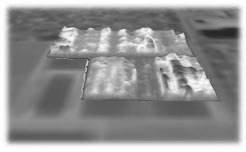
Chart shows ETo variation from normal over the last three months. It compares normal-year and current-year weekly reference evapotranspiration in inches; values generally decline from September through November.
Source note: The PDF prints the date range as 09/01/01–11/31/01. November has 30 days; the chart is labeled by month here.
Conference draws conversant crowd

More than 430 farmers, food processors, commodity brokers, and others in California agribusiness crowded the conference room of Fresno’s downtown Radisson Hotel last October for the 20th annual Agribusiness Management Conference, co-sponsored by the Center for Agricultural Business. The high attendance indicated a keen interest in business strategies for the coming year.
CATI on the Web!
For timely information about CATI, its research projects or centers, or to view text of research publications, visit us at cati.csufresno.edu.
- Center for Agricultural Business (CAB) – cati.csufresno.edu/cab
- Center for Food Science and Nutrition Research (CFSNR) – cati.csufresno.edu/cfsnr
- Center for Irrigation Technology (CIT) – cati.csufresno.edu/cit
- Viticulture and Enology Research Center (VERC) – cati.csufresno.edu/verc
- Agricultural Technology Information Network (ATI-Net) – cati.csufresno.edu/atinet
Publication Information
Update is published quarterly by the California Agricultural Technology Institute
College of Agricultural Sciences and Technology
California State University, Fresno
Winter 01-02
CATI Publication #020101
Voice number: (559) 278-2361
Fax number: (559) 278-4849
Director of Operations: Joe Bezerra
Publications Editor: Steve Olson
Editorial Assistant: Mike Rivera
California State University, Fresno
2910 E. Barstow Ave. M/S OF115
Fresno, California 93740-8009
This HTML version was generated with AI assistance and may contain errors or omissions. The original approved PDF remains the official document of record. An alternative accessible format is available upon request from the document creator in accordance with Title II of the ADA.