Update: Spring 2001
California Agricultural Technology Institute
California State University, Fresno
Spring 2001
In this issue...
- Labor survey continues.........3
- Pruning methods tested........5
- The CIMIS connection .........6
- Shrimp and rice ...................8
New instrument will aid in detecting seepage from canals
Staff at the Center for Irrigation Technology (CIT) have begun a research study to help the U.S. Bureau of Reclamation reduce the amount of water lost through seepage from irrigation canals.
The thousands of miles of canals that run throughout California have helped to make the state the greatest food-producing area in the world. Yet the most simple use of this technology — the earthen-banked waterway — permits seepage into the ground and can result in considerable loss of irrigation water.
In an effort to reduce excessive seepage, the bureau, with a $130,000 grant, has enlisted CIT’s help in testing the application of electromagnetic inductance (EM) to identify seepage locations along canals and in reservoirs.
The method employs an electronic instrument that is placed close to the ground surface or just above water. The
Seepage: Further calibration needed to finalize data
from Page 1
instrument sends an electric current into the ground, which induces a magnetic field. The instrument then reads this induced field. The strength of the induced field is dependent on several factors, including soil moisture, soil texture, and soil salinity.
The EM method allows rapid field assessment, but the data generated is what is known as “relative” data. Also required are detailed field investigations using more traditional techniques that result in “calibrated” data. These methods combined help engineers and water managers locate the potential seepage areas.
Common indicators of seepage along canals are soil saturation or excessive vegetation growth along canal banks. Other assessment methods include actual damming of canal sections and measuring water seepage into the ground.
The study is expected to take about one year, reported CIT project engineer Pete Canessa. Results will be released through field day presentations and other methods.
Dining on 2,4-D
Scientists seek methods to help soil bacteria consume greater amounts of pesticide remnants
Fresno State professor and several of her students are using a basement biology laboratory as a center for strategy development in the battle against soil and groundwater pollution.
In spite of reductions in chemical use by the agricultural industry in recent years, soil and groundwater pollution is still a problem in some areas because of the build-up of chemicals such as 2,4-D (2,4-dichlorophenoxyacetic acid) after decades of pesticide applications.
The good news, reports biology professor Alice Wright, is that soil microorganisms are not destroyed by 2,4-D. In fact, some consume it.
“Bacteria are really cool because they take these harmful chemicals and turn them into water and carbon dioxide,” she said.
While certain bacteria do metabolize 2,4-D, the problem is that the huge volume used in the United States overwhelms the soil microorganisms, causing pollution of soil and water.
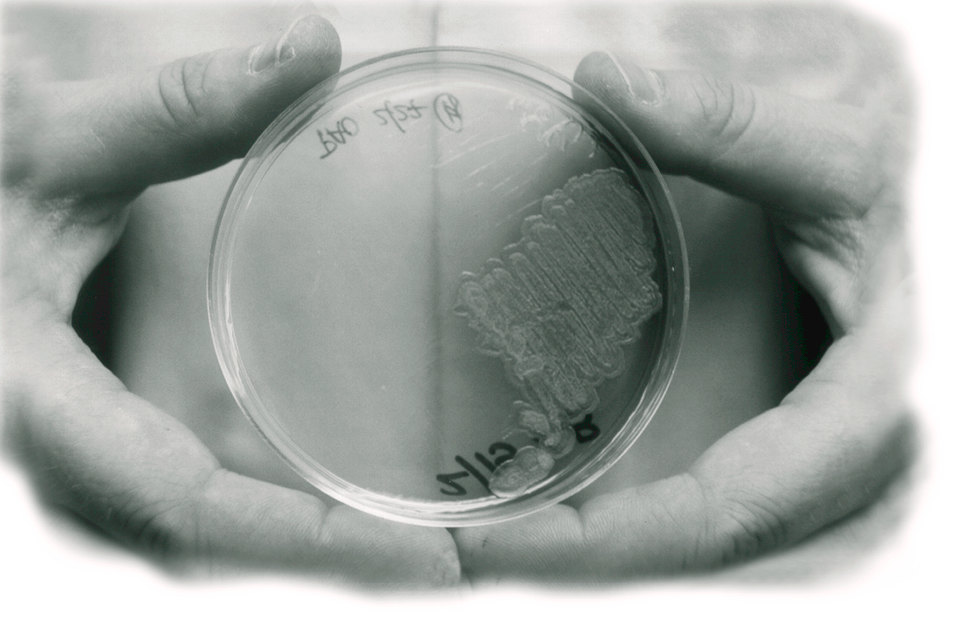
Wright is hopeful that with a little help, certain bacteria can learn to consume more 2,4-D. Focusing on the spieces Ralstonia eutrophus, Wright and her team of four students are isolating the bacteria, breaking
See Bacteria, Page 2
CSU chancellor asks state to bolster ARI funding
by Joe Bezerra, Director
California Agricultural Technology Institute
All of the California State University (CSU) colleges of agriculture have noted a distinct and increasing demand for CSU’s applied agriculture and natural resources research activity over the past five years. Unfortunately, the CSU has not had the financial resources to completely address this pressing need.
The introduction of the California State University Agricultural Research Initiative (ARI) in fiscal year 1999-2000 significantly enhanced the CSU’s ability to respond to research demands; however, escalating demand for system research activity is twice its capability to respond.
CSU Chancellor Charles B. Reed has recognized the marked increase in demand, the record of ARI success, and the continuing gap between the industry’s research need and the CSU’s ability to address that need. Therefore, Chancellor Reed has requested a $5 million annual increase in State General Fund funding, above its partnership funding commitment, to support the ARI.
California has been the leading agricultural state in the United States for over 50 years. Its agricultural gross product value in 1998 was 186 percent that of Texas, the second leading agricultural state in the nation. However, the industry’s national and international preeminence and a 10-year state economic boom notwithstanding, the industry is struggling and is experiencing an economic depression rivaling those of the late 1980s and 1930s. As a result, all sectors of the industry and the businesses that depend on it are in an unprecedented state of economic flux and uncertainty.
Driven by the imperative to adapt to its new environment and survive, the industry is aggressively adopting advanced technology and “best available” management practices developed through collaborative university-industry research partnerships funded by state, industry, and university resources.
The industry and the state’s colleges and universities have been partners in education and economic growth since the 1870s. The applied and basic university-based agricultural and natural resources research activities of the California State University and University of California have played an essential role in the development of California’s agricultural industry and unquestionably have contributed to the state’s overall exponential economic growth and prosperity.
Approval of Chancellor Reed’s request will ensure that the CSU has the resources to (1) respond proactively and progressively to the diverse challenges that inevitably will confront California’s agricultural industry; and (2) assist the industry in balancing agricultural, urban and environmental demands.
Bacteria: Trials will aid in bioremediation strategies
from Page 1
down the cell walls and clipping sections of genes out of the DNA molecules.
They are using cloning techniques to replicate sections of genes and observing the response to different stimuli. The hope is to prompt the bacteria to respond to smaller amounts of 2,4-D more quickly, and to consume more than they normally do.
“We want to improve the way they work, help them respond faster,” she said.
A “man-made” chemical, 2,4-D was introduced in 1944 and is still used extensively in the United States. The herbicide selectively acts against broad-leaved weeds, leaving cereals and grasses undamaged and increasing food production with relatively little labor.
In spite of the known risks of heavy 2,4-D use, no scientific studies of this particular kind have been done, Wright said. And while there’s no guarantee of success in altering the bacteria’s behavior, the effort will provide new information on the behavior and role of soil bacteria in metabolizing toxic chemicals.
“This study will aid in intelligent decision-making concerning the use of 2,4-D and other pesticides and may lead to the development of bioremediation strategies for pollutants that persist in the environment,” she said.
In addition to funding support from California State University Agricultural Research Initiative, Wright’s project received $130,000 in special funding from the U.S. Department of Agriculture.
Approximately one more year of laboratory work will be required before the research team can determine results of the work.
Center for Agricultural Business
Farm worker survey scheduled for completion this summer
Interview teams from the Center for Agricultural Business (CAB) will continue their travels to farms and fields of the central San Joaquin Valley this spring and summer to learn more about working and living conditions of farm workers.
The teams are obtaining the information as part of a labor and demographics study sponsored by the California Agricultural Technology Institute (CATI).
Project director Andrew Alvarado, professor in the Department of Social Work Education at Fresno State, expects to complete the survey of 300 farm workers by the end of the summer.
A key objective of the project is to determine how increased interdiction by the U.S. Border Patrol along the California-Mexico border has impacted California’s farm work force.
“Media reports suggest that the longest-established illegal entry points into California by Mexican and Central American workers seeking employment in agriculture have been abandoned for other entry points further east along the border and into Arizona,” Alvarado said.
Greater risk upon entry would likely result in longer stays by immigrants, affecting the size of the labor force, he explained.
Another aim of the study is to determine effects of the federal Welfare Reform and Reconciliation Act of 1996.
Among the expected impacts of the act was a larger pool of workers for agricultural jobs. Alvarado hopes to determine more specifically how many farm workers were recent recipients under county public assistance programs such as Temporary Assistance to Needy Families (TANF).
“This information would allow us to ascertain whether or not this group presents a viable and dependable source of labor for agriculture, and if it does, then to what extent are recent immigrants pressed for finding employment.”
Alvarado’s survey teams are traveling to locations throughout the central San Joaquin Valley, and with the permission of employers and labor contractors, are interviewing farm workers about their working and living conditions, wages, resident status, health, means of transportation, and experiences in obtaining employment.
The survey is targeting those working in grapes, citrus, tree fruit, vegetables and cotton.
Surveys of farm labor contractors and employers also will be conducted to
See Survey, Page 7

Upcoming events
April 24 – Workshop for Trainers of Agricultural Fieldworkers, in Fresno, California. Presented in English and Spanish. For details, call (559) 278-4405.
April 25 – Workshop for Trainers of Pesticide Handlers and Agricultural Fieldworkers, in Fresno. Presented in English. Call (559) 278-4405.
May 10 – Fourth Annual Agricultural Labor and Employment Summit: Legal and Legislative Update, at the Harris Ranch, Coalinga, California. Call (559) 278-4405.
May 23 – Supervising for Success: Keys to Effective Supervisory Techniques, at the Richard W. Nutter Agriculture Conference Center in Salinas, California. Presented in English and Spanish. Call (559) 278-4405.
Survey: Contractors, employers also queried
from Page 3
determine their sense of work force stability.
Analysis of the results will be completed later this year, Alvarado said. Findings will be reported to employer groups, to governmental agencies and to others in California agriculture.
Also supporting the project are the U.S. Department of Labor, the California Department of Health and Human Services, and the California Employment Development Department.
April symposium to address labor, employment laws
New laws affecting labor and employment in the grape and wine industries will be addressed by legal specialists at the upcoming Central Coast Winegrape Labor and Employment Law Symposium to be held Thursday, April 27 in Paso Robles, California.
The half-day program will feature labor law attorneys Michael Saqui and Mark Hanna, from the Fresno firm Barsamian, Saqui and Moody, presenting “Legal and Practical Do’s and Don’ts of Management: Bullet Proofing Your Operation Against Liability.”
They will discuss legislative updates on current labor and employment laws, employee handbooks, workplace investigations, wage and hour law, and relationships with farm labor contractors.
Workers’ compensation issues also will be addressed at the symposium. Alethea Leandro-Farr, claims service representative with Norton Parker Insurance Agency, will present “Workers’ Compensation: Effectively Managing the New Challenges for Employers in 2001.”
In addition, Lori Kammerer, managing director with the California Coalition on Workers’ Compensation, will speak on “Workers’ Compensation: Understanding the Politics and What We Can Expect From the New Legislature.”
Event sponsors include CATI, the Center for Agricultural Business (CAB); the Paso Robles Vintners and Grower Association; AgSafe; and Barsamian, Saqui and Moody.
For registration or other information about the symposium, call (559) 278-4405 or visit the CAB web site at cati.csufresno.edu/cab.
Center for Irrigation Technology
New researcher to aid in soil moisture, dairy studies
'Study abroad' program led France native to U.S. for soil, water studies
The expansion of research addressing soil moisture and salinity in California’s San Joaquin Valley has resulted in a new scientist joining the staff of the Center for Irrigation Technology (CIT).
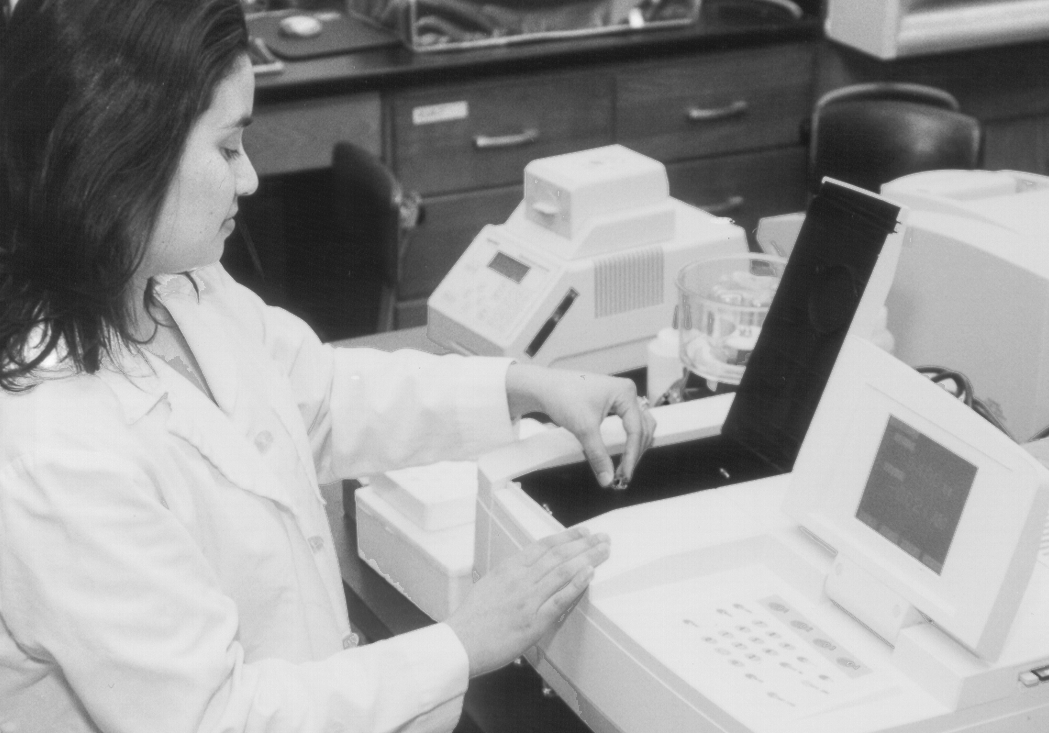
Florence Cassel Sharmasarkar began work in January focusing on two major research efforts overseen by CIT: 1) determining the extent of water lost through seepage from the thousands of miles of San Joaquin Valley aquaducts; and 2) developing laboratory protocols for measuring chemicals in dairy lagoon water.
The canal seepage project is supported financially by the U.S. Bureau of Reclamation and California’s Department of Water Resources. It will require Cassel to travel throughout the San Joaquin Valley, measuring soil moisture content along canal banks (see article, Page 1). To determine soil moisture, Cassel will use an electronic device that creates a magnetic field in the soil and then measures electrical conductivity.
For the dairy lagoon water project, Cassel will spend most of her time in the laboratory and at a computer. She is developing lab protocols for measuring levels of oxygen, acid, and other chemical compounds in the water. The lagoon project involves the addition of sulfuric acid to make the water more amenable to microorganisms. Increased microbial activity should help reduce amounts of solid material and also reduce unwelcome odors.
Cassel obtained most of her post-secondary education in Europe. She is a native of France and attended a private agricultural school called Ecole Superieure d’Agriculture in the city of Angers. Part of her bachelor’s and master’s degree programs required her to study abroad. She spent two years in Spain and one year at the University of Wyoming in Laramie doing research and management studies.
After earning her master’s in France, she returned to Laramie and completed her Ph.D. in soil-water physics and agronomy. Both she and her husband, Shankar, developed connections to the Fresno area through research associates. Shankar has a Ph.D. in soil chemistry and is serving as an adjunct faculty member for Fresno State’s Department of Plant Science and is conducting research for the USDA’s Agricultural Research Service based in Fresno.
Cassel said one of her major areas of interest is water use efficiency and pollution control.
“I believe water management practices are essential for sustaining California’s agricultural productivity and reducing environmental pollution,” she said.
Support for Cassel’s position is through special project funding and is up for annual renewal. She is part of a CIT research team that has submitted a major proposal to the CalFed program for measuring and monitoring soil salinity throughout the San Joaquin Valley.
Spring seminars to address irrigation issues
Irrigation education sponsored by the Center for Irrigation Technology continues this spring and summer with workshops addressing pumping and irrigation scheduling.
All three sessions listed below will be held at the Southern California Edison AgTAC in Tulare, California. Lunch and continental breakfasts will be provided at the following sessions:
April 26 – Agricultural Pumping Stations, from 8:30 a.m. to 1 p.m., will address the components common to pump stations and their impact on energy requirements. Workshop will conclude with lunch.
May 8 – Basic Irrigation Schduling, Part 1, from 7:30 to 9 a.m., will offer information needed for irrigation scheduling. Continental breakfast provided.
June 12 – Basic Irrigation Scheduling, Part 2, from 7:30 to 9 a.m., will feature use of information provided in part 1. Continental breakfast provided.
For more information on these and other upcoming workshops, contact Tim Jacobsen, CIT education specialist, at (559) 278-6033.
Viticulture and Enology Research Center
Pruning methods tried on Chardonnay vines
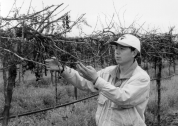
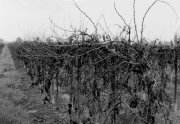
A research team from Fresno State’s Viticulture and Enology Research Center (VERC) is monitoring the performance of Chardonnay grapevines under different pruning methods in the San Joaquin Valley.
Chardonnay is considered one of the finer white wines, and the varietal is most often grown in regions cooler than the San Joaquin Valley, noted research team leader Sanliang Gu, who holds the Ricchuti Chair of Research at VERC.
However, with the right combination of rootstock, variety and pruning technique, growers may find the warmer regions to be suitable as well, Gu noted.
“In this area, it is not certain what to expect from Chardonnay vines,” he said in outlining the study. “We’re trying to see if we can come up with the best combination of methods for producing premier Chardonnay grapes in this region.”
The main focus of the study has been on pruning methods, Gu said. Conventional, mechanical and minimal techniques were employed on vines in a private vineyard near Fresno, he said.
The typical advantage of hand pruning is a more open canopy, larger berry size and earlier maturity, he explained. An advantage of mechanical pruning is that work will not be affected by labor shortages. One advantage of minimal pruning is lower costs.
Each method can have drawbacks as well as advantages. For example, hand pruning brings higher management costs. With minimal pruning there is less control over quality.
Gu said the Chardonnay study provides specific yield and quality information that growers can consider in their own management plans.
Data from the summer of 2000 show the per-acre yield from the hand and mechanical pruning treatments to be nearly identical, at 13.85 and 13.69 tons per acre, respectively. The minimal pruning treatment resulted in a higher yield of 15.48 tons per acre. The minimal pruning treatment was harvested approximately one month later than the conventional treatment because of delayed maturity, Gu noted.
Fruit quality measurements were significantly affected by pruning treatment in this study. For example, pH was 3.94 for the hand pruning, 3.53 for mechanical pruning, and 4.14 for minimal pruning. Titratible acidity was 4.50 for the hand pruning, 4.27 for mechanical pruning, and 3.53 for minimal pruning.
Additional details of the study are in a report titled “Effect of Pruning Mechanization on Vine Performance and Fruit Composition of Chardonnay Grapevines under Warm Climate Conditions in the San Joaquin Valley of California.” The report is located in the VERC research publications section of the CATI web site located at cati.csufresno.edu.
Funding for this study was provided by CATI and the American Vineyard Foundation. Vineyard management was provided by Metzler Family Farms. Gu is seeking further funding in order to obtain several seasons of yield data for this project. More information will be made available as work is completed.
Upcoming events
June 3 – Annual Celebration of Wine and tasting at Dennes Coombs’ Riverbend Ranch in Madera. Funds raised support the Vincent E. Petrucci Library. Sponsored by Fresno State’s Viticulture Alumni Club. For more information call (559) 278-7151.
June 27-30 – American Society of Enology and Viticulture Annual Convention in San Diego. Fresno State Viticulture and Enology Alumni and Friends Reunion, to be held in conjunction with the event. For details call (559) 278-2089.
Energy Conservation: The CIMIS Connection
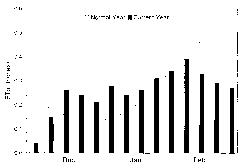
For many years now, the Department of Water Resources, local water agencies and universities have advocated the use of CIMIS ETo data to help increase water use efficiency through improved irrigation management.
Improved irrigation management results in a reduction in applied water, an increase in crop yield, an improvement in crop quality and landscape, and a decrease in energy use. While several of these benefits have been documented, decreased energy use has not received a lot of attention.
During California’s current energy crisis, however, it is fitting that the impact of improved irrigation management on energy conservation be highlighted. Energy conservation is directly related to a decrease in pumping resulting from reduction of applied water.
To illustrate the potential for energy savings, a conceptual analysis is provided below. It is based on a statewide achievable applied water reduction of 250,000 acre-feet in agricultural and 150,000 acre-feet in landscape pressurized irrigation systems.
For analysis purposes, let us calculate energy savings based on a single pumping plant operating at an overall pump efficiency of 65 percent and pressure of 60 pounds per square inch (psi). How do we compute energy savings? We can use the following equation:
MWh = (1.024 × TDH × AF) / (1,000 × OPE)
- MWh = energy savings resulting from reduction in applied water
- 1.024 = multiplication factor (it requires 1.024 kWh to pump 1 AF per foot of pressure)
- TDH = total dynamic head (feet) or pressure that the pump has to overcome (2.31*60 psi)
- AF = acre-feet
- OPE = overall pump efficiency in fraction.
- 1,000 = conversion factor from kWh to MWh
In this case, for a 200,000 acre-feet reduction in agriculture and a 150,000 acre-feet reduction in landscape, the potential energy savings would be 43,000 MWh in agriculture and 32,000 MWh in landscape for a total of 75,000 MWh. If this single pumping plant operates 4,000 hours a year, then total power savings would be 19 MW.
As the calculation shows, there is a potential for reducing energy consumption by increasing water use efficiency. However, it must be noted that to achieve the kind of savings calculated above, other irrigation management practices must be used with CIMIS.
These practices include improving irrigation system uniformity and making pumping plant operations more efficient.
Visit the CIMIS home page at the following address:
wwwdpla.water.ca.gov/cimis.html
For more CIMIS information...
CIMIS information is published quarterly in the CATI Update newsletter. Articles are provided by the California Department of Water Resources, CIMIS program staff.
For more information about CIMIS or its programs, contact any of the following representatives at these offices:
- Northern District
Eugene Pixley
(916) 529-7392
pixley@water.ca.gov - Central District
Mark Rivera
(916) 227-7603
mrivera@water.ca.gov - San Joaquin District
Kent Frame
(559) 230-3334
kframe@water.ca.gov - Southern District
Sergio Fierro
(818) 543-4652
sergiof@water.ca.gov
If you are unable to reach a CIMIS representative near you, call the CIMIS Helpline at 1-800-922-4647.
Salsa project provides education for students, product for public
Center for Food Science and Nutrition Research
The proliferation of tomato-based salsas in American grocery stores reached a milestone recently when salsa surpassed catsup as the condiment sales leader.
A number of factors influence the taste and quality of a processed salsa product, noted Professor Dennis Ferris of Fresno State’s Department of Food Science and Nutrition. Ferris and his team of student researchers have learned much after compiling three years of analytical and survey data on processing methods, shelf life and consumer acceptance of salsa prepared in the university’s food processing laboratory.
The purpose of the salsa project was to develop a salsa using a specially-dried cilantro that would replicate the flavor of fresh cilantro. Researchers ran fresh cilantro through the microwave vacuum dehydration process (MIVAC®) at Fresno State and then added the dehydrated cilantro to the salsa mixture late in the processing phase.
Consumer surveys were conducted comparing salsa with the MIVAC-treated cilantro and salsa with fresh cilantro added at the same time of processing.
Sensory evaluations revealed that consumers preferred the product with the fresh cilantro added over the salsa with the MIVAC-treated cilantro. Because of predictions that the fresh cilantro would lose its flavor during processing, the results were unexpected, Ferris said.
In spite of the evaluation results, the work was significant, Ferris reported.
“Overall, a successful product was produced for a target market that likes and purchases the product. Salsa sales at the California State University, Fresno Farm Market have been substantial and continue to grow,” he said. The project also gives researchers the opportunity for further investigation using other MIVAC-treated herbs and spices, he added.
Details of the final phase of the salsa project are in the publication, “A New Tomato-based Salsa: Continued sensory evaluation and shelf-life studies of the microbial loads of salsa containing microwaved dehydrated cilantro.”
Funding for the work was provided through the Center for Food Science and Nutrition Research (CFSNR). The publication is available on the CATI web site at cati.csufresno.edu/cfsnr. To request a print copy, see the order form below.
Publications available
(These publications may be viewed in their entirety on CATI’s World Wide Web pages, located at cati.csufresno.edu. Single copies are also available by mail at no charge)
A New Tomato-based Salsa: Continued sensory evaluation and shelf-life studies of the microbial loads of salsa containing microwaved dehydrated cilantro, by Amy Schauwecker, Hector Ochoa and Dennis A. Ferris. Pub. #000802.
Ordering Information:
Check the publication(s) desired and mail or fax form to:
CATI
California State University, Fresno
2910 E. Barstow Ave. M/S OF115
Fresno, CA 93740-8009
Fax: (559) 278-4849
Name
Company
Mailing Address
City
State
Zip
Biologist tries 'Med fly' approach to control shrimp
When most Californians think of shrimp with rice, they probably think of a delicious culinary combination at a favorite local restaurant.
When farmers in central California think of shrimp with rice, most grit their teeth, wrinkle their noses, and complain about loathsome little watery pests. That’s because very small crustaceans called tadpole shrimp, invasive to California, have found their way into growers' water-covered rice fields, where they damage the seedlings.
In an effort to solve the too-much-shrimp-with-rice problem in California, a biologist at California State University, Fresno has spent the last year studying the effects of a hormone that has been shown to hinder the reproductive ability of the tadpole shrimp and may help in controlling populations in rice fields.
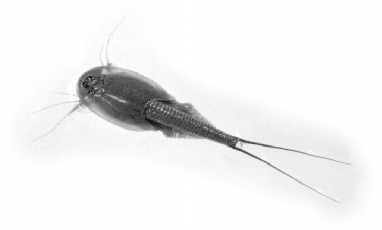
Tadpole shrimp damage rice by knocking over the young plants, or cotyledons, during foraging activities before the plants have a chance to establish firm roots, noted Professor Brian Tsukimura of Fresno State’s Biology Department. For years growers have used the pesticide copper sulfate to control the shrimp, but that is likely to change in the near future.
“Copper sulfate accumulation in rice fields has become a significant problem in that the buildup of residues creates less favorable growing condition for rice,” he said. “Also, there are increasing numbers of reports citing the detrimental effects of copper sulfate on game species, and strict regulation may be soon in coming.”
Thus, for rice to continue to be a viable crop, an alternative method of controlling the tadpole shrimp needs to be developed.
The hormone Tsukimura is studying, methyl farnesoate (MF), is produced by more than two dozen crustacean species and a number of tropical plants. Laboratory studies have shown that when MF is given as a dietary supplement to the tadpole shrimp, it inhibits egg development. If this method were to prove effective in hindering reproduction, it could provide an “environmentally friendly” way of controlling shrimp populations without pesticides.
Another portion of the study involves determining a way to get the shrimp to consume the MF in the field. Laboratory controls allowed student technicians to assemble a specific dietary regime containing the extra MF. For field application, Tsukimura is seeking to develop a MF-carrier material which can be incorporated into feed pellets, which in turn can be broadcast across a wide area.
The tadpole shrimp grows to its full adult length of three to four centimeters in about 30 days, and can start depositing hundreds of fertilized eggs for successive generations after just nine days.
Using a biological control method for the tadpole shrimp is similar to that which has been used successfully in California to control the Med fly. The method “permits the existence of adults yet controls the production of offspring,” Tsukimura said.
Initial project funding came from California State University’s Agricultural Research Initiative, which is administered by the California Agricultural Technology Institute (CATI). Continuing funding is being sought from the ARI, as well as from the U.S. Department of Agriculture and the California Rice Growers Board.
Publication and contact information
Update is published quarterly by the California Agricultural Technology Institute
College of Agricultural Sciences and Technology
California State University, Fresno
Spring 2001
CATI Publication #010401
Voice number: (559) 278-2361
Fax number: (559) 278-4849
Director of Operations: Joe Bezerra
Publications Editor: Steve Olson
Editorial Assistant: Mike Rivera
California Agricultural Technology Institute
California State University, Fresno
2910 E. Barstow Ave. M/S OF115
Fresno, California 93740-8009
Non Profit Organzation
U.S. Postage
PAID
Fresno, CA
Permit No. 262
Address Service Requested
In the event of incorrect address information or extra copies to your workplace, please return this address label by mail or fax with your requested changes. CATI fax number is (559) 278-4849.
This HTML version was generated with AI assistance and may contain errors or omissions. The original approved PDF remains the official document of record. An alternative accessible format is available upon request from the document creator in accordance with Title II of the ADA.