Update: Fall 2001
CALIFORNIA AGRICULTURAL TECHNOLOGY INSTITUTE
FALL 2001
California State University, Fresno
In this issue...
ARI funds reduced ...............2
Land-usage mapped .............3
Vine nitrogen studied ...........5
Grant funds still available .....7
Monitoring seedling growth
Research team studies factors affecting forest regeneration
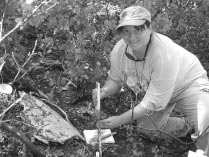
The diverse conifer forests of California’s Sierra Nevada mountains are one of the state’s most prized resources, not only for scenic vistas and recreation, but also for the lumber they provide for building homes, furniture and other wood-based products.
And while the forest might appear to be healthy, all may not be well in portions of the ecosystem, according to Fresno State biologist Ruth Ann Kern. Forest management specialists have noted that the pines, firs and other sierra species sometimes fail to repopulate the forest floor as quickly as scientists believe they should.
“Following timber harvest and natural wildfires, forest regeneration is often slower than expected,” Kern said.
The slower regeneration could be due in part to the Sierra Nevada’s drier climate, higher summer temperatures, and nutrient-poor granite soils, scientists say. But other factors, such as mountain shrubbery, also could influence seedling growth.
Since a key facet of U.S. Forest Service operations involves seedling planting, a better understanding of the relationship between native shrubs and seedling growth could enhance regeneration efforts. With that in mind, the Forest Service has teamed with California State University, Fresno to fund a three-year project on seedling growth.
The focus of the project is to determine whether and how native shrubs affect seedling survival, Kern said. Her research team is monitoring seedling growth.
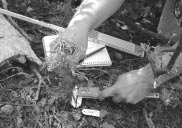
Digital caliper is used to measure diameter of pine and fir seedlings.
Ag business outlook conference set for Oct. 25 in Fresno
Economic trends affecting California agribusiness will be the subject of analysis and discussion at the upcoming Agribusiness Management Conference to be held Thursday, Oct. 25, 2001 in Fresno, California.
The annual conference, which is taking place approximately two weeks earlier than in past years, will be held at the Radisson Hotel and Conference Center downtown. It will feature outlooks from more than a dozen specialists in economic issues as well as in specific California farm commodity prices.
Providing the luncheon address will be George H. Soares, founding and managing partner of the law firm of Kahn, Soares & Conway, LLP, based in Hanford and Sacramento, California.
Soares will focus on strategies for agriculture to ensure a viable future.
See Outlook, Page 3
From the director
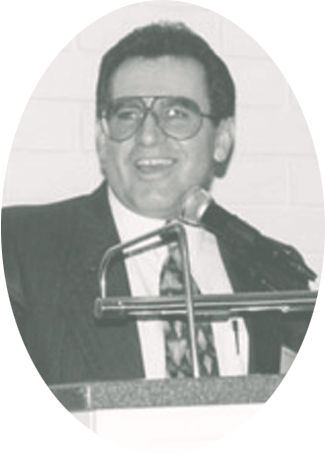
State budget crisis hinders ARI support of research
California agriculture and consumers suffered a setback this summer when Governor Davis line-item vetoed $2 million from the California State University Agricultural Research Initiative’s (ARI) budget last month during the final days of the state budget process.
After fully funding the ARI at $5 million in its first two years, the Governor actually boosted its budget to $6 million in his January and May budget proposals this year. But when the final budget was signed, $2 million was cut.
The ARI is a California State University (CSU)-based collaborative partnership between the CSU colleges of agriculture, other CSU’s, University of California, UC Extension, USDA, state and federal agencies, the state’s agricultural and natural resources industries, and allied business communities. It provides public funds that are matched annually at least dollar-for-dollar by the agricultural industry.
ARI academic-industry partnerships have flourished, generating more than $12 million in industry match funding over the last two years. Additionally, they have added value to the research and academic investments made by each partner individually. ARI projects and programs improve the economic efficiency and sustainability of California agriculture and its allied industries, with the goal of consumer sensitive and environmentally sound agricultural systems and increased public confidence in food safety.
The ARI currently funds 155 agricultural and natural resource applied research projects throughout California in the areas of agricultural business, biological diversity, biotechnology, food safety, nutrition, new product development, natural resources, production and cultural practices, public policy, and water and irrigation technology.
State Senator Charles Poochigian (R-Fresno) and his staff worked vigorously to restore the ARI budget cuts. Senator Poochigian, along with co-authors Senator Jim Costa (D-Fresno) and Senator Dick Monteith (R-Modesto), attempted to amend and move Senate Bill 433, which would restore $2 million originally in the state budget slated for the ARI, through the last days of the extended legislative session. In his call for legislative support Senator Poochigian stated, “I invite all those who advocate for a healthy agricultural industry in California to support this worthy collaboration between government, academia and agricultural industry leaders. Specialized research is vital to keeping California the agricultural leader in the nation.”
However, notwithstanding Senator Poochigian’s hard work and intense efforts to move SB 433 through the legislative process, and an outpouring of industry support and advocacy, SB 433 died at the Assembly as the Legislature sought to meet the September 14th legislative session deadline.
Growth: Treatments include light, intense burning
from Page 1
in relation to two dominant natural mountain shrubs – ceanothus (Ceanothus cordulatus) and greenleaf manzanita (Arctostaphylos patula).
To begin the study, student technicians last year outlined growth plots in an existing mixed conifer forest area approximately 80 miles northeast of Fresno, California. Three main treatments were established: 1) control plots with no alteration to the natural flora, 2) “lightly-burned” plots where some of the natural shrubbery has been burned off, and 3) “intense burn” areas where all of the shrubbery has been burned off.
Approximately 900 white fir and sugar pine seedlings were planted in the treatment plots, Kern said. Sensors placed in several locations at each site are recording air temperature, soil temperature and soil moisture. Available light also is being recorded.
Researcher team members visit the sites regularly to retrieve data from the sensors. The information gleaned will show how different types and amounts of natural shrubbery affect the microclimate surrounding the seedlings. For example, thick concentrations of shrubbery may help preserve soil moisture, but they also may block sunlight needed for growth.
After harvesting the seedlings next fall, Kern and her students will examine individual trees to determine growth rate and other characteristics. Results will be provided to federal, state and private agencies for use in forest management.
“Seedling regeneration is a real issue in the Sierra Nevada,” she said. “The growth of the trees in relation to the different micro-environments will give scientists clues as to what factors help or hinder seedling growth.”
Funding for the project came from the CSU Agricultural Research Initiative, the USDA and the Mellon Foundation.
Center for Agricultural Business
GIS technology used in land-use mapping project
The great San Joaquin Valley of California boasts millions of acres of farmland whose crops help to feed the entire world.
What most people see when gazing across the valley is vast tracts of green – peach orchards, grape vineyards, corn and other crops. What a team of researchers from California State University, Fresno and the University of California sees is something more intricate: the temperature of the soil and the leaves; mosquitoes flying in the air above; and the movement of water in underground streams beneath.
Their perceptions result from the application of Geographic Information Systems (GIS) technology, which allows data to be stored, viewed, queried and analyzed spatially. It allows multiple “layers” of information to be depicted, showing different processes that occur on, over, and under a given tract of land.
The project they are conducting is titled the San Joaquin Valley Crop, Water and Land Use Mapping Project. It is managed by Bob Slobodian, director of Fresno State’s new Interdisciplinary Spatial Information Systems (ISIS) Center, a non-profit organization dedicated to providing training and information in GIS technology.
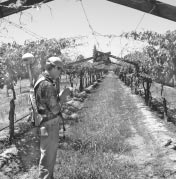
“Irrigation districts, pesticide regulatory agencies, water suppliers, city and regional planners, and a host of state and federal agencies all deal with information that is inherently spatial, containing a common attribute of geographic position,” Slobodian said in outlining the nature of GIS work. While many management agencies each compile information specific to their own work, additional data important to decision-making is absent, he noted.
The goal of the mapping project is to develop a comprehensive GIS database containing a broad range of information for a given parcel of land. The database can be compiled using various methods, such as satellite photography and plant and soil sampling, and can include information such as crop type and health, migration of pest species, and spread of insecticide-resistant pest populations.
“Such a land-use map will allow better management of many San Joaquin Valley land assets,” Slobodian said.
With funding from the CSU Agricultural Research Initiative (ARI) and administrative support from the Center for Agricultural Business (CAB), Slobodian has formed a team of specialists from the ISIS Center and from the UC Kearney Agricultural Center east of Fresno, California.
Center Director David Grantz is directing his staff to accumulate land-use data in three problem areas that affect agriculture: pesticide resistance in key agricultural pests and mosquitoes, pest populations and host plant distribution, and ground water use and hydrology.
Once converted into digital format and entered into a database, the information can then be expressed graphically on a computer screen or printout as layers of data.
Base map construction for this project is focused on three target counties: Fresno, Tulare and Kern.
Outreach to the professional community is being conducted through UC extension presentations, educational forums, and at a new website – www.uckac.edu/gis.
More information on GIS technology is available at the ISIS website, located at www.isis.csufresno.edu.
Upcoming events
September 26 – Agricultural Safety Certificate Program’s Practical Experience Workshop – Module Five, from 8 a.m. to noon in the CAB Conference Room at Fresno State. For details call (559) 278-4405.
October 10 – Agricultural Safety Program Safety Breakfast Meeting, 7:30 – 9:00 a.m. in the CATI Conference Room at Fresno State. For details call (559) 278-4405.
October 30 – Agricultural Safety Resource Alliance Safety Meeting, “Ergonomic and Safety Issues in the Vineyard,” 9 to 11 a.m. at the Napa County Fairgrounds, The Cropp Building, in Calistoga, CA. For details call 707-968-2195. To RSVP call 707-968-2058.
February 6-7, 2002 – 8th Annual AgSafe Conference at the Embassy Suites Hotel and Conference Center in Seaside, CA. For details call (559) 278-4405.
Outlook: “Good, bad, ...?” to be discussed
from Page 1
Opening the conference with a morning keynote address will be Jack Beebe, senior vice president and director of research for the Federal Reserve Bank of San Francisco. Beebe will offer his outlook on the California, United States and global economies for the year 2002 and beyond.
Also sharing insights in the morning will be University of California professor Colin A. Carter, an agricultural and resource economics specialist on Pacific Rim trade issues. He has recently investigated China’s internal grain economy and participation in the international market.
Local economist Vernon Crowder, senior vice president for Bank of America, will discuss “California Agriculture in 2002: The Good, the Bad, and the…”
The conference also will feature commodity outlook panels of agribusiness leaders. They will offer market projections for California wine grapes, raisins, table grapes, tree fruit, cotton, nut crops, citrus, tomatoes, dairy products, beef, hay and feed grains.
The conference is sponsored by the Center for Agricultural Business, the California Agricultural Technology Institute, and Bank of America Corp.
Registration fee is $85 for registrations postmarked by Oct. 18. For additional registration or conference information, call 559-278-4405 or visit the CAB website at cati.csufresno.edu.
Center for Irrigation Technology
Training to address wellhead protection
Enforcement of state regulations will require ag commissioners’ help
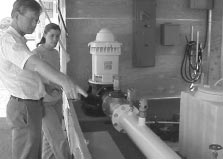
CIT education specialist Tim Jacobsen explains the functions of the new wellhead training trailer with backflow preventer to Joy Dias, field representative for the California Department of Pesticide Regulation. Photo below shows setup for a venturi injector unit.
Education specialists for the Center for Irrigation Technology (CIT) will take to the road during the next three months to provide specialized training in wellhead protection for California’s 52 agricultural commissioners and their staff.
Training leader Tim Jacobsen will pull a customized equipment trailer to several sites in order to host the training seminars. The trailer contains a sample setup of a typical electric irrigation pump and wellhead with a discharge pipe. Less common equipment includes a tank for holding liquid chemicals, an injection pump, a venturi injector, and a backflow prevention device.
The training is necessary to aid ag commissioners in effectively monitoring and enforcing regulations enacted several years ago by California’s Department of Pestcide Regulation (DPR).
The DPR’s regulations require backflow prevention devices on all chemical injection systems to help prevent the return of treated water into the groundwater.
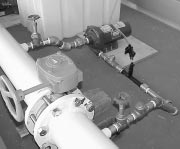
“When a well shuts off, the water backs up, and you can have a whole column of water that goes back into the ground,” Jacobsen said. If the wellhead pumping unit has an injector unit for fertilizer, herbicide or insecticide, the water column containing that chemical can be sucked back into the ground when the well shuts off.
“At every site where chemical injection is used, the DPR has mandated the backflow prevention devices to minimize that possibility,” Jacobsen said.
The training trailer will be used to demonstrate to ag commissioners and their staff how backflow devices should be installed and used. Jacobsen will travel during October, November and December to regional sites in southern, central, northern, and coastal California to provide the training.
Following the initial sessions, training in installation and operation of backflow prevention systems also will be available to commercial system operators, Jacobsen added.
For more information on wellhead protection training, contact Jacobsen at 559-278-2066.
Fall workshops to address irrigation, weather issues
Two seminars addressing irrigation and weather issues will be hosted by the Center for Irrigation Technology on October 31 and December 4. They are free of charge and will be held at the Southern California Edison AgTAC in Tulare, California.
Both workshops will run from 8 a.m. to 1 p.m. and will feature a complimentary continental breakfast and lunch.
Off-Season Irrigation System Maintenance Activities
Discussion will focus on the proper way to shut down an irrigation system for the winter. Basic system maintenance, including valve service and electrical troubleshooting, also will be addressed.
On-farm Weather Stations
Participants will discuss on-farm weather stations and address questions such as, “Do we need the information a weather station can provide to better manage irrigation strategies?” “Does the California Irrigation Management Information System (CIMIS) serve our needs?” Participants will evaluate stations on display at AGTAC as well as others on the market.
Pre-registration for the workshops is required. To register, call 1-800-772-4822.
For more information, call CIT education specialist Tim Jacobsen at 559-278-5752.
Viticulture and Enology Research Center
Viticulture studies illuminate nitrogen-EC connection
California winemakers can expect new constraints on their processing methods in the near future, as federal regulations limiting amounts of ethyl carbamate in wine are expected to be enacted soon.
Ethyl carbamate (EC) is considered a carcinogen, or potential cancer-causing compound.
If that sounds like bad news, there also is some good news, according to California State University, Fresno viticulture researcher Sanliang Gu. EC levels in wine can be managed relatively easily if vineyard managers monitor and control the nitrogen content in vines and grapes prior to harvest.
Recent research conducted by Gu through Fresno State’s Viticulture and Enology Research Center has indicated that the key factor affecting potential EC formation in wine is nitrogen content of the grapevine.
“The strong correlation between vine nitrogen status and ethyl carbamate potential suggests that any factor impacting vine N status will affect wine ethyl carbamate potential,” Gu states in a report filed with the California Agricultural Technology Institute (CATI).

Prior research has established that a direct correlation exists between EC potential and arginine, an amino acid associated with nitrogen in grape juice, Gu explained. However, this most recent phase of research was designed to determine whether a correlation exists between the amount of nitrogen in the vine and the amount of arginine, and thus EC potential, in the juice. Two years of study indicate a simple, clear, positive relationship: “Whatever you have that brings more N into the vine gives you more EC potential,” Gu said.
“If you have different rootstock, different varieties, different cultural practices, it doesn’t matter. The N and juice arginine relationship is always positive.”
Gu’s research involved a wide assortment of variables, including four grape varieties: Chardonnay, Savignon blanc, Cabernet Sauvignon, and Syrah. It also featured different rootstocks, clones, training systems, pruning methods, irrigation treatments and soil types. Different treatments affected nitrogen content in the vines, but in all cases, nitrogen content correlated positively to juice arginine and EC potential, Gu said.
Gu suggested measuring nitrate content of petioles at full bloom to determine nitrogen content of the vine, and thus EC potential in wine. Based on nitrogen content, winemakers can process the juice as necessary to avoid high EC levels in the finished wine.
The research project was funded through California’s Agricultural Research Initiative (ARI) and by E & J Gallo Winery. Support is being sought for additional research, Gu said.
Detailed information on this project will soon be available in a report to be published on the CATI website, located at www.cati.csufresno.edu.
Microbiologist joins VERC research staff
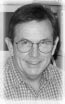
Microbiology research efforts at the Viticulture and Enology Research Center have been bolstered with the addition of a new faculty member and researcher.
Roy Thornton, a 20-year professor and most recently a research microbiologist for E & J Gallo Winery, joined the new Viticulture and Enology Department officially formed by the university last year. Also working with Thornton as a faculty member in the department will be Fresno State Winemaster Ken Fugelsang.
Thornton’s specialty area is wine microbiology, with an emphasis on wine yeast genetics and physiology. He also has researched the breeding of wine yeasts by selective hybridization for improved wine-making properties, manipulation of wine flavor by the use of different wine yeasts, and the interaction of wine yeasts and bacteria.
The timing may be right for Thornton to begin investigating additional yeast strains for use in wine fermentation, as new federal laws limiting the amount of ethyl carbamate (EC) in wine may require the industry to alter some standard winemaking practices.
EC is considered carcinogenic. Typically, amounts of EC in wine are so minute they can only be measured in parts per billion (ppb). Nevertheless, the new regulations will force winemakers to ensure that levels are below established limits.
Thornton already is forging working relationships with researchers at the University of California, Davis and with the Wine Institute to begin studying new methods for reducing EC in wine.
His current faculty responsibilities include teaching an enology class and overseeing student seminars and laboratory work.
Thornton received his Ph.D. in applied microbiology from Strathclyde University in Scotland. He taught at Massey University in New Zealand for 20 years.
Prior to his arrival at Fresno State, he worked as a senior research microbiologist for E & J Gallo Winery for five years.
California Irrigation Management Information System
Potential for more stations in non-ideal settings
In 1982, the Water Use Efficiency Office, then known as the Office of Water Conservation, in cooperation with the University of California at Davis, started developing the California Irrigation Management Information System.
The primary goal of CIMIS, a network of computerized weather stations, was to provide reference evapotranspiration (ETo) data for agricultural and landscape irrigation. By 1985, when DWR started operating the network, there were 45 stations on the network. Initially almost all the stations were installed in agricultural areas of the state; currently, with CIMIS having expanded to 117 stations, 35 stations are located in urban areas.
Today, due to regional microclimates and because many agencies prefer stations be located on their property, there is an even greater need for more stations in the urban environment.
Visit the CIMIS home page at the following address: www.dpla.water.ca.gov/cimis.html
Because of the site requirement for ETo stations, however, it is difficult to find “ideal” ETo station sites in urban areas. This is further complicated by the need for secure locations that have minimum risk of vandalism.
Help may be on the way, though. Preliminary results of a recent California Urban Water Conservation Council-sponsored study headed by Dr. Richard Snyder, a biometeorologist from the University of California, show that in some cases data from non-ideal sites can be adjusted and used to calculate ETo.
Since ETo is a measure of the evaporative demand of a region without the effect of local small-scale climate, a large expanse of grass, about 300 feet in all directions from the weather station, is needed. Weather data that are affected by local small-scale climate conditions such as hot air from pavement or bare soil, shading from local objects, and low wind speed due to local obstruction, should not be used to calculate ETo.
Since it is often difficult to find suitable sites in the urban environment, the purpose of the study by Dr. Snyder was to develop methods to estimate ETo using data from “non-ideal” sites. The study dealt mainly with adjusting three of the four variables used to calculate Eto – air temperature, wind speed, and relative humidity – against nearby CIMIS stations.
Fourteen different non-ideal sites were used and results showed that for many of the locations, it was possible to adjust data and estimate ETo at the non-ideal site that characterized the region. Although additional studies are needed, it is clear that the same procedure can be used to calculate ETo at non-ideal agricultural sites.
For more CIMIS information...
CIMIS information is published quarterly in the CATI Update newsletter. Articles are provided by the California Department of Water Resources, CIMIS program staff.
For more information about CIMIS or its programs, contact any of the following representatives at these offices:
Northern District
Jamie Dubay
(530) 529-7367
pixley@water.ca.gov
San Joaquin District
Steve Ewert
(559) 230-3334
sewert@water.ca.gov
Central District
Mark Rivera
(916) 227-7603
mrivera@water.ca.gov
Southern District
Sergio Fierro
(818) 543-4652
sergiof@water.ca.gov
If you are unable to reach a CIMIS representative near you, call the CIMIS Helpline at 1-800-922-4647.
Weekly ETo Comparisons for Fresno
Fresno: 6/01/00– 8/31/01
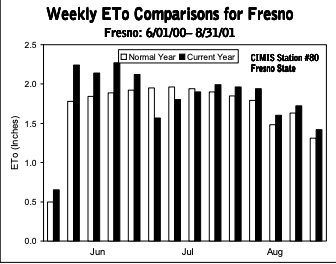
Chart shows ETo variation from normal over last three months.
Funds still available to agriculture for reducing peak load power use
More than $4 million in state grant funds to farmers, food processors and other businesses has enabled California’s agricultural industry to trim six megawatts of power from its utility bill during the last two months.
More than $65 million remains available in the funding pool, program administrators report.
The funds already granted in most cases matched investments made to reduce electrical power consumption during peak use hours. The funds were part of an emergency program enacted by the state legislature earlier this year.
Overseen by the California Energy Commission, the program offers technical services and up to $75 million in financial incentives to the ag industry to reduce electricity consumption.
The Center for Irrigation Technology (CIT) is administering all phases of the program except for water districts, which may apply at California Polytechnic State University, San Luis Obispo.
In outlining the goals of the program, CIT Director David Zoldoske emphasized energy use reduction.
“The main objective is to get people to reduce peak load energy use. We will pay you to do that,” he stated.
As of late August, 98 farmers and other ag-related businesses had qualified for funding to help cover costs of installing new, energy-efficient equipment, retrofitting existing systems such as irrigation pumps, and adopting other electricity-saving measures.
The incentive grants are available to water agencies, food and fiber producers, dairy farms, animal production facilities, food processors, greenhouses, cold storage facilities and other agricultural energy users.
Successful applicants for funding must demonstrate that new equipment additions reduce or shift electricity inflow and usage from peak times (between 12 p.m. and 6 p.m.) Monday through Friday from the months of June through September.
Applications will be accepted throughout the fall and winter, as well as in the spring and summer of next year, Zoldoske said.
For further information contact CIT toll free at (866) 297-3029 or visit the Agricultural Peak Load Reduction Program website at www.energy.ca.gov/ag.
Publications available
Update: Fall 2001
(These publications may be viewed in their entirety on CATI’s World Wide Web pages, located at cati.csufresno.edu. Single copies are also available by mail at no charge)
Production of Sourdough Frozen Pizza and Fresh Focaccia Using MIVAC Spices and Herbs, by Saif Al-Lemki and Dennis A. Ferris. Pub. #010704.
Ordering Information:
Check the publication(s) desired and mail or fax form to:
CATI
California State University, Fresno
2910 E. Barstow Ave. M/S OF115
Fresno, CA 93740-8009
Fax: (559) 278-4849
Name
Company
Mailing Address
City State Zip
Student pizza products get green light from consumers
A professor at California State University, Fresno has joined with a team of students to develop a new pizza product that conforms to the latest desires expressed by U.S. consumers.
Professor Dennis Ferris of the Department of Food Science and Nutrition and a team of students decided to undertake the pizza project following extensive research of market trends and direction of consumer habits, he said. The bottom line is that consumers want more flavor and easier-to-make products.

In response, the team formulated two objectives: to develop a pizza sauce that retains the characteristics of fresh oregano and basil, and to produce a frozen sourdough pizza and focaccia bread that is satisfactory to the consumer palette.
Seed money for the project was provided by the California Agricultural Technology Institute (CATI) and the Center for Food Science and Nutrition Research (CFSNR). After a year of trials and development, the team submitted its products for consumer tests. Sample tastings were conducted at the University Farm Market and at other locations on the Fresno State campus. Trials tested “likeability” of the new products and also compared them to familiar commercial products such as Tombstone® and Red Baron® pizzas and commercially produced focaccia bread.

The end result was not only the completion of project goals, but a taste treat for consumers. Ninety-five percent stated a “like” for the new products.
Time and funding constraints have precluded continued work, Ferris said. However, further information on the recipes and development of the products is available in a CATI publication titled “Production of Sourdough Frozen Pizza and Fresh Focaccia Using MIVAC Spices and Herbs.”

To request a print copy, use the publication order form on Page 7 or visit the CFSNR website at cati.csufresno.edu/cfsnr.
CATI on the Web!
For timely information about CATI, its research projects or centers, or to view text of research publications, visit us at cati.csufresno.edu.
Center for Agricultural Business (CAB) – cati.csufresno.edu/cab
Center for Food Science and Nutrition Research (CFSNR) – cati.csufresno.edu/cfsnr
Center for Irrigation Technology (CIT) – cati.csufresno.edu/cit
Viticulture and Enology Research Center (VERC) – cati.csufresno.edu/verc
Agricultural Technology Information Network (ATI-Net) – cati.csufresno.edu/atinet
In the event of incorrect address information or extra copies to your workplace, please return this address label by mail or fax with your requested changes. CATI fax number is (559) 278-4849.
Update is published quarterly by the California Agricultural Technology Institute
College of Agricultural Sciences and Technology
California State University, Fresno
Fall 2001
CATI Publication #011001
Voice number: (559) 278-2361
Fax number: (559) 278-4849
Director of Operations: Joe Bezerra
Publications Editor: Steve Olson
Editorial Assistant: Mike Rivera
Address Service Requested
California State University, Fresno
2910 E. Barstow Ave. M/S OF115
Fresno, California 93740-8009
Non Profit Organization
U.S. Postage PAID
Fresno, CA
Permit No. 262
CALIFORNIA AGRICULTURAL TECHNOLOGY INSTITUTE
This HTML version was generated with AI assistance and may contain errors or omissions. The original approved PDF remains the official document of record. An alternative accessible format is available upon request from the document creator in accordance with Title II of the ADA.