Update: Fall 2000
CALIFORNIA AGRICULTURAL TECHNOLOGY INSTITUTE
FALL 2000
In this issue...
- Irrigation outreach ............... 4
- MIVAC management ........... 5
- CIMIS info .......................... 6
- Ag teachers talk ................... 8
California State University, Fresno
ARI launches system-wide ag, environmental studies
Scientists from the California State University (CSU) and other institutions began collaborating this summer on system-wide research efforts to enhance the state’s agriculture industry and natural environment.
The work is funded by the CSU’s Agricultural Research Initiative (ARI), approved by the state Legislature last year to encourage collaborative problem-solving between educational institutions and private industry.
Some $5 million in total research funds have been earmarked for the 2000-01 research year. Of that, approximately $4 million has been dispersed through each of four ARI “member” universities. They include California State University, Fresno; California State Polytechnic University, Pomona; California State University, Chico; and California Polytechnic State University, San Luis Obispo.
The additional $1 million has been designated for projects of significance to the entire CSU system rather than to a particular campus. The 14 system-wide projects this year range from analyzing ammonia emissions in the air above agricultural lands to tracking forest regrowth in the Sierra Nevada mountains. Specific projects, along with the names of the principal researchers, are introduced in the following paragraphs:
Ammonia analysis
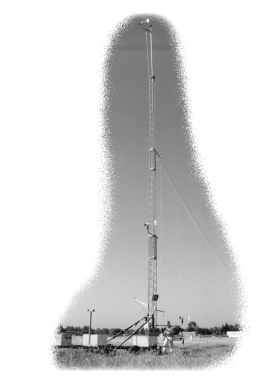
Fresno State plant science professor Charles Krauter is leading a three-year study of atmospheric ammonia. Ammonia gas (NH3) is a trace element sometimes emitted from fields following application of nitrogen-based fertilizers. When the ammonia “evaporates” from the soil, it is lost to the crops and also can facilitate formation of particulates in the air. To help the farming industry learn more about ammonia emissions, Krauter will measure atmospheric NH3 levels at various farm and non-farm locations.
Biotechnology advocate to give conference address
One of California’s great advocates of biotechnology will outline the benefits of this science to agriculture during a keynote address at the 19th Annual Agribusiness Management Conference, set for Thursday, Nov. 9, in Fresno, California.
Whether the subject is cloning sheep or increasing the Vitamin A content of rice, Martina McGloughlin will likely have faced the issue. And she has faced many during her more than 10 years associated with the Biotechnology Program at the University of California, Davis, of which she is now director.
Among her duties, McGloughlin serves as an advocate of biotechnology and as an information source on the related subjects of science, regulations, technology transfer and public policy.
A native of Ireland, McGloughlin conducted scientific research at Trinity College Dublin and University College Dublin before coming to the United States. She won a number of awards and science fellowships and has published numerous papers, encyclopedia submissions and two books in the biotech area.
McGloughlin also proved her communications skills in Ireland by winning public speaking awards at virtually all levels of competition.
See Conference, Page 3
Studies: Specialists will promote ag literacy
from Page 1
the crops and also can facilitate formation of particulates in the air. To help the farming industry learn more about ammonia emissions, Krauter will measure atmospheric NH3 levels at various farm and non-farm locations.
Water use
Environmental and consumer needs of California water will likely result in further reductions in irrigation water supplies to farmers. To help them do more with less, the Center for Irrigation Technology will implement a program providing strategies for water use efficiency. The program will offer field training in new water management techniques, demonstration of efficient irrigation methods, and strategies to use when water shortages occur.
Elephant grass
Feed trials for dairy cattle will feature a forage grass comparable to alfalfa in nutrition content, palatability and growth potential. Preliminary tests by research consultant Morton Rothberg for the Center for Irrigation Technology have shown that elephant grass (Pennisetum) can thrive on water relatively high in salt and nitrogen. Trials this year will include feeding the grass to Holstein cows and measuring palatability, nutrient value milk production.
Ag literacy
More than 10 years ago the U.S. Department of Agriculture identified a problem of agriculture “illiteracy” among the American people; that is, they lack the knowledge needed to make sound policy decisions regarding the future of agriculture. In order to boost public awareness, Fresno State ag literacy specialist Lonna Torico will recruit teachers and educational administrators to serve as “curriculum specialists” for ag literacy. They will develop materials promoting agriculture in elementary and secondary schools.
Forest regrowth
The large conifer forests of California’s Sierra Nevada mountains form the “backbone” of the mountain ecosystem and provide wildlife habitat, recreation and lumber. However, following timber harvest and natural wildfires, forest regeneration in this area has often been slow. In an effort to determine how natural surrounding shrubs affect seedling survival, Fresno State biology professor Ruth Ann Kern will monitor seedling growth as influenced by ceanothus and greenleaf manzanita.
Biosolids
Agricultural use of wastewater treatment plant sludge (also called biosolids) in fertilizer applications provides economic benefits through the reuse of nutrients and organic matter; however, their application also can leave unwanted inorganic compounds in the soil. As a means of determining specific effects of fertilization with biosolids, USDA research scientist Gary Banuelos will monitor soil, leaves and fruit in an apricot orchard treated with biosolids, to determine the accumulation of inorganic elements.
Salt tolerant plants
The buildup of salt, selenium, boron and other elements continues to threaten agricultural lands of the west side of California’s San Joaquin Valley. In an effort to further advance the “sequential re-use” method of irrigation, Fresno State plant scientist Sharon Benes will study the growth of salt-tolerant plants such as salicornia, saltgrass and atriplex, and salt-tolerant forages such as creeping wild rye grass and alkali sacaton. Tests will involve irrigating plants with salt water and measuring growth.
Halting microbial growth
Lactoferrin is a natural protein found in cow’s milk and known for its ability to block certain bacteria growth. According to research specialist Dr. Narain Naidu of California Polytechnic University, San Luis Obispo, lactoferrin also has potential for use as a spray-on agent for preventing growth of bacteria such as E. coli and salmonella on processed beef. In special trials, Naidu will track microbial growth on processed meat coated with a lactoferrin formulation.
Precision agriculture
The combined use of overhead photography, satellite technology and computer software can enable farm managers to make “micro-applications” of water, fertilizers, pesticides, etc. on crops. To help advance this technology, called global positioning systems (GPS), in California, Rollin Strohman of California Polytechnic State University will lead in developing a web-based course that will provide free public access to precision agriculture information.
Pest protection
The Food Quality Protection Act of 1999 will help to ensure a safe food supply for California consumers, but limits on certain pesticides could result in destructive pest outbreaks and reduced agricultural production. To help counter this potential problem, Fresno State plant science professor Earl Bowerman will test the efficacy of newer, reduced-risk insecticides and oils for use in stone fruit orchards. His research team also will seek to develop a biological pest control program to reduce pest populations.
See Ag, Page 7
Conference: Outlook to be offered on state, national, gobal economies
from Page 1
Dublin before coming to the United States. She won a number of awards and science fellowships and has published numerous papers, encyclopedia submissions and two books in the biotech area.
McGloughlin also proved her communications skills in Ireland by winning public speaking awards at virtually all levels of competition.
Additional speakers at this year’s “Issues and Outlook for 2001” conference will address other economic issues. Rodger Wasson, president and chief executive officer of the Almond Board of California, will discuss the effects of Asian economics on the world marketplace, focusing specifically on “China – Emerging Market or Competitor.”
Ted Gibson, chief economist for the economic research unit of the California Department of Finance, will focus on state and national issues, offering his “Outlook for California, United States and Global Economies.”
The last part of the morning program will feature a panel of commodity experts who will offer outlooks for some of the California’s key crops, including wine, raisin and table grapes, tree fruit, citrus, and nut crops.
An afternoon commodity outlook panel will follow the luncheon. Specialists will discuss the future of tomatoes, cotton, beef, poultry, hay and feed grains, and the dairy industry.
The annual agribusiness conference will be held at the Radisson Hotel and Conference Center in Fresno. It is sponsored by the Center for Agricultural Business (CAB) and the California Agricultural Technology Institute at California State University, Fresno, and by Bank of America Corporation.
Cost to attend is $85 for registrations received no later than October 27, 2000. Walk-in registration is $100. For more information, call Linnea Finley at CAB at (559) 278-4405.
19th Annual Agribusiness Management Conference
| Time | Program |
|---|---|
| 7:30 a.m. | REGISTRATION |
| 8:00 - 8:30 | Welcome & Opening Remarks Joe Bezerra, Director of Operations California Agricultural Technology Institute California State University, Fresno |
| Agriculture: A Look Into the Future Vernon Crowder, Vice President & Manager Bank of America, Fresno/South Valley Commercial Banking Office |
|
| 8:30 - 9:15 | Outlook for California, U.S. and Global Economies Ted Gibson, Economist State Department of Finance |
| 9:15 - 10:00 | China - Emerging Market or Competitor? Rodger Wasson, President and CEO Almond Board of California |
| 10:30 - 12:15 p.m. | Commodities Outlook Panel: wine, raisin and table grapes; tree fruit; citrus and nut
crops Moderator: Lynn Williams, Assistant Professor Department of Agricultural Economics California State University, Fresno |
| 12:15 - 2:00 Luncheon | The Impact of Biotechnology on the Future of Agricultur Agriculture Martina McGloughlin, Director Life Sciences Informatics and Biotechnology Programs University of California, Davis |
| 2:00 - 3:45 | Commodities Outlook Panel: Tomatoes, cotton, poultry, dairy, hay, feed grains and
beef Moderator: Jim E. Casey, Professor Department of Agricultural Economics California State University, Fresno |
Safety breakfast program launches Salinas meetings
After four successful years of presentations in the Fresno area, safety breakfast meetings hosted by the Center for Agricultural Business (CAB) will expand to serve the Salinas, California area as well.
The monthly forums began in 1996 at California State University, Fresno, where participants have discussed everything from Cal-OSHA regulations to hearing loss. Beginning in September, meetings also will be held in Salinas, one of the most productive vegetable growing and food processing areas in the state.
“We’ve had interest expressed by individuals from that area, and then we received a call from a representative from Western Growers Association offering to serve as a sponsor, so we thought it would be a good time to launch the program there,” said Kimberly Naffziger, program development specialist and director of CAB’s Safety Breakfast meetings.
The format will be the same as the Fresno breakfasts – starting at 7:30 a.m. with bagels, muffins, and coffee, a presentation by a speaker on a safety issue, followed by discussion. The meetings conclude at 9 a.m.
The Salinas breakfasts will be on the third Wednesday of each month at the offices of the Grower-Shipper Association of Central California.
Fresno breakfasts are continuing on the second Wednesday of each month at Fresno State’s California Agricultural Technology Institute.
Local businesses and agencies are encouraged to serve as sponsors, Naffziger said. For sponsor, topic or other information, call CAB at (559) 278-4405.
Mission Outreach: Filling of endowed position will enable CIT to expand educational activities
Recent cash investments by leaders of California’s commercial irrigation industry will begin to pay dividends this coming year. The dividends will consist of seminars, workshops and other educational activities organized by new CIT irrigation education specialist Tim Jacobsen.
Jacobsen’s position is made possible by an endowment established for the Center for Irrigation Technology in 1998 and funded by six charter contributors representing irrigation equipment manufacturers and friends of agriculture. The benefits of extended education are expected to be shared by both the agricultural and urban communities, said CIT Director David Zoldoske.
Jacobsen earned his master’s degree in plant science from California State University, Fresno and has since earned certification as an irrigation designer, agronomist, pest control adviser and soil scientist. Over the past 20 years he has worked in the commercial industry serving in all those capacities.
He also has engaged in educational activities, including teaching classes at Fresno State and hosting seminars for the industry. Jacobsen said he looks forward to melding his teaching experience and irrigation knowledge into a program that will benefit California’s agricultural industry.
“My objective is to increase the knowledge level so growers can maximize irrigation efficiency in the valley,” Jacobsen said. While he is convinced that San Joaquin Valley farmers are already near peak efficiency in their water use, room remains for improvement. “We can do better, but not a lot better. Still, we need to do those things that help us gain that last five percent of efficiency,” he said.
His outreach strategy involves offering educational seminars and training workshops, beginning early next year. Themes will range from on-farm drainage management to utilizing dairy effluent. Events will be held at Fresno State and locations throughout the San Joaquin Valley.
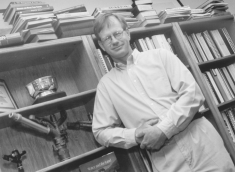
Jacobsen’s efforts are the positive results of investments made by members of the irrigation industry, noted Zoldoske.
“The endowment will significantly increase our ability to convey the importance of appropriate irrigation technology,” he said.
The charter contributors to the education endowment are Ewing Irrigation Products, Hunter Industries Inc., David and Sarit Miller, Rain Bird Inc., The Toro Company, and Valmont Irrigation. Additional contributions have come from Agricultural Products, Chapin-Watermatics Inc., CMB Industries, Irrometer Company Inc., Jain Irrrigation Systems Inc., Olson Irrigation Systems, and Roberts Irrigation Products.
“CIT is honored to be supported by these leaders in the irrigation industry who recognize the value of education,” Zoldoske said. As of July 2000, the endowment had reached nearly $400,000; the goal is $800,000. For information on becoming an endowment supporter, call CIT at (559) 278-2066.
Engineer offers outline on purchasing irrigation system
The selection and purchase of an agricultural irrigation system can be a manic blend of both elation and dread, warns CIT agricultural engineer Ed Norum in a new publication he has authored outlining the issues surrounding irrigation system installation.
A new irrigation system “represents the future growth and success of your agricultural enterprise. The better organized and comprehensive your approach, the more likely your success in specifying and purchasing the best products and services for the application,” Norum states.
Following introductory remarks, Norum presents an outline of virtually all the issues a grower will face in designing, installing and maintaining an irrigation system. Some of these include system design philosophy, design options, and background information required.
The new publication is titled, “Purchasing an Irrigation System.” It can be viewed and printed from the CIT website, located at cati.csufresno.edu/cit. Within the United States, print copies of the publication may be requested using the order form on Page 7.
Industrial strength software eases MIVAC management
The following article includes excerpts from a research report written by Richard Kohl, Carter Clary, et al.
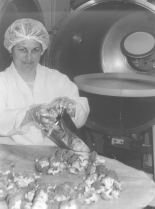
The Viticulture and Enology Research Center (VERC) has been involved in the development of microwave vacuum (MIVAC) dehydration technology since 1978. Research has focused on dehydration of whole and cut fruits, vegetables and other food products. The combination of microwave under vacuum offers the opportunity to process foods in a way not possible by other means and provides distinct benefits of rapid, low temperature dehydration, without causing changes in color, flavor, appearance, and nutritional value.
The MIVAC laboratory operates two food dehydration units: an older batch process unit and a prototype continuous production model. The data acquisition system for the continuous production model, designed and installed by Pacific Gas and Electric Company, has provided useable and reliable data on selected process variables.
The batch process unit continues to be very useful in testing small samples of food products; however, there is no automated system of data collection. In order to facilitate the work, the research team decided to design and install an automated data acquisition system to provide data in industry standard format.
The key to process data collection is the link to the central controller by a host PC, running a Human-Machine Interface (HMI) software. The HMI software provides Graphical User Interface (GUI) that can bring all process parameters into the PC operating in the Windows environment. Once the data is collected in the host PC, the information is compatible with spreadsheet programs.
The HMI software used in this project is Wonderware InTouch, which is capable of interfacing the digital information from the PLC to Windows driven spreadsheets like Excel.
With the completion of the work, Wonderware InTouch is being demonstrated in an actual processing application and has been adopted for use in other projects within CATI. The data provided by the hardware and displayed and stored by the software is invaluable for the analysis of the process and its efficiency.
More information on this research project, including details of software installation and operations, can be obtained in a research report entitled, “Development of a Data Management Network for Batch Microwave Vacuum Dehydration of Fruits and Vegetables.”
The report may be viewed and printed from the VERC website located at cati.csufresno.edu/verc. Within the United States, print copies of the publication may be requested using the order form on Page 7.
Visiting scientists bolster VERC research efforts
Two plant science specialists have joined the staff of the Viticulture and Enology Research Center to collect data on new vineyard management projects.
Guoqiang Du, of the Hebei province in China, has assumed a one-year appointment as a visiting scientist to help in the study of partial rootzone drying of grapes. The project is under the leadership of VERC research scientist Sanliang Gu.

Du holds a doctorate and taught at China’s Hebei Agricultural Univesity for nine years before coming to the United States last year to do research.
His duties will include collecting data on soil moisture, plant moisture content, plant growth and quality of fruit, and analyzing data following the growing season.
Abdul Hakim came to Fresno State from the University of Georgia, where he served a two-year research term tracking post-harvest physiology of vegetables.

Hakim received his master’s degree from Bangladesh Agricultural University. He earned his Ph.D. in horticulture at the University of Helsinki in Finland. .
During his two-year appointment, Hakim will do field and analytical work in Gu’s study of the influence of rootstocks, clones, training, pruning, irrigation and soil fertility on the formation of arginine in grape juice.
Enhanced CIMIS web site coming soon
OCTOBER 2000
California Irrigation Management Information System
In the 18 years since the program started, the Department of Water Resources’ California Irrigation Management Information System (CIMIS) has made a number of changes to the system to improve quality of data and to make it easy to access data.
For the most part, the changes have been minor, but at times it has involved complete redesign of the system. In order to support the growth in number of users requesting CIMIS data and to take advantage of improvements in computer technology, CIMIS is making major enhancements to the system. The enhancements include web-enabling the database; that is, all the information that is currently accessible through the text base modem dial-up and Telnet will be accessible on a new CIMIS web site.
New features also have been added. Because the new system is web based, you will need Internet service (Internet Service Provider) and World Wide Web software (browser). Although the CIMIS database will be fully accessible on the web, you will still need to use your current identification number and password to access data. Users will be automatically redirected to the new web site from the current CIMIS web site, wwwdpla.water.ca.gov/cimis.html.
Due to the conversion to the web, any scripts that you currently use to access CIMIS may need to be modified to work on the web. DWR staff will be available to help you with questions regarding the new system.
Visit the CIMIS home page at the following address: wwwdpla.water.ca.gov/cimis.html
Highlights of new features that have been added to the new system include:
- Access to current and all historical data from the web
- Graphical display of data
- Option to download files directly into Microsoft Excel®
- Data request by Zip Code
- Penman-Monteith ETo values
CIMIS expects the new system to be fully operational by January 2001. To ease your transition to the new computer system, the Department of Water Resources will operate the current system in tandem with the new system until the end of June 2001.
If you would like additional information, please call 1-800-922-4647 or contact your area CIMIS representative.
For more CIMIS information...
CIMIS information is published quarterly in the CATI Update newsletter. Articles are provided by the California Department of Water Resources, CIMIS program staff.
For more information about CIMIS or its programs, contact any of the following representatives at these offices:
| District | Representative contact information |
|---|---|
| Northern District | Eugene Pixley (916) 529-7392 pixley@water.ca.gov |
| San Joaquin District | Kent Frame (559) 230-3334 kframe@water.ca.gov |
| Central District | Mark Rivera (916) 227-7603 mrivera@water.ca.gov |
| Southern District | Sergio Fierro (818) 543-4652 sergiof@water.ca.gov |
If you are unable to reach a CIMIS representative near you, call the CIMIS Helpline at 1-800-922-4647.
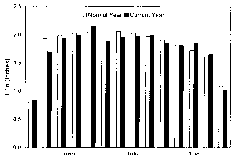
Fresno: 6/01/00– 8/31/00
CIMIS Station #80
Fresno State
June July Aug.
Chart shows ETo variation from normal over last three months.
Students conduct taste tests for mandarin orange study
A group of Fresno State students spent four days eating and evaluating Mandarin oranges earlier this year as part of a commercial research firm’s study of experimental cultural practices on the oranges.
The sensory evaluations were conducted by students in the Department of Food Science and Nutrition at the request of Whaley & Steinberg, a Fresno, California-based research firm specializing in forensic agricultural sciences.
The firm was conducting research on the application of gibberellic acid and two fungicides on Satsuma Mandarin oranges as a means of reducing aging disorders and extending the marketing season of the fruit. Application of the gibberillic acid was meant to delay fruit maturation, and the fungicides were applied to help prevent rind breakdown.
The treatments were conducted in six commercial orchards owned by growers in Fresno and Tulare counties. Several treatments, including different combinations of gibberillic acid and fungicide, were applied to groups of trees in each orchard.
Following the analytical examinations of the harvested fruit, boxes of oranges were delivered to the Fresno State campus; there, a nutrition class of approximately 40 students took part in the sensory evaluations, which included tasting and evaluating the oranges for sweetness and juiciness.
Results of the sensory evaluations were mixed. However, when taking all scores into consideration, it was determined that oranges with a late-season application of the greater amount of gibberellic acid had the best overall performance. Students did not do sensory evaluations of fungicide-treated oranges, since the fungicides are not cleared for use on Satsuma oranges.
Arrangements for the sensory evaluations were made through CATI’s Center for Food Science and Nutrition Research, under the direction of food science professor Joanne Caid.
The research also was supported by the Citrus Research Board.
Publications available
(These publications may be viewed in their entirety on CATI’s World Wide Web pages, located at cati.csufresno.edu. Single copies are also available by mail at no charge)
- Purchasing an Irrigation System, by Edward Norum. Pub. #000901.
- Development of Data A Management Network for Batch Microwave Vacuum Dehydration of Fruits and Vegetables, by Richard Kohl, Carter Clary, et al. Pub. #000902.
Ordering Information:
Check the publication(s) desired and mail or fax form to:
CATI
California State University, Fresno
2910 E. Barstow Ave. M/S OF115
Fresno, CA 93740-8009
Fax: (559) 278-4849
Name
Company
Mailing Address
City State Zip
Update: Fall 2000
Ag teacher survey shows high Internet use
State educational entities will focus on web as vehicle for information dissemination
A recent teacher survey by the Agricultural Technology Information Network (ATI-Net) has revealed that California’s high school agricultural teachers are regular computer users who make frequent use of Internet technology.
The survey stemmed from ATI-Net’s collaboration this year on several projects with the California Department of Education’s Agricultural Education Unit. Part of the project work involved disseminating information and materials to the teachers via the Internet. However, no one was certain how effective this method was without knowing the teachers’ access to the World Wide Web. To determine this, ATI-Net sent out a mail survey to all the state’s secondary agricultural teachers, reported general manager Mike Spiess.
Nearly half of the ag teachers reported frequently using the World Wide Web as a resource for teaching.
Spiess reported that of the 661 surveys mailed, 303 were returned. The sample was tested and found to be representative of the state’s teachers by region, gender, and age. The average age of those responding was 38, and the average number of teaching years was 12.
The survey found that 98 percent of teachers have access to a computer (90 percent at home) and 90 percent have Internet access (either at home or the school). Ninety-two percent have access to a PC, and 40 percent reported having access to a Macintosh. Fifty-three percent reported using email at least five times a week, while 17 percent reported not using email.
Nearly half of the ag teachers reported frequent use of the the World Wide Web as a resource for teaching, and 40 percent reported having a web site for their local FFA chapter. With this overall high access to the Web and relatively high use for teaching purposes, the Internet has proved to be a valuable communication tool and will likely continue to be used as such, Spiess said.
Regarding other aspects of computer technology, the most common software used is word processing, the teachers reported, with 71 percent confirming frequent use. Fewer (18 percent) reported frequent use of presentation software (e.g., PowerPoint), while 33 percent reported frequent use of spreadsheet software.
Some significant regional differences were found in the teachers’ computer and software use, Spiess noted from the responses. Those differences, along with results of the entire survey, are being prepared for publication at the end of the year, he said.
Update
Update is published quarterly by the California Agricultural Technology Institute
College of Agricultural Sciences and Technology
California State University, Fresno
Fall 2000
CATI Publication #001001
Voice number: (559) 278-2361
Fax number: (559) 278-4849
Director of Operations: Joe Bezerra
Publications Editor: Steve Olson
Address Service Requested
California State University, Fresno
2910 E. Barstow Ave. M/S OF115
Fresno, California 93740-8009
Non Profit Organization
U.S. Postage PAID
Fresno, CA
Permit No. 262
This HTML version was generated with AI assistance and may contain errors or omissions. The original approved PDF remains the official document of record. An alternative accessible format is available upon request from the document creator in accordance with Title II of the ADA.